
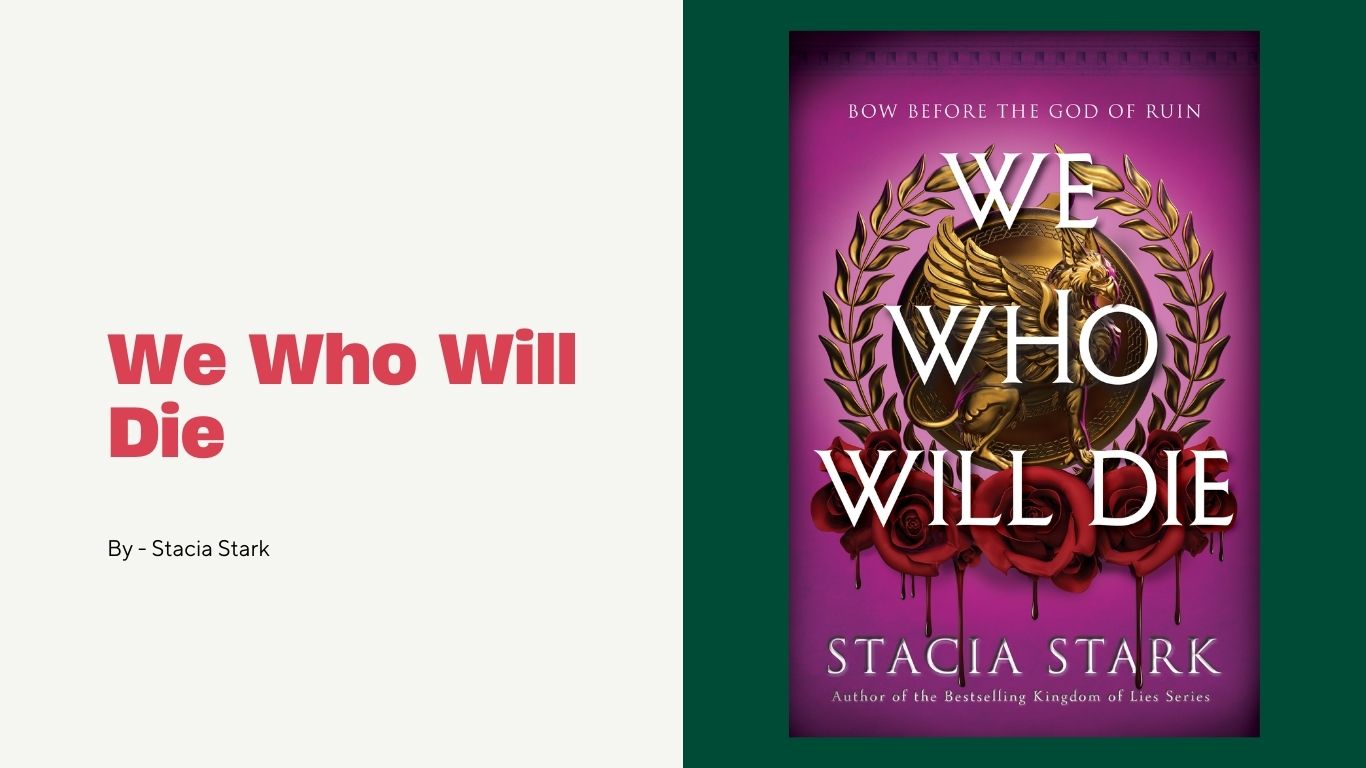
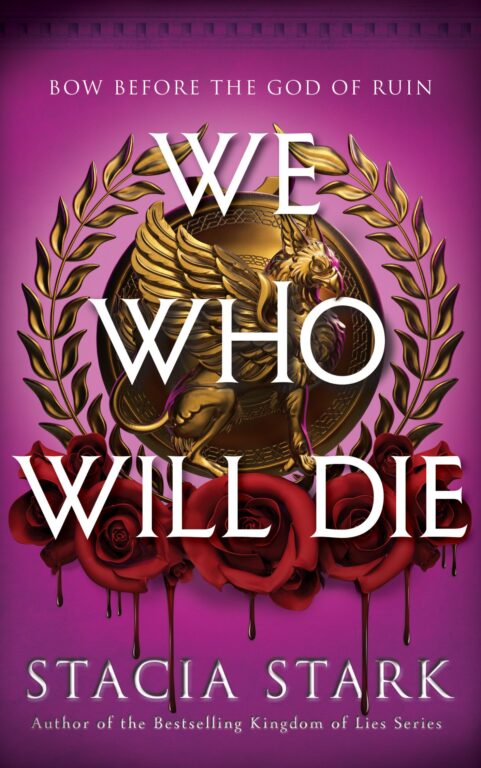
We Who Will Die is Stacia Stark’s ambitious entry into an epic romantasy that blends gladiatorial spectacle, political intrigue, and morally complex vampires. At its heart is a classic bargain: the protagonist must risk everything to save her family. What makes the novel more than an exercise in high-stakes fantasy is the way Stark threads grief, duty, and slow-burning desire through a vividly imagined, Roman-inspired world. This review will cover plot essentials, the book’s strongest elements, places where it stumbles, and why it will appeal to many readers of dark fantasy and romantasy alike.
Plot overview — what actually happens (no major spoilers)
Arvelle, the book’s central figure, comes from the Thorn district, a place where survival is a daily negotiation. When her brothers’ lives are threatened, she makes a magically binding vow: she will enter the Sundering, a lethal arena where the combatants are tested for speed, strength, and cunning, and from there attempt the impossible — kill the emperor, an ancient vampire born of divine scheming. To win, Arvelle must re-enter a world that once chewed her up: the ring where her best friend died, the political webs that sustain a brutal status quo, and the supernatural rules that govern magic and roses-are-blood-red/”>blood. Along the way she meets dangerous allies and potential lovers, and the story alternates perspectives to show both internal struggle and external maneuvering. The stakes are personal and cosmic: a family’s survival on one hand, and a system of vampiric power and god-touched history on the other.
Worldbuilding and tone — a Roman-flavored dark fantasy
Stark leans heavily on Roman-esque visual and cultural cues — reforms of empire, arenas, oaths with legal weight — while overlaying a mythology of vampires and vengeful gods. The Sundering functions both as a spectacle and as a social sieve: it reveals who is expendable, who is dangerous, and who might become a pawn in larger games. The world feels lived-in: districts and social hierarchies are concrete, and the presence of gods and vampiric lineages gives the political machinations a supernatural tilt. Some reviewers describe the setting as immersive and inventive, especially where the author uses the arena and its rituals to show social order rather than merely stage fights.
Characters — Arvelle and the people who complicate her life
Arvelle is crafted as both pragmatic and emotionally scarred: she knows how to fight and how to bargain with fate, but she is haunted by the cost of survival. The secondary cast includes rivals and would-be allies who are rarely flat; Stark spends time revealing the moral ambiguities of those who populate the court, the arena, and the city. Romantically, the book progresses as a slow burn — desire and trust build amid violence and strategy rather than appearing overnight. Readers who enjoy moral grayness and found-family-upstairs-by-lisa-jewell/”>family dynamics will find much to like here: characters are given space to be heroic and selfish at the same time. Several early readers singled out the emotional resonance of grief and the believable way relationships grow under pressure.
Pacing, structure, and the romance element
Pacing is a balancing act. The novel mixes action-heavy Sundering sequences with quieter scenes of strategy and intimacy. That alternation creates momentum, though a few readers note a slower middle section where the book favors worldbuilding and internal reckoning over plot-forward motion. The romance is gradual and earns its moments; it doesn’t undercut the novel’s darker beats, which keeps emotional stakes credible. If you prefer unrelenting action, parts of the book might feel deliberately measured; if you favor character work that pays off in later chapters, the pacing will satisfy. Early reactions from ARC readers called the novel “devourable” despite some slower stretches, a sign that the combination of worldbuilding and interpersonal tension tends to keep readers invested.
Strengths — where the book shines
- Atmosphere and setting: The Roman-inspired trappings combined with vampiric mythology create a fresh texture for romantasy. The arena scenes are visceral and well-staged, giving a clear sense of danger and stakes.
- Moral complexity: Characters are rarely purely good or evil; motivations are layered, which makes political moves and personal betrayals feel consequential.
- Emotional core: Loss, guilt, and devotion are treated as real costs of the choices characters make; the emotional beats land because they are earned through consequence rather than exposition.
Weaknesses — what might not work for everyone
- Mid-book pacing: Some readers report a lull where the narrative prioritizes setup and world history over forward momentum. If you want relentless plot, this may feel like a drawback.
- Complexity of lore: The intertwining of gods, vampires, and political structures can be dense; readers who prefer minimalist mythmaking may need to settle into the rules slowly.
Who should read this book?
If you enjoy slow-burn romance wrapped in high-stakes fantasy, with gladiatorial arenas, political scheming, and morally shaded vampires, We Who Will Die will likely hit the right notes. Fans of intense worldbuilding and emotionally costly choices — especially readers who appreciated Stark’s previous work — should find this an engaging opening to a larger series. If you prefer short, self-contained fantasies or light-hearted romance, this book’s darker tone and layered plotting may not be the best fit.
Final thoughts — a promising beginning
Stacia Stark’s We Who Will Die is an ambitious start to a new series. It combines visceral arena conflict with political maneuvering and a romance that develops under pressure. While not without small pacing issues and a hefty load of lore to absorb, the novel’s emotional honesty and the stakes faced by Arvelle give the story real momentum. For readers who like their fantasy with grit, grief, and complicated loyalties, this is a book worth opening.