
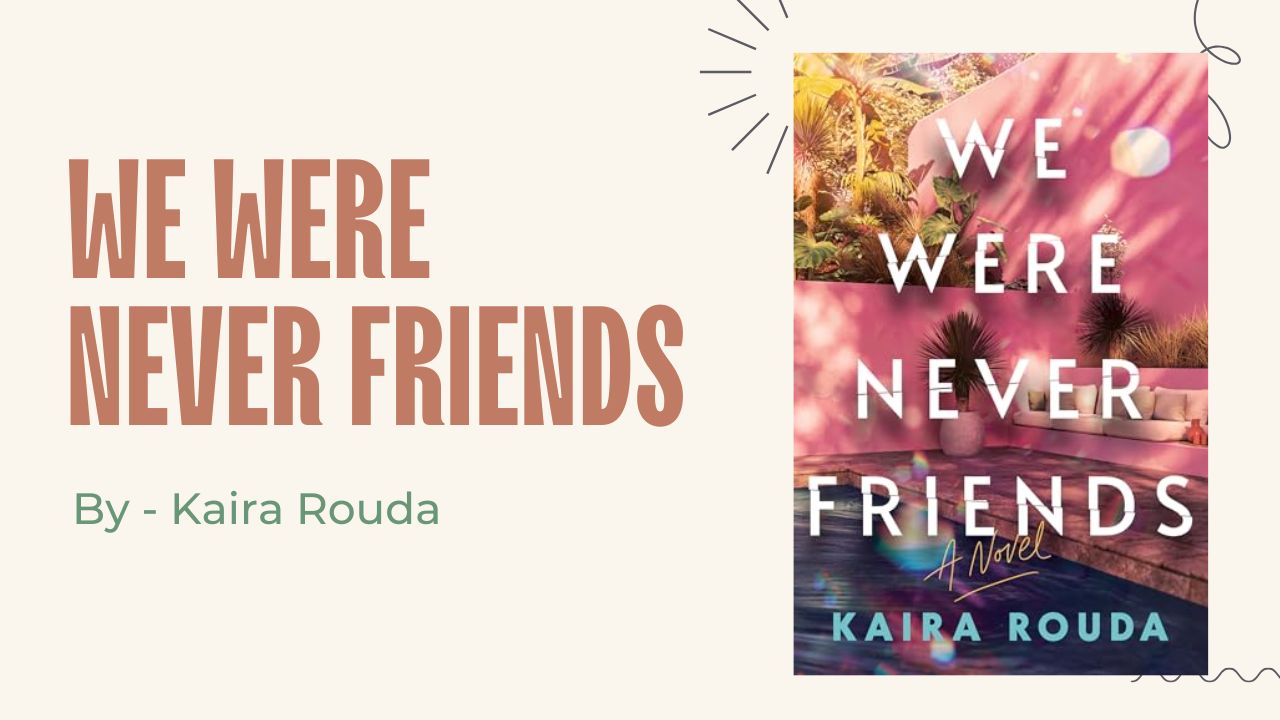
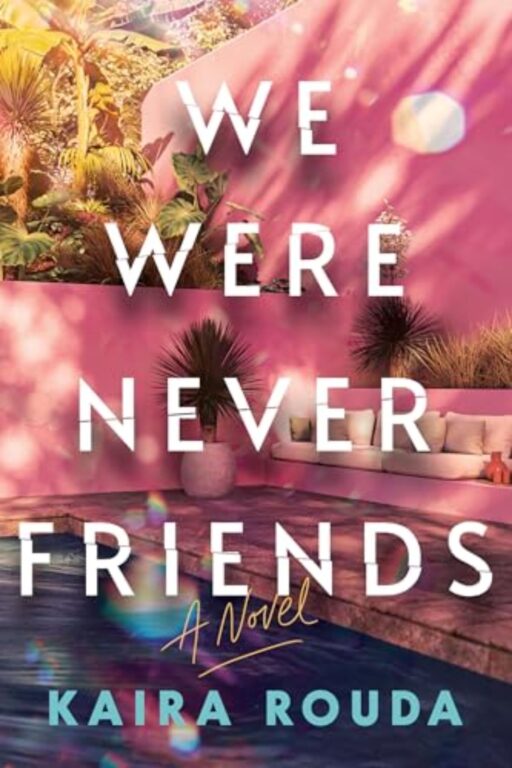
Kaira Rouda’s latest domestic thriller “We Were Never Friends” arrives like a lacquered invitation you shouldn’t accept — glossy on the surface, dangerous underneath. Set over a charged reunion weekend at a Palm Springs estate, the story assembles a quartet of former sorority sisters whose decades-old wounds and rivalries begin to fester into something far more lethal. The novel is lean, tightly constructed, and built to be devoured in a single sitting by readers who like their tension polished but sharp.
The Premise — Polished Surfaces, Rotten Roots
At its heart, the plot is deliciously straightforward: an engagement celebration reunites old college acquaintances — Roxy, the perfectionist hostess; Beth, the once-marginalized outsider; Sunny, the carefree former confidante; and Jamie, the accomplished cardiologist whose life appears enviably composed.
The weekend’s luxury setting mirrors a darker spring-break memory that binds them. As cocktails flow and curated smiles widen, old humiliations begin to resurface. Rouda uses the sun-drenched desert mansion as a pressure chamber. Secrets slip out. Alliances rearrange. The past refuses to stay buried. The setup reads like a sorority drama sharpened into a revenge thriller.
Characters — Flawed, Fractured, and Watching One Another
Rouda sketches her characters with crisp, telling details — designer table settings, carefully chosen outfits, brittle pleasantries that barely conceal resentment. These women are not written to be likable in a traditional sense. They are defensive, calculating, and often unreliable. That friction is part of the novel’s appeal.
Beth serves as the emotional anchor — imperfect yet easier to root for than the others. Roxy is entitlement wrapped in expensive linen. Sunny carries an airy charm that feels increasingly suspect. Jamie’s professional authority masks private instability.
Some readers may crave deeper psychological excavation, but Rouda prioritizes momentum. The characterization is sharp rather than sprawling — enough to provoke suspicion without slowing the pace.
Pacing & Structure — Short Chapters, Sharp Turns
This is not a slow-burn meditation. It moves quickly. Short chapters rotate between perspectives, each offering partial truths. Rouda dispenses revelations carefully, ensuring that every chapter ends with a nudge forward.
Clues hide in plain sight, and when the final layers peel back, the payoff feels engineered rather than accidental. Readers who prefer atmosphere-heavy thrillers may find it brisk. Those who favor tight plotting and quick escalation will appreciate the discipline.
Themes — Friendship, Status, and the Performance of Perfection
Beneath the glossy surface lies a study of social hierarchy. The novel explores how class, money, beauty, and belonging shape female friendships — and how easily admiration curdles into resentment.
The sorority backdrop is more than nostalgia; it becomes a metaphor for lifelong competition. These women learned early how to perform loyalty while measuring each other’s worth. Rouda taps into that tension with dark humor, preventing the drama from tipping into melodrama.
There’s an undercurrent about the cost of maintaining “perfect” lives — the strain of curated marriages, curated homes, curated happiness. In this world, image is everything, and truth is negotiable.
What Works — and What May Divide Readers
What works: the tone. Rouda balances glamour and menace with confidence. Dialogue carries bite. The confined setting intensifies every confrontation.
What may divide readers: the streamlined psychological depth and a few late-stage plot conveniences. If you prefer intricate emotional layering, you may find the novel more plot-driven than introspective.
Still, the emotional punch lands. The unraveling feels satisfying, even when it edges toward the theatrical.
Final Verdict
We Were Never Friends is a sleek, fast-moving domestic thriller about the danger of old grudges dressed in designer labels. It’s best suited for readers who enjoy stylish settings, morally gray characters, and twist-forward storytelling.
This is a weekend read — sharp, glossy, and just venomous enough to linger after the last page.