
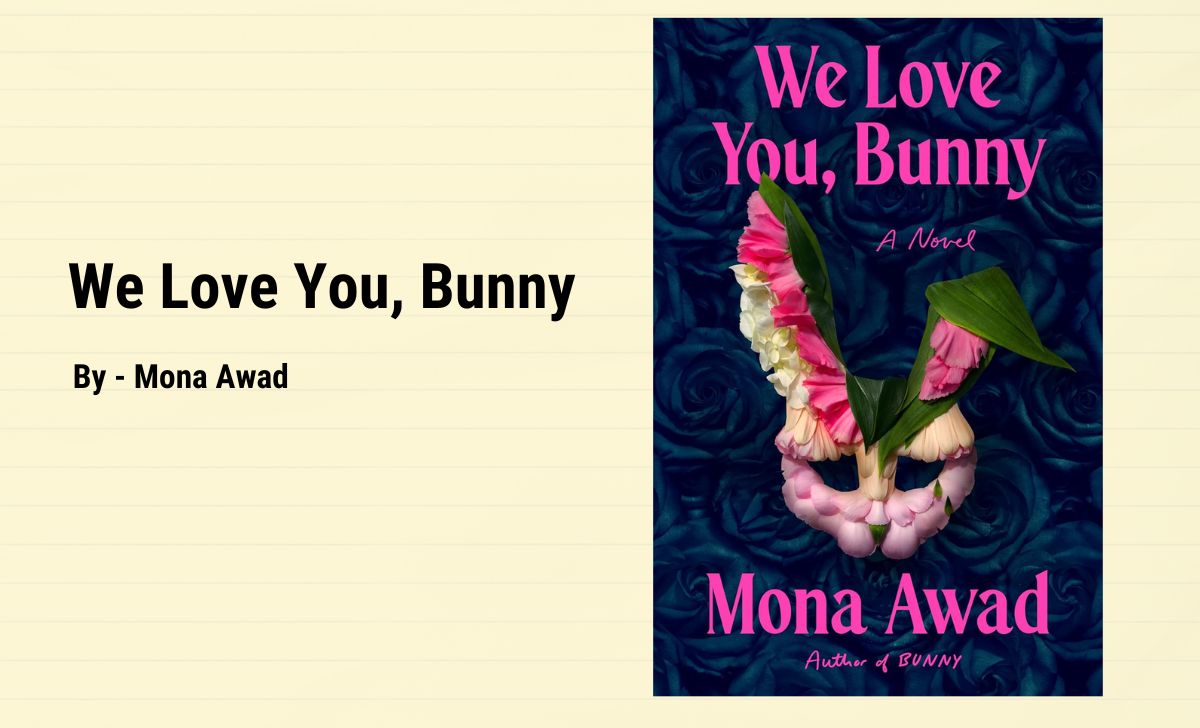
Mona Awad’s latest novel, “We Love You, Bunny,” cracks open the feverish, glitter-speckled world first introduced in her cult classic “Bunny” and invites readers back for another round of uncanny games, dark academia drama, and unsettling surreality. This novel, described as both a prequel and a sequel, rewards returning readers and tempts new ones with its sensuous, gothic swirl of art school satire, metaphysical weirdness, and narrative audacity. Awad’s prose remains just as enchanting and treacherous as ever, guiding readers deeper into the psychology and intensity of her infamous “Bunnies.”
Revisiting the Bunny-Verse
“We Love You, Bunny” centers around Samantha Heather Mackey, who has recently found literary success with her debut novel—a work that lifts the veil on her experiences at the insular, elite Warren University MFA program. The quirky and menacing clique known as the “Bunnies,” who were the focus of Awad’s previous book, are none too pleased with Samantha’s fictionalized version of their lives. In response, they kidnap her during her book tour and take turns telling their own truth, each seizing the narrative axe and swinging it freely.
What unfolds is a wickedly intelligent metafictional exercise: the Bunnies (now narrators themselves) recount not only how their strange alliance formed but also their discovery of sinister creative powers and the genesis of their first horrifying, funny, and somehow tender creation—Aerius. This retelling transforms the novel into a kaleidoscopic fever dream, where each Bunny’s inner world and motivations flicker urgently in the collective, hive-mind glow.
Plot Overview
The narrative structure eschews linear sequencing for a more experimental, voice-driven storytelling. The book opens with Samantha’s abduction by the Bunnies. Bound and gagged, she becomes a captive audience while the Bunnies recount their tale—an origin story of their creative partnership, bizarre rituals, and emotional entanglements.
The plot revisits some of the original events of “Bunny” but from new, often contradictory perspectives. The major addition is Aerius, the Bunnies’ first “creation” and a Frankensteinian figure who is both their muse and their cautionary tale. His sections read as a pastiche mash-up of gothic horror and millennial absurdity, narrated in a deliberately stylized and idiosyncratic voice that blends 19th-century grandiosity with text-message brevity.
While the novel offers some new lore and backstory, it is less interested in solving the original novel’s mysteries than evoking even more questions. Readers are encouraged not to search for a definitive truth but to enjoy the cascading, unreliable accounts that build a denser and weirder mythology around Warren University and its denizens.
What Works: Voice, Humor, and Subversion
Awad’s talent for voice is on full, wicked display. Each Bunny, previously indistinguishable behind Samantha’s first-person account, now emerges with distinct quirks, trauma, and narrative priorities. The perspectives switch often, creating a sense of narrative whiplash that is, for some, part of the book’s delight. Readers are treated to slapstick, gothic horror, and biting satire—sometimes within a single chapter.
The comedic timing, especially in how the Bunnies interact with Samantha and each other, makes the violence and emotional cruelty that underpins their world feel even more uncomfortably funny. Awad takes the “dark academia” aesthetic and weaponizes it; critiques of MFA culture, artistic ambition, and the commodification of trauma are never far from the surface.
Notably, the inclusion of Aerius allows Awad to riff on classic literature (Mary Shelley’s “Frankenstein” is a clear influence) while lampooning contemporary internet culture and creative self-obsession. These sections are equal parts hilarious and disturbing, making for a reading experience that flips between empathy, repulsion, and morbid curiosity.
What Frustrates: Repetition, Pacing, and Ambiguity
For all its inventiveness, “We Love You, Bunny” is not universally beloved. Some readers report that the narrative, at nearly 500 pages, is weighed down by lengthy retellings and shifting perspectives that occasionally either repeat too much or deflate the mysterious energy of the original novel. Where the ambiguous, surreal horror of “Bunny” left much to interpretation, this sequel tends to explain and literalize, which, for some fans, diminishes its uncanny magic.
The frequent alternation of viewpoint characters, the purposeful unreliability of every narrator, and the recurring plot points may tire those seeking a tighter or more conventionally plotted novel. The character of Aerius, while inventive, divides opinion; some readers love his oddity, others find his lengthy sections tiresome and distracting.
While Awad’s wit and literary playfulness remain strengths, not every experiment lands—readers unfamiliar with “Bunny” may find this novel confusing and impenetrable without the context of its predecessor, despite claims of standalone status.
Themes: Creation, Obsession, Art School Satire
At its heart, “We Love You, Bunny” is a fierce meditation on creation—personal, artistic, and possibly monstrous. The book mines the relationships between artists, their muses, and their rivals, often showing how love and annihilation occupy adjacent spaces. The violence of artistic creation—literalized through the creation of Aerius—is entwined with questions about narrative control, unreliable memory, and the ethics of transforming one’s pain (and the pain of others) into art.
The satire of academic pretensions and the absurdities of art school bureaucracy is sharp and relentless. Awad’s critique of self-serious artistic hierarchies and the cutthroat competition lurking beneath a surface of girlish camaraderie is as funny as it is incisive. She also continues to explore themes of loneliness, belonging, and the costs—psychological, social, and even supernatural—of acceptance in exclusive creative circles.
Reading Experience and Audience
“We Love You, Bunny” is a true love-it-or-hate-it novel. Devotees of Awad’s world-building and her feverish, sensory-laden prose will find much to savor, from the deadpan repetition of “Bunny” nicknames to the sly pop culture references and breaking of the fourth wall. Those who crave closure or clarity may feel frustrated, and some may find its deliberate strangeness alienating.
Yet for those who appreciate literary experimentation, satirical horror, and the strange overlap of fairytale and slasher narrative, Awad’s novel is a compulsively readable, uproariously weird journey—one as likely to provoke groans as gasps, but never, ever boredom.
Final Thoughts
Mona Awad’s “We Love You, Bunny” offers a unique, biting, and extravagantly weird addition to the canon of contemporary dark fiction. Whether taken as a metafictional prank, an art school satire, or a gothic fairytale about identity, narrative, and group madness, it stands as a testament to Awad’s prowess for literary risk-taking and her distinctive, sometimes polarizing, style.author/show/7104825.Mona_Awad”>