
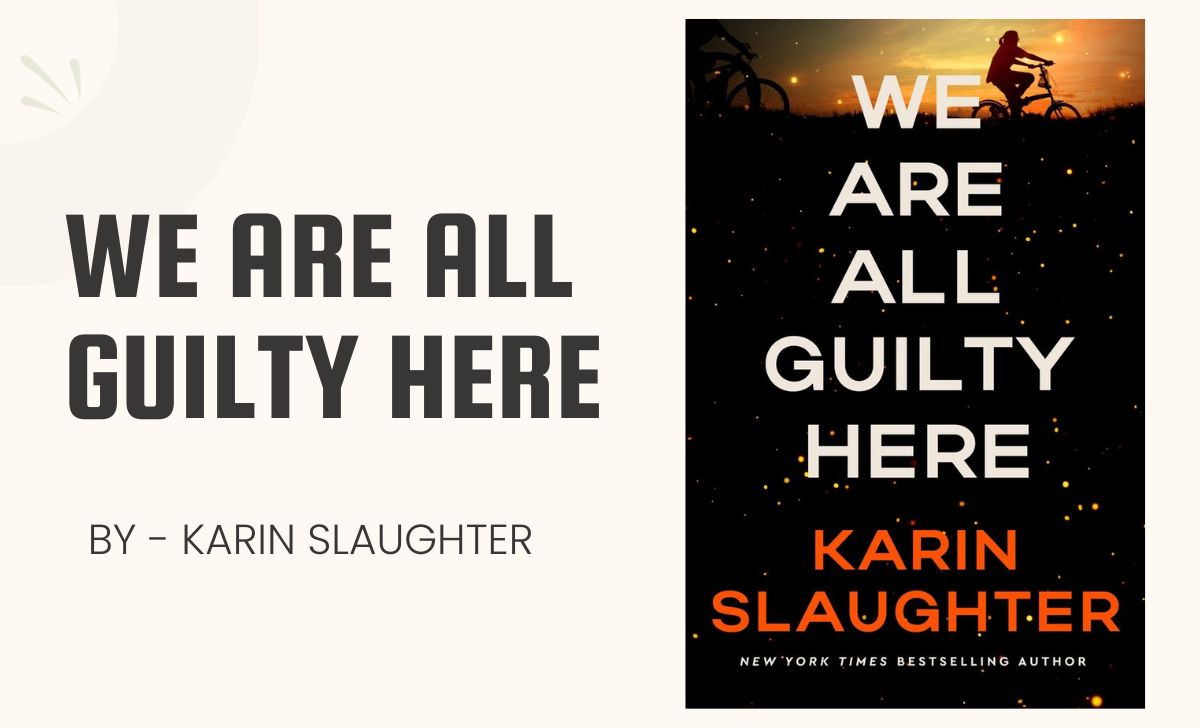
Karin Slaughter’s We Are All Guilty Here grabs you from the first page with its oppressive summer heat and whispered secrets under firework-lit skies. Set in the small Southern community of North Falls, it’s a high-stakes mystery driven by guilt, family ties, and the chilling realization that no one truly knows the people they live alongside. As the first instalment in a new series, it’s both a gripping standalone and a compelling foundation for what’s to come.
Plotline (We Are All Guilty Here)
On a sweltering evening when the townsfolk gather to watch fireworks, two teenage girls—Madison Dalrymple and Cheyenne Baker—vanish without a trace. Emmy Lou Clifton, a local deputy, can’t shake her haunting guilt—she turned away when one of the girls sought help, and now she’s tormented by what might have happened. Determined to make amends, Emmy leads the investigation alongside her father, Sheriff Gerald Clifton, as the town peels back a veneer of civility to reveal secrets festering beneath.
The story splits across two timelines: the frantic search in the aftermath of the disappearances, and the re-emergence of another missing child, Paisley Walker, ten or more years later. That cold case brings in former FBI criminal psychologist Jude Archer, forcing Emmy and Jude into a reluctant duo—instinct versus method, hometown loyalty vs professional detachment. Together, they uncover long-buried truths and the dark underbelly of North Falls, where every neighbor’s secret feels like a confession.

Small-Town Atmosphere and Pressure
Slaughter masterfully captures the claustrophobic intensity of a town where everyone knows everyone—even if they don’t really know each other. The town’s collective guilt is palpable: parents watching their children, town elders propping up uneasy calm, and teenagers bristling against invisible boundaries. The narrative pressure cooker atmosphere makes every interaction feel loaded, every glance ominous. This is small-town life turned gothic—a place where familiarity can serve up betrayal.
Compelling Protagonists: Emmy and Jude
Emmy Lou Clifton stands out as a flawed and relentless hero. Her guilt isn’t just a driving force—it shapes her at every turn, revealing her resilience, determination, and tender conscience, especially towards the families of the missing girls. Jude Archer, by contrast, enters with the precision and analytical rigor of someone trained to kill her feelings, not kill people. Their tension crackles: Emmy’s emotional intuition versus Jude’s cold logic. Yet, that friction is what makes their alliance so compelling, and the slow forging of trust between them one of the story’s emotional cores.
Themes of Guilt and Collective Denial
The title—We Are All Guilty Here—isn’t just a marketing choice; it’s the thematic backbone. In a community built on loyalty to the Clifton name and whispered loyalties to each other, complicity comes in subtle forms: turning away when help is needed, covering up missteps, twisting facts to preserve normalcy. Slaughter deftly shows how guilt spreads—not always for doing the worst things, but sometimes for doing nothing at all. Themes of memory, denial, and the cost of silence echo throughout the town, and throughout the characters.
Pacing, Suspense, and Shocking Twists
From the explosive opening night, the pace rarely lets up. Slaughter sprinkles red herrings, dramatic reversals, and a high-stakes confrontation that keeps tensions soaring. Tension alone doesn’t create suspense—the characters’ emotional stakes do, and here they’re sky-high. As layers unfold, you sense the weight of every revelation. Even when the pace slows, it’s to deepen character or ratchet up dread, never to let you relax.
Where the Novel Shines—and Where It Pauses
Kirkus acknowledged that while the novel might lack the “surgical precision of Slaughter’s very best nightmares,” it “richly earns its title” with vivid character and immersive setting. Other reviewers laud the emotional power and compelling plotting. The Financial Times finds the blend of small-town charm and dark psychological probing deeply effective. While there’s no consensus on perfection—and some readers felt the ending left them less curious about future instalments—the majority agree it’s a knockout of a series kickoff.
Final Thoughts
We Are All Guilty Here is a powerful, emotionally driven thriller that both introduces a new saga and stands on its own. Slaughter’s strengths—in character development, atmospheric tension, and emotionally wired storytelling—are on full display. Whether you’re drawn to psychologically rich crime fiction or haunted yet resilient heroines, this novel delivers in spades.
Fans of her previous work—Grant County, Will Trent, Pretty Girls—will feel at home with the tone, while the new series promises fresh emotional and investigative horizons. If you’re ready for a thriller where guilt is as integral as clues, and where survivors bear the deepest scars, you’ve found your next read.