

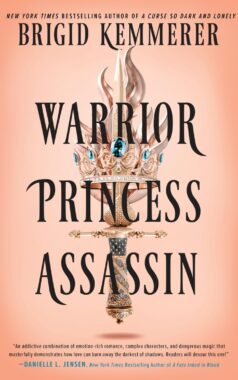
Brigid Kemmerer’s Warrior Princess Assassin arrives like a promise: a bold step into adult romantasy from a writer known for emotionally rich YA fantasy. The book pairs sharp, often urgent prose with a knot of complicated loyalties and desire, and it asks readers to ride the friction between duty, survival, and messy attraction. If you like your fantasy heated, character-driven, and focused on the moral cost of power, this one is built to grip you.
Plot (what happens)
At its heart the novel follows Ky (a princess with secrets and a crown-sized burden), Jory (a bold figure whose loyalties are tested), and Asher (an assassin whose life has hardened around what he must do to survive and protect). When a deadly threat targets the royal line, alliances shift: old bonds are questioned, new pacts are forged, and the three leads are thrown into a high-stakes scramble where survival demands morally dubious choices. The narrative balances quests and political danger with intimate scenes of negotiation and confession — the stakes are both the realm’s future and each character’s claim to agency. This is an adult book that foregrounds the erotic and emotional consequences of its choices while still delivering courtly intrigue and action.
Characters and relationships — why chemistry matters here
Kemmerer writes people who feel lived-in: they carry scars, bad decisions, and genuine competence. Ky’s arc is driven by the pressure of being both ruler and human; Jory is the kind of character whose generosity masks complicated self-preservation instincts; Asher brings the darker expertise of someone who’s done terrible things to stay alive. The chemistry among them is deliberately uncomfortable at times — the book leans into a “why-choose” dynamic rather than a blunt love triangle, which gives space for consent, negotiation, and shifting power balances to shape the romance. Readers who enjoy slow-burning temptation and emotionally messy arrangements will find the relationship work compelling; readers who prefer tidy romances may feel stretched by how often the characters misread or withhold from one another.
The writing and pacing — what speeds and stalls the ride
Kemmerer’s prose moves with the momentum of someone used to YA pacing but willing to let adult scenes breathe: lines land, the dialogue snaps, and intimate moments have heat and consequence. Where the novel shines is in how desire alters tactical choices — sex isn’t gratuitous here; it alters alliances. That said, several reviewers noted pacing hiccups: some plot beats arrive quickly and require suspension of disbelief, while other emotional transitions feel compressed. If you want a book that takes time to map every political maneuver, this might feel a bit fast; if you read for character friction and charged scenes, the momentum will likely work in the book’s favor.
Worldbuilding and stakes — enough meat for the trilogy start
The setting balances familiar fantasy scaffolding (courts, guilds, assassins) with enough original texture to make the stakes feel immediate. Magic and political structure are sketched economically — the book gives you what you need to understand threats without long expository stretches. That’s a strength if you like forward motion; it’s a limit if you hunger for encyclopedic detail in book one. Still, Kemmerer drops in compelling political moves and moral dilemmas — betrayals, the cost of protection, and the question of whether a ruler can remain humane while defending a whole people. The drama grows mostly through character choices rather than sweeping worldbuilding reveals, which keeps the emotional center close.
Themes — what the novel asks of its reader
Power, consent, survival, and the ethics of protection are constant undercurrents. The book examines whether love and duty can coexist when both demand sacrifices; whether violence can ever be truly cleansed by intention; and whether chosen families (or chosen alliances) can repair the damage that old systems cause. Kemmerer doesn’t sanitise the characters’ flaws — she makes them consequences. This lends the novel an emotional gravity: choices have fallout, and the story consistently forces characters (and readers) to reckon with that fallout.
What works, and what might not land for everyone
What works: vivid, active characters; sharp, sensual scenes that carry narrative weight; a brisk plot that keeps you turning pages; and a willingness to explore consensual, complicated romantic structures. Reviewers and readers have praised Kemmerer’s ability to write desire as plot fuel and to keep the emotional stakes high.
What might not land: repeated miscommunications that drive conflict (some readers feel these are overused), a preference-dependent handling of poly/why-choose dynamics, and a desire for more exhaustive worldbuilding in the first volume. If you need every political mechanism mapped out before you’ll root for a plot twist, this book asks for a bit of trust that the trilogy will expand the stage.
Final verdict — who should pick this up
If you want romantasy that prioritises character heat and the ethical cost of power, Warrior Princess Assassin is a strong, pleasurable start to a trilogy. It’s best for readers who enjoy adult romantic tension tied to actual plot consequences, who don’t mind emotional messiness as part of character growth, and who can accept some narrative shortcuts in exchange for fast emotional payoff. Fans of Kemmerer’s YA work who’ve matured into adult fantasy — or anyone who loves consensual but complicated relationship dynamics in high-stakes settings — will likely be satisfied. Publishers and early reviewers have given the book notable praise, which is a good sign that this debut adult entry lands with many readers.