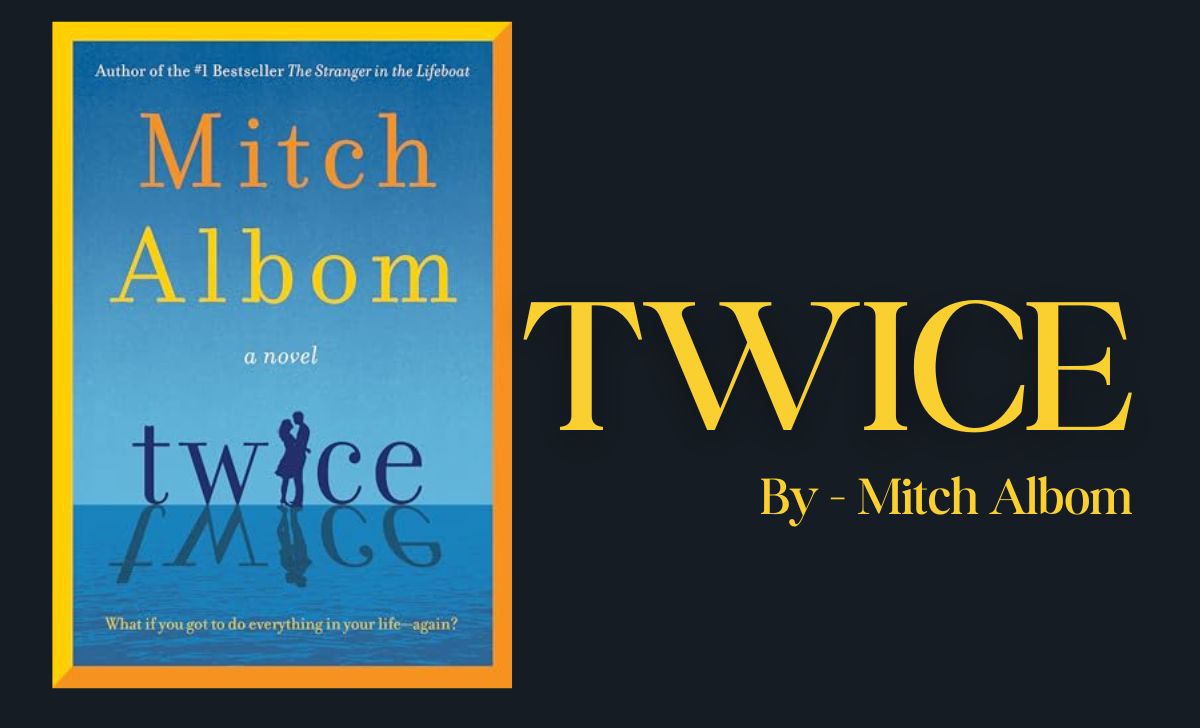
Mitch Albom’s Twice arrives as a touching fable about regret, affection, and the irresistible fantasy of “doing it over.” It asks a simple, human question: if you could go back and redo one moment in your life, would that fix you — or simply change what you lose?
The book centers on Alfie Logan, a man who discovers at eight that by saying one word twice, he can repeat a moment of his life once more. What seems like forgiveness from fate quickly becomes a set of rules and limits that test whether second chances really make life better.
What the Book Is About (Plot Summary)
At the center of Twice is Alfie Logan’s curious gift: he can tap his body, say the word “twice,” and return to any single instant he has already lived — but each redo is absolute, and he must accept the consequences that follow.
The novel opens in medias res: Alfie is in a Bahamian police station after winning millions at a casino under suspicious circumstances. Rather than defend himself, he asks an investigator to read a notebook he’s written, and the bulk of the novel unspools as Alfie’s recollection.
From his childhood discovery of the power to his messy adult choices — especially in love — we watch him test the limits of the ability and, almost inevitably, hurt the people closest to him. Importantly, Albom introduces a moral rule to the magic: while you may redo events, you can’t force love to reset the same way — undoing a relationship can mean it never becomes what it once was again. That constraint is where much of the book’s ache and consequence grow.
Style and Structure — How Albom Tells the Story
Albom’s prose is economical and warm; he favors plain sentences and emotional clarity over rhetorical complexity. The framing device — Alfie’s notebook being read aloud in an interrogation-like setting — lets Albom move back and forth in time with gentle ease.
Short chapters and a focus on scenes rather than long exposition keep the narrative moving, which may please readers who want a story that doesn’t overstay its welcome. That same clarity, however, sometimes leans toward the familiar: Albom’s moral observations arrive almost as parables, and a reader who prefers ambiguity or interior complication may find the approach too tidy.
Several critics have praised his storytelling gifts here; others have said the restraint sometimes saps urgency. But even with its simplicity, Twice carries the signature Albom sincerity that has made his stories resonate with millions.

Characters and Emotional Core
Alfie is both likable and frustrating — exactly the sort of protagonist who invites us to both root for him and roll our eyes at his choices. He’s shaped by ordinary flaws: vanity, a yearning for thrill, and a wish to erase small humiliations.
Gianna, the novel’s principal love interest, is drawn with warmth but sometimes feels more like the moral mirror Alfie needs than a fully independent inner life. Albom’s strength lies in sketching emotional pivots — regret, tenderness, quick remorse — in ways that land, even if some secondary characters remain lightly sketched.
Where the book succeeds most is in scenes of intimacy: short exchanges, return visits to the past, and the quiet reckonings that follow choices feel sincere and, at times, quietly devastating.
Themes — What the Book Is Trying to Say
At its heart, Twice is a meditation on consequence. Albom asks whether the irresistible impulse to fix our mistakes will actually improve our lives or simply reroute pain. The novel suggests that the value of life may not be in getting everything right, but in how we live with the consequences.
The rule that love, once undone, cannot be entirely restored gives the story its moral bite: some losses teach us things we desperately need to learn. That idea — that a second try can cost you the only thing you actually wanted to save — is the book’s most effective cruelty and its most humane lesson.
The Book’s Strengths
- Albom’s facility with emotionally resonant scenes: short, decisive moments carry most of the book’s weight.
- Clear, readable prose that will appeal to readers who like stories with heart rather than puzzles.
- A central conceit that genuinely complicates familiar “time travel” wish-fulfillment: the rules Albom sets create real stakes and ironic tragedy.
The Book’s Weaknesses
- The moral clarity can verge on predictability; readers who want moral ambiguity or startling structural risks might feel undernourished.
- Some characters, especially in early pages, function primarily to reflect Alfie’s growth rather than to surprise or complicate it.
- For readers who prize stylistic daring, Albom’s straightforward voice may read as too neat; the tone, while comforting, sometimes flattens tension.
Who Should Read Twice?
If you like tender, idea-driven stories about love, regret, and personal change, Albom’s novel will likely satisfy. Fans of his earlier works — readers who appreciated the moral clarity of Tuesdays with Morrie or the accessible warmth of The Five People You Meet in Heaven — will find much to enjoy.
If you prefer novels that resist tidy answers or that revel in linguistic risk, this may not be your first choice. Overall, Twice offers a compact, emotionally focused experience that leaves you considering how much you’d gamble to get one more chance.
Final Thought
Twice is less an intellectual puzzle than a bedside fable — comforting, occasionally uncomfortable, and often earnest. Its magic is simple, its stakes are clear, and its questions linger: if you could fix the past, would you — and at what price?
Mitch Albom doesn’t pretend to supply a universal answer, but he does give readers a story that quietly insists we reckon with what our do-overs might cost those we love.