

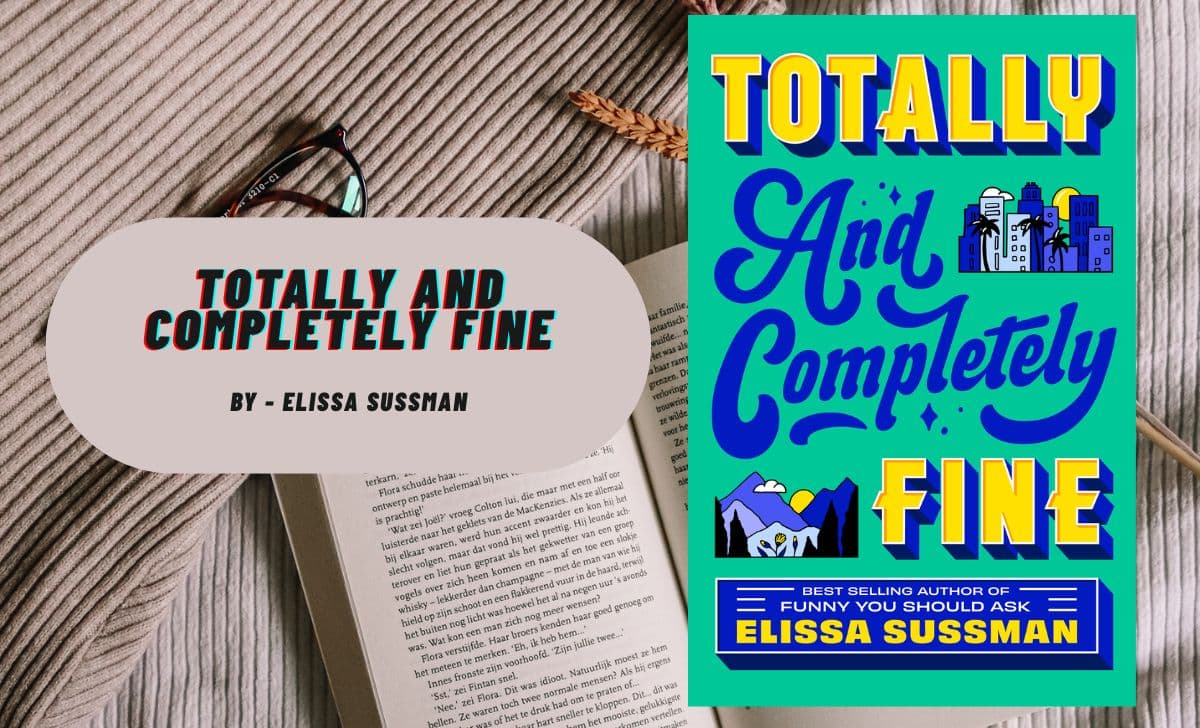
Totally and Completely Fine by Elissa Sussman is far more than a feel‑good romantic tale—it’s an emotionally honest exploration of grief, healing, and the messy ways those journeys intersect with fresh love. Set in the familiar small town of Cooper, Montana (already introduced in Sussman’s earlier novel Funny You Should Ask), the story centers on Lauren Parker—a widow, single mother, sister to a rising Hollywood star, and the kind of woman whose heart has both given and lost deeply.
Plot and Pacing: Telling Two Stories at Once
Sussman structures her novel through an alternating “Then” and “Now” timeline. In the Then chapters, we experience Lauren’s life with her late husband Spencer—simple, vivid moments that build a realistic vision of love and the eventual hole left behind when he dies. In the Now, we follow Lauren three years post‑Spencer, floundering in grief and trying to parent her teenage daughter, Lena, alone.
Her brother Gabe invites Lauren and Lena to the set of his film. It’s there that Lauren meets Ben Walsh—Gabe’s co‑star. He’s charming, bisexual, and significantly younger than Lauren, which immediately complicates things. They are drawn to each other, igniting chemistry that soon extends beyond a one-night fling when Gabe and Ben show up in Cooper to renovate the town theater. As proximity grows, so does the difficult task of building something new on top of old pain.
Main Characters: From Grief to Resilience
Lauren Parker is beautifully complex—a woman tethered to memory yet slowly discovering the courage to open up again. Sussman imbues her with both heartbreak and humor. Lauren’s exhaustion from grief is real: therapy sessions that haven’t “fixed” everything, daily survival as a craft‑store co‑owner, and parenting a deep‑in‑grief teen.
Lena, the 13‑year‑old, is fiercely compelling. Her haunting and authentic teenage grief offers some of the novel’s most poignant moments. She’s tearing herself—and inadvertently, her mother—apart, the way Sussman so realistically captures.
Ben Walsh, the bisexual heartthrob, manages to avoid cliché. He’s not simply a fling—he’s thoughtful, flawed, protective of Lena, and cautious about dating a woman with ties to another life. His character brings genuine warmth, and his struggles with fame and his place in Lauren’s world help ground his relationship with her.
Gabe returns as a familiar figure, showing growth since Funny You Should Ask, particularly around his own recovery, which has ripple effects on his family, especially Lauren and Lena.
Themes: Loss, Motherhood, and Messy Healing
The Reality of Grief
The novel never sugarcoats grief as something you “overcome.” Instead, it remains a quiet force, shaping every decision and emotion. Lauren’s grief is a weight she still carries, and the interplay between her past and present underlines how loss never completely lets go.
A Mother’s Heartbreak
As a single parent, Lauren’s heartache isn’t just her own—it’s echoed in her daughter’s turmoil. Their relationship is messy, authentic, and deeply touching—especially the moments where mother and daughter alternate between fight and reluctant empathy.
New Love Amid Old Scars
Lauren and Ben’s relationship isn’t insta‑love but a slow bloom of cautious trust and genuine connection. The author resists the temptation to make new love erase the past. Instead, Ben becomes someone who helps Lauren accept both her losses and her hopes for the future.
Small‑Town Community as Character
Cooper, Montana, feels alive—not just a backdrop. Sussman captures the comfort and caustic scrutiny of a small town where everyone knows your family name. The movie‑set being built there adds texture to the town’s rebirth—and to Lauren’s personal transformation.
Highlights and Criticisms
Strengths
- The dual‑timeline narrative renders both love stories with emotional clarity—a past that’s lived‑in and a present that’s hard‑won.
- Sussman’s dialogue blends humor and rawness in a way that feels real. Lauren’s voice is both sarcastic and weary—an ideal echo of someone learning to trust again.
- The book tackles sensitive issues like widowhood, teenage grief, addiction, and fame with nuance, never slipping into melodrama.
Limitations
- Some readers may find the romance resolution a touch hurried. Lauren’s emotional growth feels earned—but Ben’s deep acceptance may feel slightly idealized.
- Secondary arcs—Lauren’s therapy, Allyson, Gabe’s recovery—are fleshed out yet not fully explored. The focus remains intentionally tight on Lauren and Lena’s healing.
- The small‑town setting sometimes feels more functional than lived: charming but perhaps under‑developed.
Final Assessment: Hope that Includes the Past
Totally and Completely Fine is a romance that doesn’t shy away from emotional complexity. Rather than healing being the endpoint, it becomes one layer of a broader acceptance—a way to carry forward, not leave behind. Sussman delivers a story where grief and possibility exist side by side, making her title an emotional destination more than a summary.
This is an ideal read for anyone craving a relationship story that feels grounded, a protagonist who’s beautifully flawed and healing, and a plot that acknowledges the weight of the past even as it steps forward. Sussman joins the ranks of contemporary writers like Emily Henry and Christina Lauren in proving that romance can be both life‑affirming and heartbreak‑proof.
If you enjoy love stories dotted with messy real‑life elements, rich mother‑daughter dynamics, and emotional growth that is earned, Totally and Completely Fine is exactly that: heartfelt, honest, and quietly powerful.