

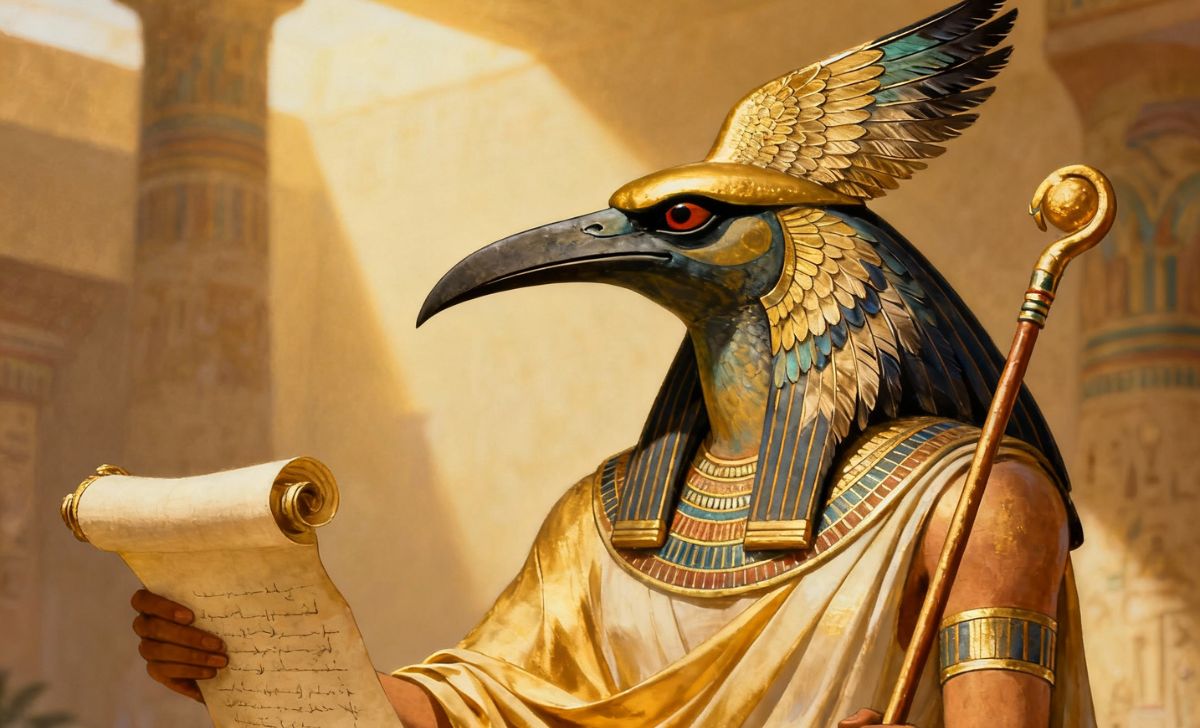
Thoth, the Egyptian god of knowledge, writing, and the moon. Revered as the cosmic scribe and the mind of Ra, his influence extended far beyond the boundaries of ancient Egypt, shaping philosophy, science, and mysticism throughout history. His mysteries endure as a testament to humankind’s eternal quest for enlightenment and balance between intellect and divine inspiration.
The Divine Scribe of the Gods
Thoth, known to the Egyptians as Djehuty, was often depicted with the head of an ibis or the form of a sacred baboon. These animals symbolized wisdom, reflection, and lunar cycles, connecting him to both earthly knowledge and cosmic order. He served as the scribe of the gods, meticulously recording the outcomes of divine judgments and maintaining the balance of Ma’at—the principle of truth and order that governed the universe. Ancient texts describe him as self-created, an embodiment of divine reason and the spoken word that shapes reality.
Origin and Association with Moon and Knowledge
Thoth’s connection to the moon symbolized his cyclical nature of wisdom—waxing and waning like the lunar light but always returning to illuminate the darkness of ignorance. The Egyptians viewed him as the counterbalance to Ra, complementing the sun god’s fiery brilliance with the reflective calm of the moon. This duality represented harmony between intellect and emotion, logic and intuition. As the keeper of time, he even measured night and day and counted the years, establishing the celestial calendar that governed Egyptian life.
Inventor of Writing and Language
Perhaps Thoth’s most celebrated achievement is the invention of writing and hieroglyphs. The Egyptians credited him with creating written language, allowing humans to record laws, rituals, and knowledge for posterity. Writing, in their belief, was a sacred act that linked the mortal realm to divine thought. His palette and stylus symbolized the bridge between heaven and earth—the divine tool through which ideas became immortal.
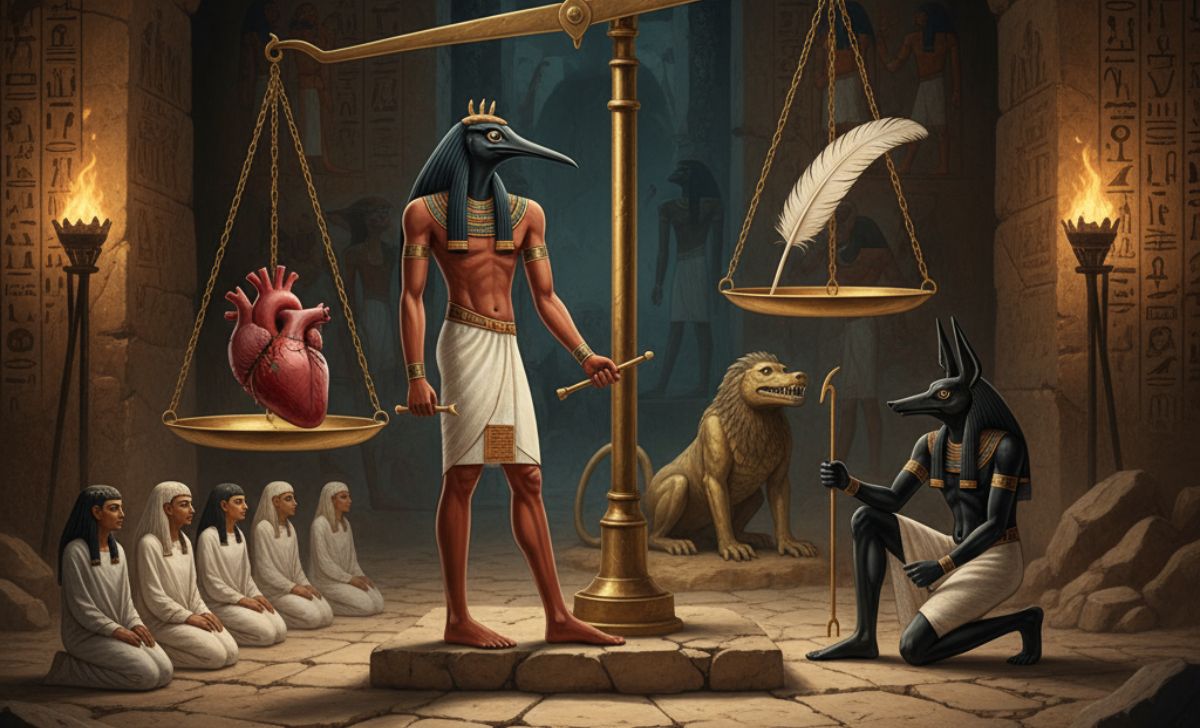
In the Book of the Dead, Thoth’s role as the recorder of truth was vital. He stood beside the scales of justice, inscribing the fate of souls as their hearts were weighed against the feather of Ma’at. This act signified the power of knowledge not merely as intellect but as moral discernment—the wisdom to discern right from wrong.
Guardian of Magical Knowledge
Thoth’s powers extended deeply into the realms of magic, or “Heka,” the divine force that animated the universe. He was regarded as the patron of magic users, priests, and scholars, the one who could command the laws of the cosmos through words. Ancient Egyptian myths spoke of the Book of Thoth, a legendary text that contained secrets so powerful they could grant mastery over the gods and insight into the language of animals. According to legend, those who dared read it risked divine punishment for wielding knowledge beyond mortal comprehension.
Thoth’s mastery over magic was not limited to words. He famously used his intellect and cunning to break the curse of Ra that prevented the sky goddess Nut from giving birth. Through a clever game of chance, He won extra days from the Moon god Khonsu, adding five days to the calendar and allowing Nut to bear her divine offspring—Osiris, Isis, Seth, Nephthys, and Horus. This myth encapsulates Thoth’s ability to outthink even the gods, solving cosmic dilemmas through intellect and patience rather than brute force.
Mediator and Judge Among the Gods
Thoth’s counsel was indispensable in resolving divine disputes. When the gods quarreled, it was Thoth who mediated peace. He played a crucial role in the myth of Osiris and Isis, aiding Isis in resurrecting Osiris and guiding Horus in his eventual victory over Set. As mediator, he symbolized impartial judgment—the balance of mind over emotion, order over chaos. His calm wisdom ensured that divine conflicts never unraveled the harmony of creation.
His role extended to mortals as well. Priests of Thoth were tasked with maintaining records, interpreting dreams, and conducting rituals of healing and resurrection. They followed his example, merging science, spirituality, and ethics as one cohesive truth.
The Many Forms and Symbols of Thoth
Thoth’s iconography reveals the layered depth of his character. In art, he appears as an ibis-headed man holding a writing palette—a divine chronicler observing the events of gods and men. As a baboon, he represents keen perception and lunar awareness. The crescent moon resting on his head denotes celestial wisdom, while the ankh in his hand signifies eternal life. Together, these symbols represent his dominion over knowledge, time, and spiritual transformation.
His partner, the goddess Seshat, embodied the written word—reflecting Thoth’s spoken intellect in tangible form. Some traditions describe her as his daughter, others as his consort, but both function as twin forces of divine creativity. While Thoth conceived thought and speech, Seshat materialized them through inscription and record.
Thoth and Hermes Trismegistus
The reach of Thoth’s influence extended far beyond Egypt. When Greek culture intertwined with Egyptian tradition during the Ptolemaic era, he was merged with Hermes, the Greek herald of the gods, forming the figure Hermes Trismegistus—the “Thrice-Great Hermes.” This fusion birthed Hermeticism, a philosophical and mystical tradition that profoundly shaped Western esoteric thought, alchemy, and the Renaissance pursuit of hidden wisdom.
Hermetic texts, often attributed to Hermes Trismegistus, taught that knowledge of the cosmos mirrored knowledge of oneself, echoing Thoth’s ancient creed of self-reflection and balance. He became not just the god of writing, but the archetype of the enlightened philosopher—one who bridges the divine and human realms through understanding.
Legacy in Ancient and Modern Thought
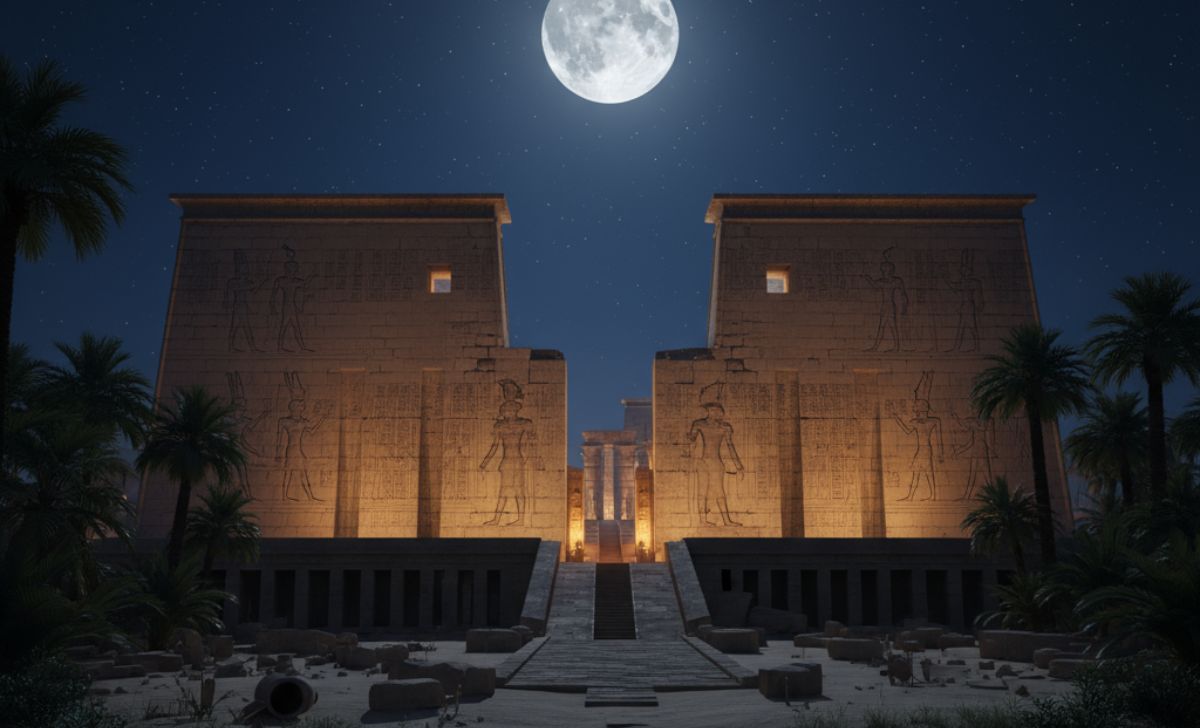
In Egypt, Thoth’s influence survived for millennia. His city, Hermopolis (originally Khmun), became a center of learning and mystical worship. Countless ibises and baboons were mummified as offerings to honor his divine wisdom. Temples dedicated to Thoth also functioned as early academies, where scribes, astronomers, and priests studied the mysteries of the stars and the structure of the cosmos.
Even today, Thoth’s image persists in literature and philosophy. He represents the eternal seeker—one who uses intellect not as domination, but as a tool for enlightenment. His lessons encourage the unity of rational thought and spiritual intuition, teaching that true knowledge demands moral integrity. The myth of Thoth thus becomes a symbolic mirror for humanity’s relationship with knowledge itself: an eternal balancing act between understanding the world and respecting the mysteries that lie beyond.
Conclusion: The Timeless Light of Knowledge
The story of Thoth endures because it reflects the human condition—the desire to understand creation and one’s place within it. As the divine recorder, he reminds us that wisdom is both a gift and a responsibility. His powers transcend mere intellect; they represent harmony between science and soul, expression and silence, reason and faith. Whether as Djehuty of Egypt or Hermes Trismegistus of Greece, he stands as the eternal guardian of knowledge, guiding those who seek truth through words, symbols, and cosmic order.