
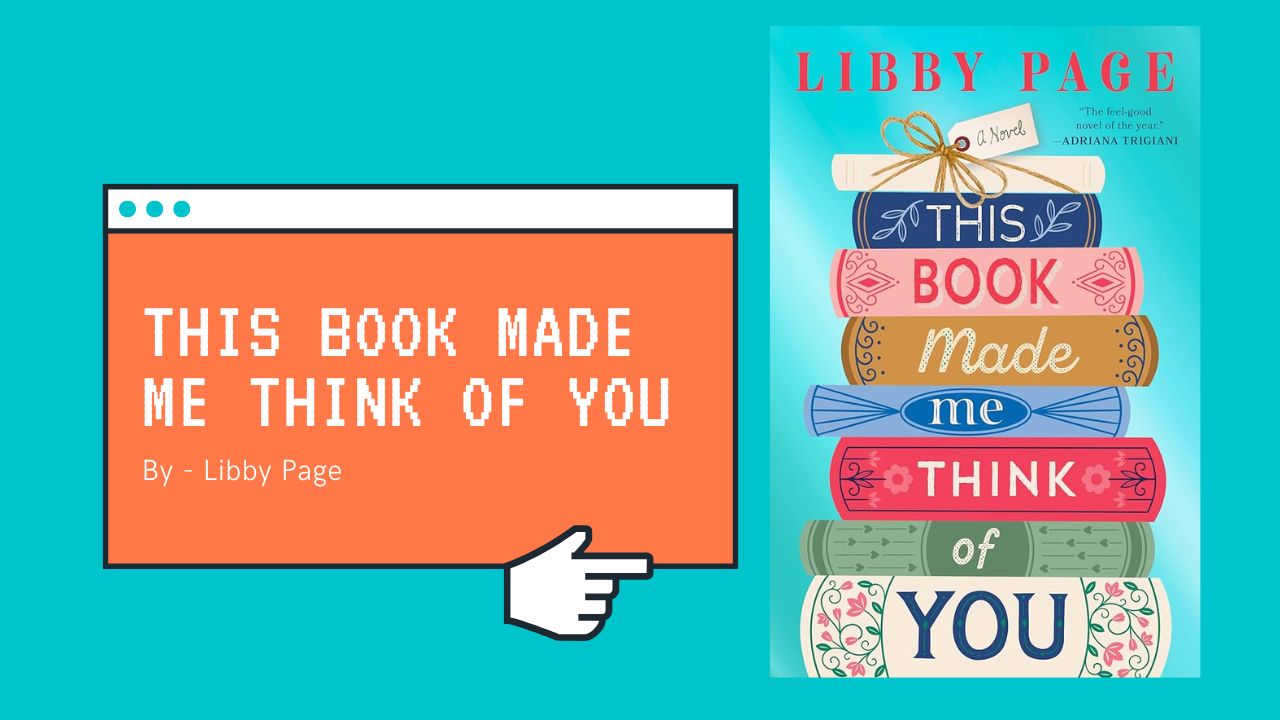
Libby Page’s This Book Made Me Think of You is the kind of book that feels like a warm conversation with a close friend — gentle, poignant and impossibly heartfelt. At its core, it’s a novel about grief, love, and the strange, beautiful way stories can guide us back to life when everything feels shattered.
What it’s about
Tilly Nightingale wakes up to an odd birthday surprise: twelve books, one for each month, left for her by the man she loved and recently lost. Each selection nudges her out of the fog of grief and into small adventures, conversations at a favorite bookshop, and a slow re-opening to the world — all told through Libby Page’s quietly observant lens.
Tone and style
Page writes with steady, comforting propulsion: sentences that favor kindness over flash, images that land like soft knocks on the door. The book feels deliberately cozy — warm lighting, bookshop banter, and the kind of cinematic nods that echo classic romantic dramas. That filmic affection gives the novel a familiar comfort while keeping the focus squarely on Tilly’s interior life.

Characters
Tilly is the bruised center — credible, sometimes stubborn, often quietly funny. Joe (mostly gone from the page) lives through the gifts he left; the clever structural choice of a book-a-month turns him into a presence without him needing many scenes. Alfie, the bookshop owner who becomes a sounding board and a tether to community, gives the story its bookstore-heart. The emotional beats feel lived-in rather than performative.
Themes
At its core this is a book about what books do: they steady, teach, console, and sometimes push us toward reorderings of life. Grief here isn’t solved — it’s catalogued, handled in increments, and slowly made manageable through ritual (reading), small voyages, and human conversation. The month-by-month structure becomes an elegant metaphor for time’s patient work.
What works
- The premise is both literal and clever: twelve books equal twelve chances for a plot beat and for Tilly to rebuild herself.
- Page’s affection for readers and bookstores is infectious; if you love bookshop atmospheres, this novel will feel like a warm chair and a cup of tea.
- Emotional honesty — the book lets sadness exist without turning it into melodrama.
What doesn’t
If you prize surprise above comfort, you might find the plot’s moves telegraphed; some turns land exactly where you expect and the ending leans into reassurance rather than risk. The pacing and structure are familiar, which may feel predictable to some readers.
Verdict
Libby Page has written a tender, reader-first novel: not a radical reinvention, but a reliably moving one. If you want a book that honors how reading can be a lifeline — and enjoy being gently led through grief rather than pushed — this will do the trick. It’s companionable, well-constructed, and likely to leave you with a list of titles to chase next.