
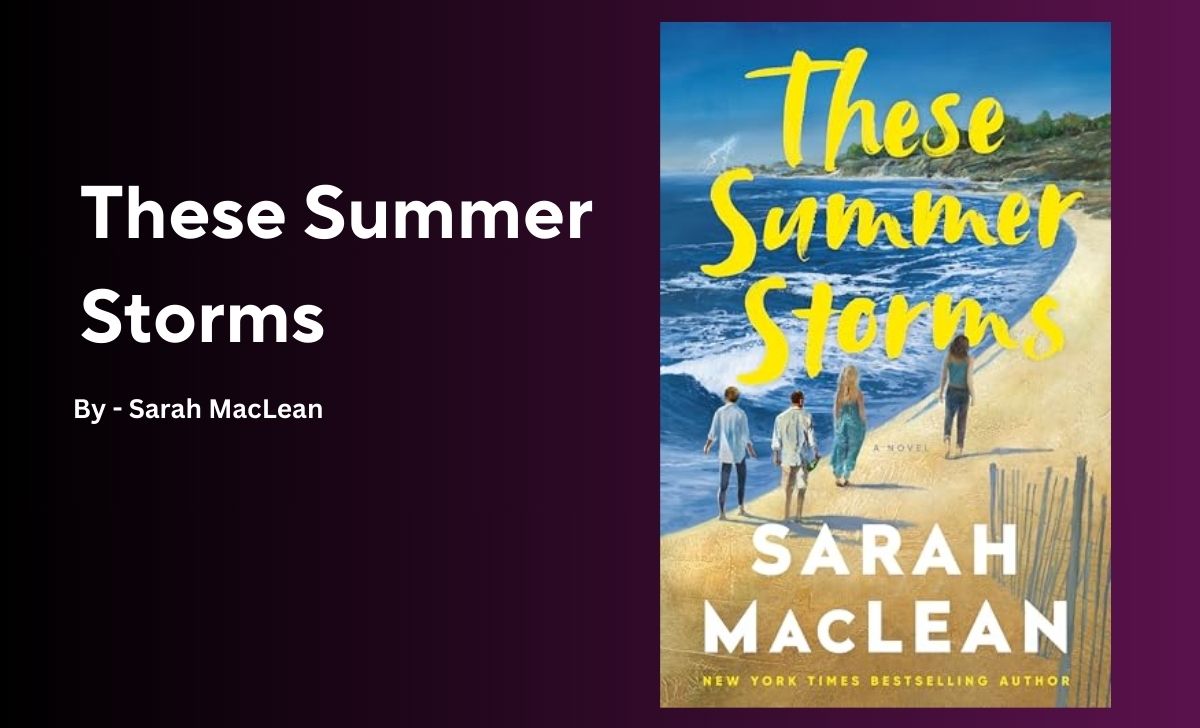
These Summer Storms by Sarah MacLean delivers a sharp twist on the classic family drama, merging inheritance games, emotional reckoning, and steamy romance into one atmospheric tale. Set on a storm-battered private island in Rhode Island, the novel follows Alice Storm as she returns home for her father’s funeral—only to find herself trapped in a high-stakes challenge with her estranged family. What unfolds is a week-long confrontation of secrets, betrayals, and buried emotions. With echoes of Succession and The Inheritance Games, MacLean’s foray into contemporary fiction is equal parts riveting, emotional, and compulsively readable.
Plot Overview
When Alice Storm is summoned back to her family’s private island in Rhode Island following the sudden death of her father, billionaire tech mogul Franklin Storm, she expects a brief, uncomfortable farewell—nothing more. She hasn’t set foot on Storm Island in five years, exiled after daring to expose the darker underbelly of her father’s company. But Franklin had one last twist in store: a posthumous inheritance challenge that traps Alice, her three siblings, and their widowed mother under one roof for a week. Each must complete assigned tasks or risk forfeiting their inheritance—not just individually, but collectively. Alice, despite not receiving a direct letter, learns staying the full week is mandatory: if she leaves, no one inherits a cent.
That would be complicated enough on its own—except that Alice has already had a one-night stand with Jack Dean, her father’s charismatic right-hand man, who now becomes the message-bearing enforcer of Franklin’s will. As the stormy weather intensifies outside, inside the island’s estate long-buried resentments simmer: a sister’s secret affair and spiritual obsessions; a power‑hungry brother and his wife; a mother who compares and competes. Over the course of seven days, allegiances shift, secrets explode, and Alice must decide whether this final storm will break her or allow her to rebuild identity, love, and family.

A Family Caught in Turbulence
MacLean shifts from her signature historical romance into modern-day family drama with flair. The Storms resemble an elite New England dynasty: privileged, polished, and deeply fragmented. The isolation of the island estate—a lavish yet claustrophobic manor battered by summer storms—amplifies emotional dynamics. Interpersonal flashpoints sprout around trivial “tasks” set by Franklin: praising him during odd hours, confessing private truths, and navigating forced cohabitation with estranged relatives. Each rule designed to humiliate or provoke shifts into a conduit for truth-telling and vulnerability.
Alice’s mother Elisabeth, her stereotypically icy and manipulative matriarch, sets the emotional tone: measured, cutting, competitive. Greta, the eldest daughter, suffocates under perfectionism while maintaining a hidden love affair. Sam, the golden son, juggles addiction, expectation, and a domineering wife. Emily, the youngest, retreats into wellness rituals and “vibes”—a comic yet poignant counterpoint to the family’s trauma. Living under these conditions—no escape, emotional landmines at every turn—the Storm clan is forced into confrontation.
Reviews compare the novel’s vibe to Succession and Inheritance Game, thanks to its sharp depiction of elite dysfunction under pressure.
Alice and Jack: Chemistry in Chaos
The romance is an essential thread—but it’s intricately woven into the drama. Alice and Jack’s connection begins in confusion: a drunken one-night fling on a train, prior to knowing who or what Jack truly represents. When Alice realizes Jack is the executor of her father’s will—and the enforcer of every unfair and invasive rule—everything feels tainted. Yet MacLean writes their slow-burn attraction with restraint and heat, born of shared grief and complicated loyalty.
Jack Dean emerges as more than a handsome lieutenant: he’s emotionally intelligent, capable of empathy and frustration. He recognizes the impossible position Alice is placed in, torn between family obligation and personal autonomy. Their tension escalates through banter, mutual defensiveness, and moments of vulnerability. The romance thread shows MacLean’s familiar strengths: sexual heat, emotional stakes, and a partner grounded in both competence and internal struggle.
Several reviewers praise this relationship dynamic as one of the book’s high points: “ingredients of laugh‑out‑loud banter and piping‑hot intimacy” forming “deliciously satisfying finish”.
Themes on the Edge of the Storm
Identity and Independence
Alice’s arc centers on disentangling from a legacy she never wanted and forging her own path. She built a life beyond the Storm name—yet her father’s final gambit demands her participation. Her task, ostensibly simple—to stay—transforms into a crucible of belonging, forgiveness, and self-definition. Through flashbacks, vivid memories, and confrontations with family, she reclaims autonomy.
Wealth, Power, and Control
Franklin’s wealth represents both protection and coercion. His final will is his ultimate exertion of control—even in death. Upending relationships, forcing humiliation, revealing secrets: each rule exposes how extreme privilege corrupts connection and authenticity. Critics note MacLean’s ability to critique wealth’s influence while still delivering an absorbing, scandalous narrative.
Grief, Healing, and Forgiveness
This is not a breezy read despite its summer setting. Beneath storms—literal and metaphorical—lies grief: for children to a father; for siblings separated by silence; for self-worth l damage. Healing emerges through honesty, confronting trauma, and accepting imperfection. Several reviewers remark that going deeper than light romance was unexpected—and enriching.
What Works—and What Falters
Strengths
- Setting as a mood machine: the Rhode Island summer estate, private docks, storm-lashed skies, and old architecture evoke a haunting, beautiful ambience.
- Family drama driven by character, not plot contrivance: each sibling feels distinct, flawed, and real—even when heightened for dramatic effect.
- Emotional arcs woven into the inheritance premise: each task they perform fosters revelations or ruptures, making the mechanism resonate.
Shortcomings
- Pacing at the end lags: once the inheritance game escalates, the resolution feels rushed, with multiple threads tied up quickly. Some critics felt the final act lost momentum.
- Imbalance in secondary characterization: while Alice and Jack are richly developed, some siblings (especially Greta or Emily) feel less fully explored.
- Genre tension: reviews commented on tonal mismatches, as the novel shifts between romance, literary drama, and commercial plot devices—sometimes uneasily.
Final Thoughts
These Summer Storms marks Sarah MacLean’s bold shift into contemporary fiction—anchored in juicy plotting and emotional resonance. It’s a moody, vivid summer read filled with rich‑people dysfunction, tangled desires, and secrets unearthed in storm-washed corridors. While its ambition occasionally outpaces its execution, especially in its final stretch, the novel’s strengths in character voice, witty dialogue, and structural tension bring reward.
Ultimately, the novel asks two interlocking questions: what would you sacrifice to reclaim your identity? And can a family fractured by inheritance and betrayal ever find healing? For readers drawn to both steamy romance and sharply drawn ensemble drama, this book offers a satisfying storm—intimidating at first glance, but capable of powerful clarity when the skies finally clear.
Also Read: The Woman in Suite 11: By Ruth Ware (Book Review)