
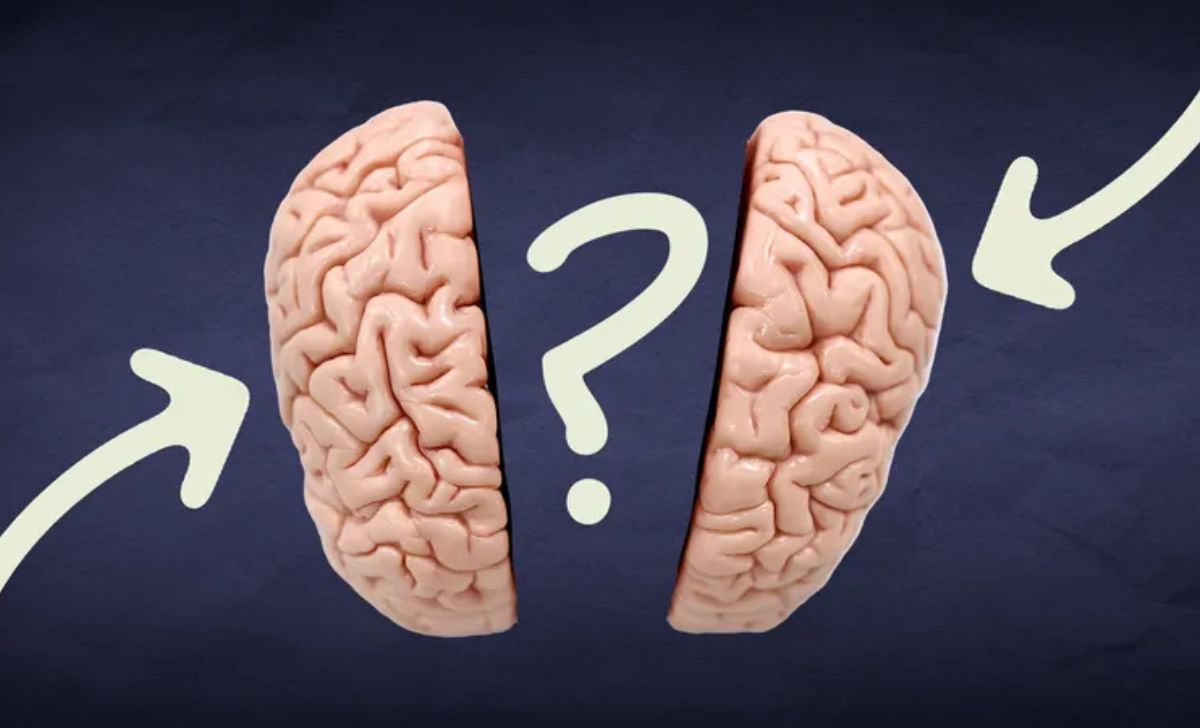
Behold the human brain—an organ with a fascinating, lumpy landscape split into two distinct hemispheres. For decades, this division has inspired one of the most popular ideas in psychology: that the left brain is responsible for logic while the right brain governs creativity. It sounds neat, almost poetic—but as appealing as this idea is, it’s simply not true. The truth behind the left brain–right brain myth is far more nuanced, and modern neuroscience paints a very different picture of how our minds work.
The Origins of the Myth
The myth didn’t appear out of thin air. In the mid-1800s, French neurologist Paul Broca and German neurologist Carl Wernicke studied patients who had communication problems after brain injuries. Both scientists discovered that damage to specific areas in the left hemisphere affected language, leading to the belief that the left side of the brain controlled logical and linguistic abilities.
This finding captured the public imagination. Soon after, popular culture ran with the idea. Robert Louis Stevenson’s classic tale Dr. Jekyll and Mr. Hyde helped fuel the notion of two competing selves: a logical left brain versus an emotional right brain. Over time, this narrative became simplified and sensationalized until it solidified into the “left brain = logic, right brain = creativity” stereotype we know today.
What Science Actually Says
While it’s true that the brain has a left and right side, and that each side controls certain functions, the reality is much more complex. For example, the left hemisphere generally manages movement on the right side of the body, while the right hemisphere manages the left. Vision works in an even more fascinating way: each eye processes both left and right visual fields, with those signals crossing over to the opposite hemisphere. This system ensures that the brain uses both sides together to create a complete image of the world.
Some scientists suggest that this crossover system dates back to early evolution, providing animals with a survival advantage. If a predator approached from the left, the body could react faster by moving to the right. This shows that certain processes—like vision and movement—are indeed divided between hemispheres.
But when it comes to higher-level traits such as logic and creativity, the story changes. Patients who lost an entire hemisphere, or had their hemispheres surgically separated, continued to demonstrate a wide range of logical and creative abilities. This evidence directly challenged the myth of left-versus-right brain dominance.
The Half-Truth Behind Hemisphere Activity
Of course, scientists have discovered that certain cognitive functions are more active in one hemisphere than the other. For instance, language tends to be more localized in the left hemisphere, while attention often leans toward the right. But this doesn’t mean one hemisphere defines a person’s personality or abilities. Instead, these functions are distributed by systems rather than by individuals.
So while the left hemisphere may do “more work” in language processing, that doesn’t mean someone is “left-brained.” Similarly, while certain tasks may activate one side more, the brain constantly works as a whole.
Why the Myth Persists
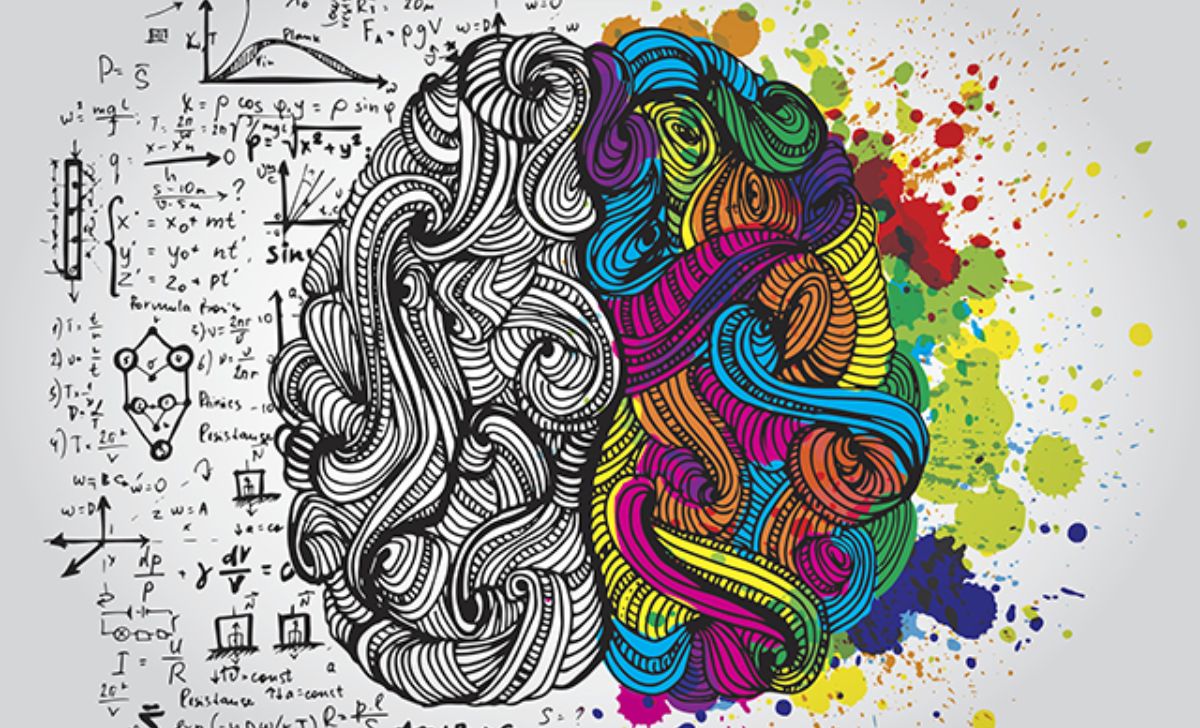
Part of the appeal of the left brain–right brain myth is its simplicity. It offers an easy way to categorize people: “You’re analytical, so you must be left-brained” or “You’re artistic, so you must be right-brained.” This narrative is catchy, marketable, and has even been used in self-help books, personality tests, and classroom settings.
But the truth is that human thought can’t be divided so neatly. Complex math problems often require bursts of creativity, while great works of art often rely on logical structure and planning. Creativity and logic aren’t opposites—they’re intertwined processes that demand the whole brain.
The Whole Brain at Work
Modern neuroscience confirms that almost every meaningful human activity—whether painting a masterpiece, solving an equation, or playing an instrument—lights up multiple regions across both hemispheres. Logic and creativity are not walled off on opposite sides but are deeply interconnected.
So the next time you hear someone claim they’re “more right-brained” or “more left-brained,” you’ll know better. The truth is that our brains are far too complex to be reduced to a catchy dichotomy.
Final Thoughts
The myth of the left brain versus right brain may be persistent, but it doesn’t hold up under scientific scrutiny. While some functions show hemisphere specialization, creativity and logic are not split between sides. Instead, they are the product of the entire brain working in harmony. By letting go of the myth, we can appreciate the brain for what it truly is: a remarkable, interconnected organ capable of both reason and imagination—without needing to choose sides.