
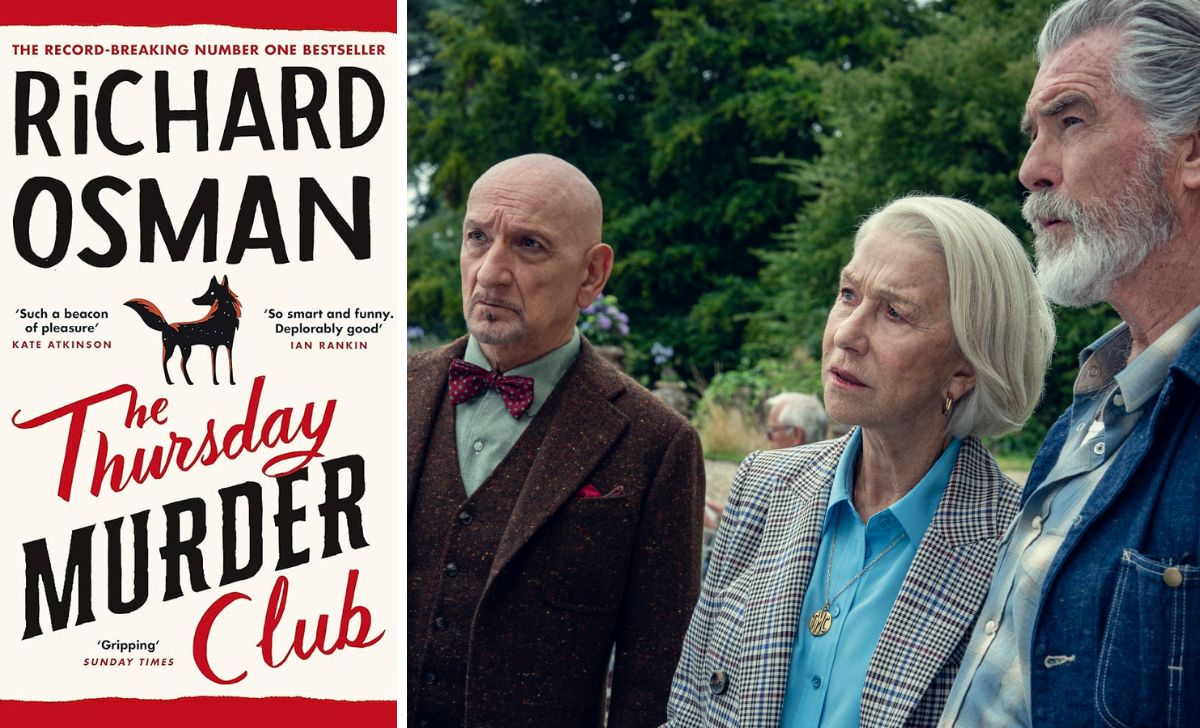
Richard Osman’s smash-hit debut, The Thursday Murder Club, has made the leap from page to screen. Five years after the novel became a UK phenomenon and drew interest from Steven Spielberg’s Amblin Entertainment, Netflix has released a feature adaptation directed by Chris Columbus. Known for Home Alone, Mrs. Doubtfire, and the first two Harry Potter films, Columbus returns to the streamer after The Christmas Chronicles: Part Two—this time trading holiday magic for cozy British crime.
Plot: Four Retirees, One Real Murder
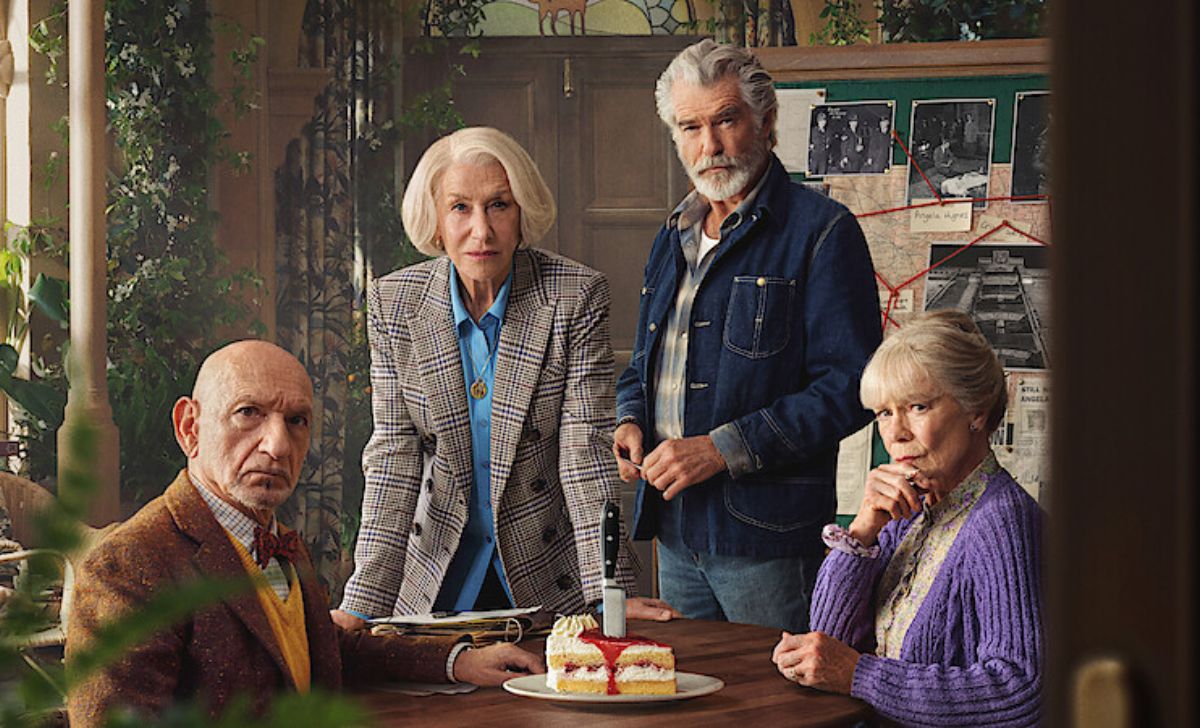
Set in the upmarket retirement community of Cooper’s Chase, the story follows four sharp, mischievous residents who meet weekly to pore over old police files. The club includes Elizabeth (Helen Mirren), whose past remains intentionally murky; Ron (Pierce Brosnan), a twice-divorced former union firebrand; Ibrahim (Ben Kingsley), a retired psychiatrist with a precise mind; and Joyce (Celia Imrie), a nurse newly arrived at the village. Their hobby turns urgent when a fresh murder lands on their doorstep, tangling them in a dispute between property co-owners Tony Curran (Geoff Bell) and Ian Ventham (David Tennant).
As the quartet tumbles into a real whodunit, they enlist PC Donna de Freitas (Naomi Ackie) and keep butting heads with DCI Chris Hudson (Daniel Mays). Parallel to the present-day case, the club peels back layers of a decades-old mystery from the 1970s involving Peter Mercer and the suspicious death of his girlfriend—an unsolved puzzle that once consumed a founding member of the Thursday gatherings.
Cast: Mirren, Brosnan, Kingsley, Imrie—and a Scene-Stealing Turn
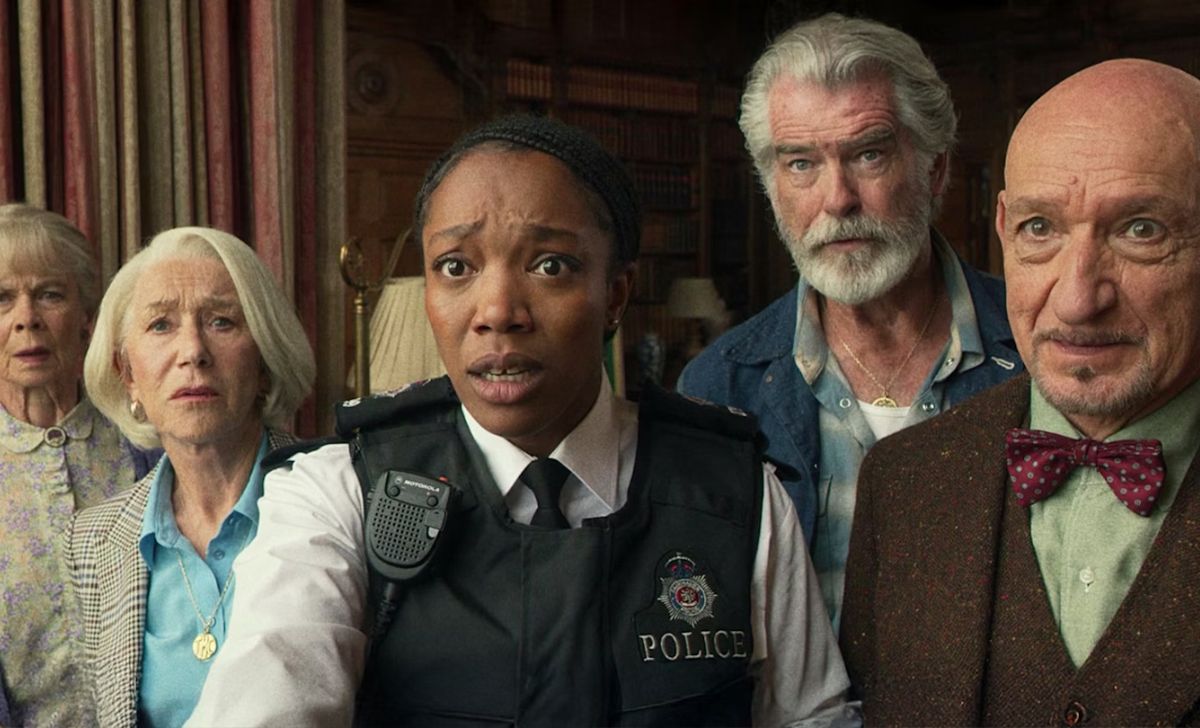
The casting leans hard into charm and chemistry. Mirren and Imrie play off each other with wry finesse, while Brosnan and Kingsley find comic notes in the ways their characters outfox officious authority. On the periphery, Tom Ellis stands out as Ron’s son Jason, a faded boxing champion trying to parlay notoriety into reality TV relevance. Ellis dials in a “mate-next-door” warmth that pairs nicely with Brosnan’s gruffness, and Henry Lloyd-Hughes brings a tightly coiled energy to Bogdan, a former employee caught up in Cooper’s Chase’s messier history.
Tone and Texture: Cozy Crime with British Sensibility
The mystery itself is intentionally straightforward—many viewers will clock the solution before the film spells it out. That simplicity is the point: it lets the movie foreground friendship, community, and the sly pleasures of teamwork. Columbus leans into ensemble rhythms, crafting light chuckles rather than broad comedy. Fans of Rosemary & Thyme or Only Murders in the Building’s gentler moments will feel at home; the film aims to be rewatchable comfort viewing rather than a brain-twisting puzzle box.
Craft: Polished, Pacey, and Handsomely Mounted
Katy Brand and Suzanne Heathcote’s screenplay keeps character beats front and center while stitching together parallel investigations. Behind the camera, Columbus sprinkles affectionate nods to classic mystery tropes without turning the movie into parody. Don Burgess’s cinematography contrasts lush exteriors and cozy interiors; Dan Zimmerman’s editing keeps the pace brisk without rushing past key reveals; and James Merifield’s production design wraps Cooper’s Chase in a warm, lived-in sheen. The result feels familiar in a good way—like a fresh entry in a long-loved tradition of British whodunits.
What Works
- The ensemble: Mirren, Brosnan, Kingsley, and Imrie play to each other’s strengths, delivering the quietly funny, humane notes that make cozy crime tick.
- Character-first storytelling: By keeping the plotting clear, the film gives viewers space to invest in relationships, not just red strings and corkboards.
- Age on screen: The movie treats its older leads as capable, wily protagonists whose life experience is a superpower, not a footnote.
Where It Wobbles
Not everyone is sold. Early reactions online suggest a split: some book fans feel the film trims away the novels’ heart and humor, while some newcomers find the opening act tentative before the movie clicks into a more confident groove. With a cast this stacked, a few viewers also wished for performances that lingered longer in memory. The counterpoint: others find the film charming, easy to settle into, and exactly the kind of well-cast comfort watch Netflix rarely nails.
Spoiler Zone: The Big Reveals Explained
Spoilers ahead.
The present-day murder pulls the club into the long-standing feud between retirement-home co-owners Tony Curran and Ian Ventham. When Curran turns up dead, Bogdan admits to Elizabeth that he killed him—but in self-defense during a fight after Bogdan went to retrieve his passport. Amid the escalating legal and financial chaos, Ventham also ends up dead, tightening the noose around Cooper’s Chase and pushing the club back toward their original cold case.
That older file—the 1970s case involving Peter Mercer—connects to the club’s origins. Elizabeth notices that her friend Penny, a former officer and one of the founding members, looks furious in every old crime-scene photo, suggesting she never bought the official story. Penny now lies comatose in hospice, cared for by her husband John. When Elizabeth and the club press John, he opens up about the truth he and Penny carried for years. In the film’s somber final movement, John and Penny choose to end their lives together using fentanyl, leaving the club to reckon with the cost of secrets and the tenderness that often motivates them. In the aftermath, Joyce is welcomed as a full-fledged member of the Thursday Murder Club.
Columbus’s Fit for the Material
On paper, Columbus—a filmmaker associated with big-hearted family fare—might seem an odd pairing for a quaint British mystery. In practice, his knack for ensemble dynamics and gentle humor turns out to be the right match. He stages capers with clarity, favors character reaction over plot pyrotechnics, and knows how to make a place like Cooper’s Chase feel like a community you’d actually want to visit again next week.
Will Fans of the Book Be Happy?
If you loved the novels for their warmth and the feeling of spending time with people you like, the movie aims for that bullseye. It does streamline and sand down edges; purists may miss certain textures from the page. But the adaptation respects the heart of Osman’s premise: friendship as the secret weapon, and curiosity as a way of staying gloriously alive.
Should You Watch It?
If you’re in the mood for a comfortingly constructed whodunit—with marquee names, winking homages to classic mystery grammar, and the promise of more adventures—queue it up. If you want a twist-heavy thriller that resets your brain chemistry, this isn’t that. The Thursday Murder Club stakes its claim as a gentle, character-forward mystery that treats its “twilight years” heroes as the sharpest people in the room.
The Bottom Line
The Thursday Murder Club doesn’t try to reinvent the genre; it tries to remind you why you like it. Between a warm ensemble, polished craft, and a story that privileges connection over convolution, it lands as an inviting watch. And should Netflix greenlight sequels, the film leaves you eager to see the club reconvene—same time next Thursday.
Now streaming on Netflix (released August 28).