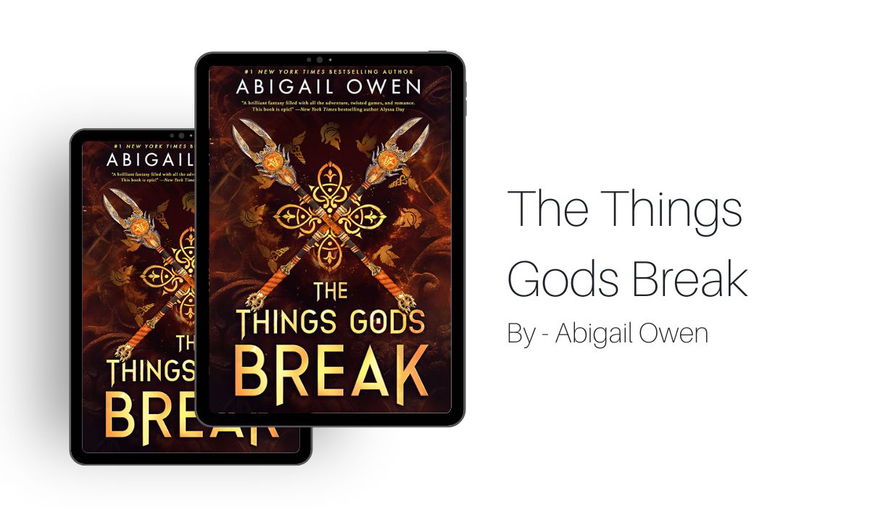
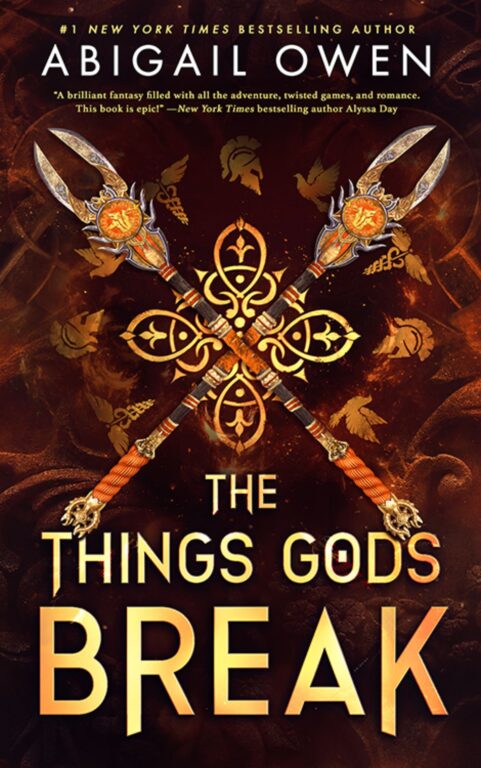
The Things Gods Break is the second instalment in Abigail Owen’s The Crucible series, and it brings readers right back into the turmoil left after the events of the first book. If The Games Gods Play left you with questions or emotional shock, this continuation heightens every element — danger, mythology, secrets, romance, and the looming threat of divine collapse.
Published in 2025, this novel returns to a myth-infused world where gods are flawed, time is unstable, and memory itself becomes both a burden and a weapon. Owen once again delivers a story rich in emotion, conflict, and fast-paced twists.
What This Book Offers (Tone & Style)
Abigail Owen’s writing maintains a cinematic sharpness — scenes unfold briskly, dialogue has bite, and every emotional moment feels carefully placed. This book blends dark fantasy with romantasy, and the emotional stakes are high.
Readers and reviewers consistently describe the novel as packed with tension, emotion, and surprising revelations. While many loved its intensity, some also noted that its pace and density can feel overwhelming — a deliberate choice that suits its fractured-time narrative.
Plot (Spoiler-Aware Overview)
The story picks up immediately after book one. Lyra and her ally Boone are trapped in Tartarus — not a simple underground prison, but a place where time shatters and re-forms unpredictably.
While the mortal world hangs on the edge of collapse, Lyra is dragged through distorted timelines that reveal:
- Hades’ past and the painful events that shaped him
- Ancient divine conflicts
- The hidden truths of Lyra’s fragmented childhood
- Secrets capable of reshaping the fate of gods and mortals
The novel blends present-moment danger with deeply affecting glimpses into history and memory. As Lyra attempts to escape Tartarus and stop an impending catastrophe, the revelations she uncovers intensify the emotional complexity of every decision.
The plot is fast, twist-filled, and layered — designed to keep readers constantly anticipating the next revelation.
Characters — Depth, Emotion, and Purpose
Lyra
Lyra remains the emotional anchor of the series. She is sharp, determined, and often sarcastic, but this book allows her vulnerabilities to surface. Moments of grief, longing, and confusion make her feel grounded and real.
Hades
Hades is one of the standout characters in this instalment. Instead of being portrayed purely as a mythic deity, he receives a more humanized treatment. His trauma, motivations, and emotional depth give him dimension far beyond traditional depictions.
Boone & Supporting Characters
Boone acts as a grounding presence and moral counterpoint. Other secondary characters contribute context, tension, and emotional weight, helping shape Lyra’s arc and the broader mythology.
Many readers found the character work to be one of the book’s strongest qualities, as it balances high-stakes fantasy with intimate personal conflict.
Structure, Pacing, and Worldbuilding
This book is designed for momentum. The narrative jumps into action quickly, then interrupts itself with time-shifted scenes that reveal crucial information.
This structure is intentionally fragmented — mirroring the instability of Tartarus and the emotional chaos faced by the characters.
Some readers enjoy this puzzle-like storytelling, while others may find the time jumps disorienting.
The worldbuilding stands out because it’s embedded within emotion and conflict rather than long explanations. Gods, prisons, time fractures, and mythic rules are introduced as consequences of character choices rather than detached lore.
What Stands Out (Strengths)
1. Emotional Weight
The book delivers strong emotional punches. Themes of trauma, love, sacrifice, and survival are handled with sincerity. Moments of loss or revelation feel earned and genuinely affecting.
2. Unique Mythological Approach
Instead of retelling established myths, Owen reimagines them—giving new shape to gods and their origins by grounding them in vulnerability and history.
3. Compelling Twists
The story contains several major twists that feel natural yet surprising. Many of these recontextualize earlier events in satisfying ways.
Where Some Readers May Struggle
1. Non-linear Structure
The fragmented timeline may confuse readers who prefer straightforward storytelling. Scenes often transition abruptly as time bends and breaks.
2. Uneven Pacing
The flow shifts between intense action and slow emotional revelations, which can feel inconsistent depending on reader preference.
3. Heavy Emotional Themes
While beautifully written, the story leans into trauma, grief, and moral conflict. Readers looking for something lighter may find the tone heavier than expected.
Themes and Takeaways
At its core, The Things Gods Break is about:
- How the past shapes the present
- Whether broken things — gods, relationships, timelines — can truly be restored
- The cost of love
- The consequences of divine and mortal decisions
- The burden and power of memory
The book suggests that knowing the truth can heal, but it can also trap. The gods of Owen’s world are held accountable for their actions, making them feel more human than their mythology would imply.
Final Verdict
The Things Gods Break is an emotionally rich, high-stakes continuation of The Crucible series. Its fragmented structure, bold twists, and mythological complexity make it a compelling read for fans of romantasy, character-driven fantasy, and stories where the emotional stakes are as intense as the action.
Readers looking for a fast, twisty, emotionally resonant fantasy will likely love this instalment. Those who prefer linear narratives may find it challenging — but for many, the payoff is well worth the journey.
This book succeeds because it is ambitious, intimate, and willing to break its characters open to show what lies underneath.