
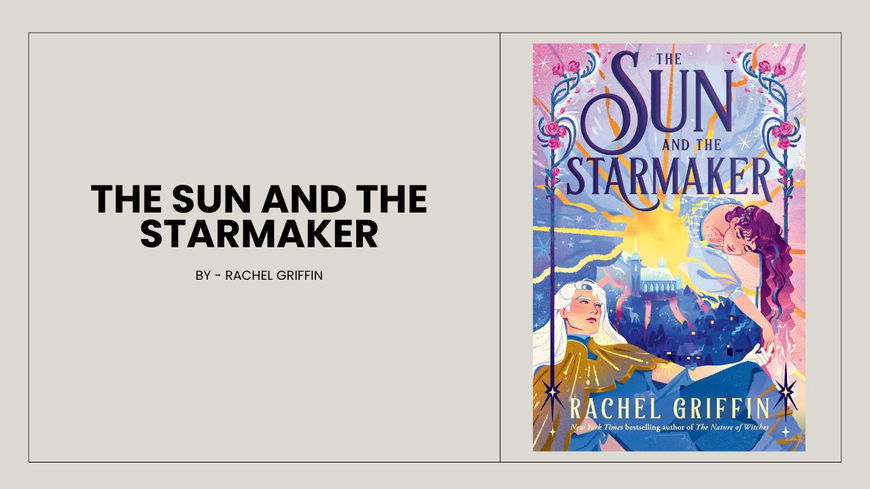
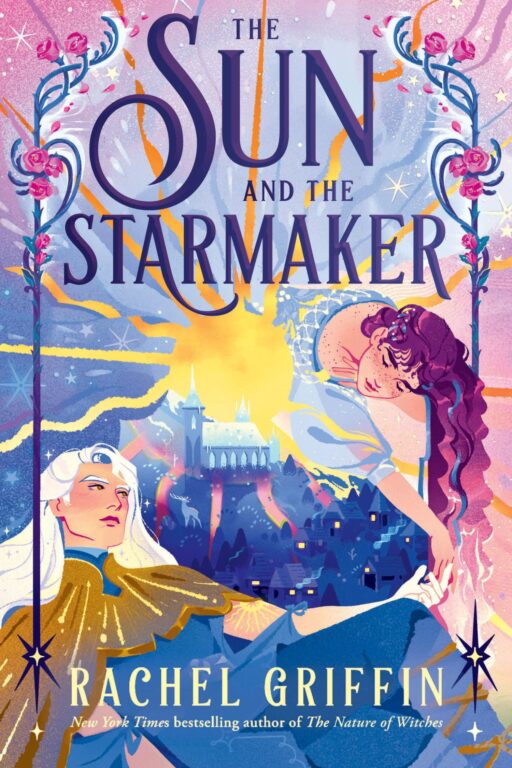
Right from the first pages, The Sun and the Starmaker sweeps you into a rugged, snow-covered world where survival hinges on an almost mythical force. In the remote mountain village of Reverie, sunlight doesn’t reliably rise each day — instead, villagers depend on the magical work of a figure known only as the Starmaker, who brings warmth and light into their days. This fairy-tale backdrop feels alive and tactile, from the whispering frost in the woods to the towering glaciers that define Aurora’s home. Griffin’s worldbuilding is both whimsical and grounded, the kind that makes you want to curl up with a cup of tea and get lost in its snowy elegance.
🧚♀️ Aurora Finch — A Hero Born from Loss and Love
Aurora is the heart of this story. Introduced as a young woman whose life is already shaped by the icy world around her, she’s full of stubborn strength and deep emotional currents. Instead of fading into the background, she brings a fierce inner life to the plot — whether she’s confronting her own magic or navigating complicated feelings toward her family and future.
As the book unfolds, Aurora’s transformation from a hopeful villager into someone capable of wielding sunlight itself feels intimate and deeply affecting. Her journey isn’t just about discovering power; it’s about discovering who she is when the light dims and hope feels fragile.
❄️ The Starmaker — More Than Just a Mysterious Mentor
If the Starmaker were written by any ordinary storyteller, he might have been a one-dimensional “grumpy mentor.” But Griffin infuses him with layers: centuries of loneliness, the heavy weight of responsibility, and a vulnerability that slowly reveals itself through small gestures and quiet moments.
The shift from antagonism to affection between Aurora and the Starmaker never feels rushed. It unfolds gradually, like dawn breaking over a frozen peak. This emotional evolution lies at the soul of the novel, offering moments that make you smile, sigh, and occasionally ache.
💔 Themes That Stick With You
This isn’t just a fairy-tale romance dressed in snow and stars; it’s a story about grief, identity, and what it means to keep going when everything feels uncertain. Griffin doesn’t shy away from hard emotional truths, even in a fantasy setting.
The relationships Aurora has — with family, with her past, and with the Starmaker — are written with emotional depth. The story explores how love can be both a comfort and a risk, how power can be both a gift and a burden, and how light sometimes comes from the most unexpected places.
⚖️ What Works — and Where It Slows Down
This is very much a character-driven story. Readers expecting constant action or high-stakes battles in every chapter might find the pacing gentle at times. But that quieter rhythm is also part of its charm.
The slower moments allow the emotional arcs to breathe. Instead of rushing from conflict to conflict, the novel lingers in conversations, silences, and inner reflections. The result feels like a winter embrace — cozy, thoughtful, and quietly powerful.
✨ Final Thoughts
The Sun and the Starmaker isn’t just another fantasy novel — it feels like a luminous fairy tale about hope, resilience, and the courage to love despite fear. Rachel Griffin crafts a world where magic feels intimate rather than grandiose, and where the emotional stakes matter just as much as the fantastical ones.
If you’re drawn to atmospheric fantasy, slow-burn romance, and stories that explore light in both literal and emotional ways, this book is likely to leave a lasting impression long after you turn the final page.