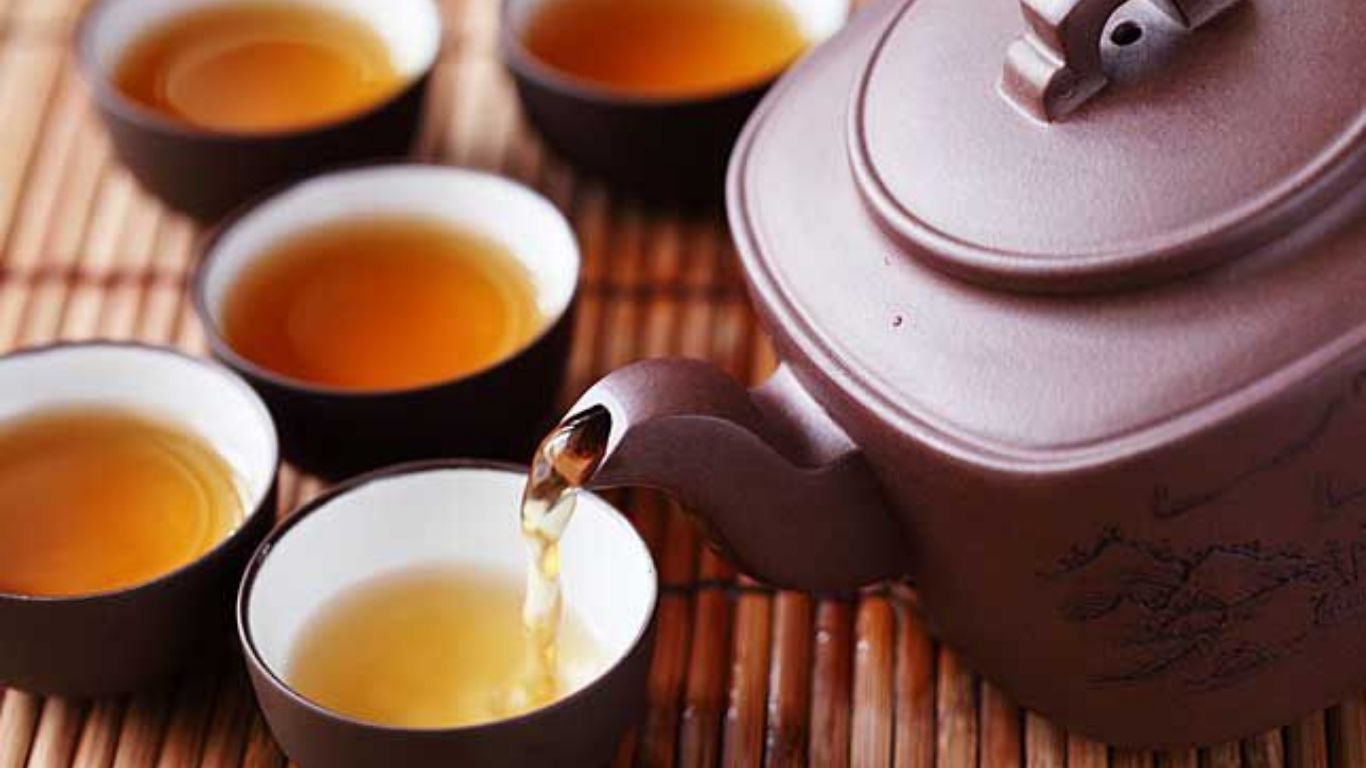
Tea is far more than a comforting hot drink; it is a plant that has shaped myths, empires, trade routes, and even wars over thousands of years. From the legend of a poisoned farmer in ancient China to the rise of British tea culture and the Opium Wars, the story of tea is a story of how a simple leaf changed the world.
Shennong and the legend of tea
According to an old Chinese legend, the discovery of tea begins with Shennong, the divine farmer and mythical inventor of agriculture. Exhausted after a long day wandering the forests in search of edible plants, he is said to have accidentally poisoned himself 72 times in a single day. Just as the poisons threatened to end his life, a leaf drifted into his mouth, and when he chewed it, the bitterness revived him and drove out the toxins.
That leaf, the story says, was tea. The tale does not hold up as medical fact—tea does not actually cure poisoning—but the legend tells something more important about how ancient China saw this plant. Tea in this story is not just a beverage; it is a symbol of vitality, knowledge of nature, and the delicate line between what heals and what harms.
Tea in ancient China as food
Archaeology pushes the story of tea even deeper into the past than the myth suggests. Evidence indicates that tea plants were being cultivated in China as early as about 6,000 years ago, more than a millennium before the Great Pyramids of Giza were built. This early tea, however, barely resembled the drink poured from modern kettles and teapots.
For a long time, tea was not primarily a drink at all. The leaves were treated more like a leafy green vegetable: eaten directly, boiled with other ingredients, or cooked together with grain porridges. In that era, people valued tea for its flavor, aroma, and stimulating effect, but they were still some distance away from the idea of steeping loose leaves in hot water to sip as a stand‑alone beverage.
From food to drink: a turning point
Tea began its transformation from food to drink roughly 1,500 years ago, when people realized that a careful balance of heat and moisture coaxed out far more complex flavors from the leaves. Instead of chewing leaves or folding them into porridge, they started to boil or infuse them in water, experimenting with roasting, steaming, and drying along the way.
These experiments slowly turned tea into an art. Different preparation methods brought out different aromas and textures, and drinkers began to notice subtle differences between leaves grown in different regions or processed in different ways. Over time, tea shifted from something functional and nourishing to something people sought out for pleasure, ritual, and reflection.
The rise of powdered tea and matcha
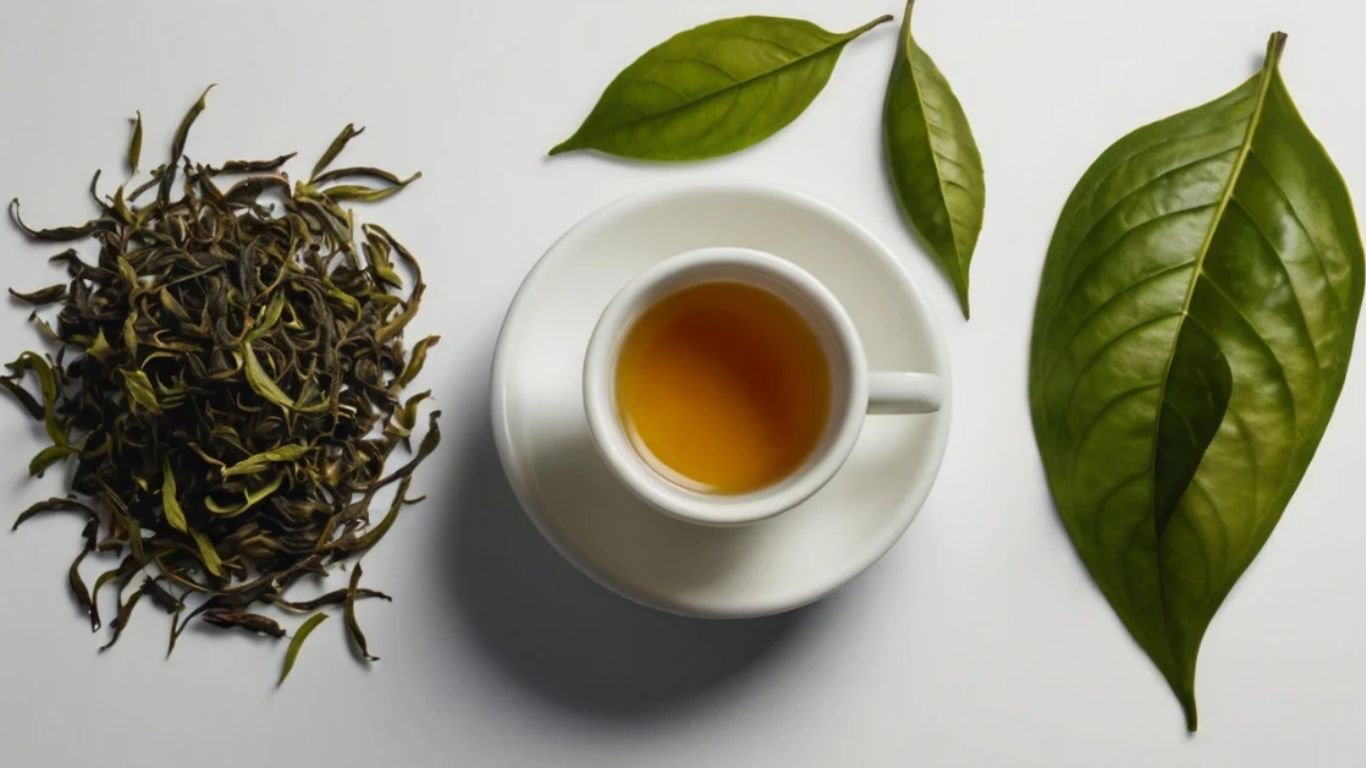
After centuries of improvisation, China settled on an influential standard method: tea leaves were processed with heat, compressed into solid cakes, and later ground into a fine powder that could be whisked into hot water. This powdered preparation was called “mo cha,” a term that eventually became known to the world as matcha.
Powdered tea opened the door to a new kind of experience. Whisking the powder into water created a creamy foam, and hosts and guests began to treat the surface of the drink as a canvas for fleeting artistic gestures. Tea masters and artists drew intricate patterns in the foam, a practice that feels strikingly familiar today to anyone who has admired latte art in a modern café.
Tea as culture, poetry, and philosophy
By the time matcha culture matured, tea had become a central symbol of Chinese literati life. Scholars and poets wrote entire essays and books praising its virtues and describing its ideal preparation. Emperors claimed favorite teas, prized particular regions, and sponsored gardens and tea farms to secure a steady supply of their preferred leaves.
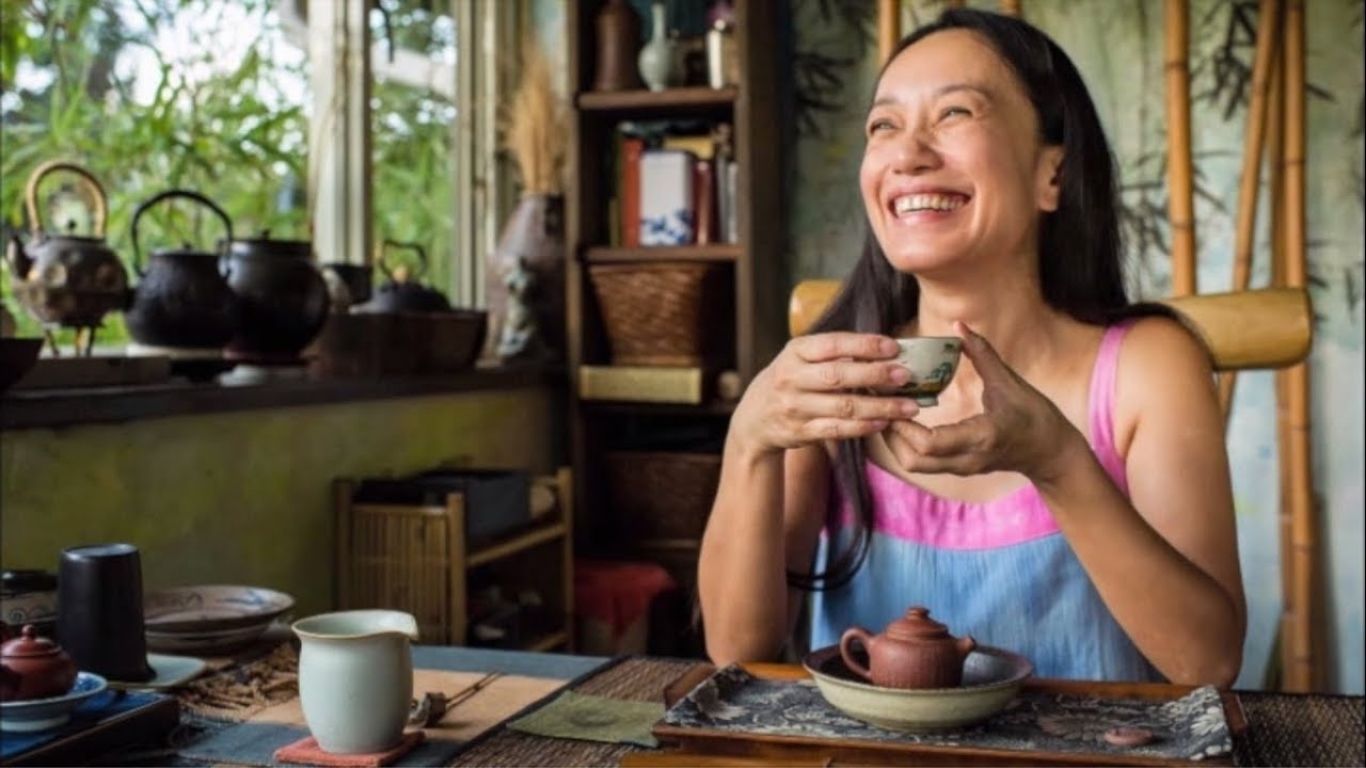
Tea gatherings evolved into occasions for poetry, calligraphy, and philosophical conversation, with the brewing and drinking itself carefully choreographed. The way water was heated, the order in which cups were filled, even the shape of the vessels became part of a larger aesthetic language. In these settings, tea was no longer a mere drink; it was a medium for taste, conversation, and shared contemplation.
From China to Japan: the birth of the tea ceremony
Tea did not stay confined to China. In the 9th century, during the Tang Dynasty, a Japanese monk returned home carrying tea seeds or plants, planting the first roots of Japanese tea culture. At first, tea in Japan remained associated with monks and temples, valued for its ability to support long hours of meditation.
Over centuries, however, the Japanese developed their own distinctive practices around tea preparation and serving. These practices gradually crystallized into what is now known as the Japanese tea ceremony, or chanoyu. This ritual places extraordinary emphasis on harmony, respect, purity, and tranquility, turning each preparation into a carefully staged meeting where every movement, vessel, and gesture carries meaning.
Ming Dynasty: loose leaf tea takes over
Back in China, the 14th century brought another dramatic shift. During the Ming Dynasty, the emperor decided that pressed tea cakes were no longer the ideal standard and promoted loose leaf tea instead. This change encouraged growers and craftsmen to focus more on the shape, size, and integrity of individual leaves.
Loose leaf tea altered both everyday habits and elite tastes. Rather than grinding cakes into powder, drinkers could now steep the full leaves directly, appreciating how they unfurled in water and released nuanced layers of flavor. This style paved the way for many of the classic green, oolong, black, and white teas that dominate modern shelves, all descended from the same tea plant but processed differently.
Tea, silk, and porcelain: China’s global leverage
As loose leaf tea spread, China held an extraordinary advantage. Virtually all of the world’s tea trees grew within its borders, and Chinese producers controlled the knowledge of how to cultivate and process the leaves. Tea joined porcelain and silk as one of three essential Chinese export goods, forming the backbone of a powerful trade portfolio.
This monopoly translated into economic and political power. As tea drinking became fashionable abroad, other countries had little choice but to buy from Chinese merchants on Chinese terms. The plant may have been small and delicate, but the trade built around it helped sustain dynasties and finance imperial projects.
Tea sails west: Dutch traders and European curiosity
Tea’s journey to Europe began in earnest in the early 1600s. Dutch merchants, particularly those working for the Dutch East India Company, brought the first significant shipments of Chinese tea to Amsterdam around 1610. From there, the habit of drinking tea slowly spread across neighboring regions, starting as a luxury reserved for the wealthy.
By 1700, demand had skyrocketed. Tea in Europe could sell for ten times the price of coffee, a mark of both its status and the tight control over its supply. Yet despite this soaring European thirst, the plant itself still grew only in China, keeping the trade routes long, the prices high, and the politics delicate.
Catherine of Braganza and English tea culture
Tea’s fortunes in Britain owe much to a Portuguese princess. When Catherine of Braganza married King Charles II in 1661–1662, she brought with her a strong personal habit of tea drinking, already fashionable in Portugal. At first, tea in England was rare and expensive, known mostly as a kind of exotic medicine or curiosity.
Catherine’s visible enjoyment of tea at court turned this oddity into a trend. Aristocrats imitated her daily tea rituals, and soon tea became a symbol of refinement and modern taste among the English elite. Over time, this enthusiasm gave rise to the traditions of afternoon tea and tea houses, deeply embedding the drink into British social life and identity.
The clipper ships and the race for tea
As British and European demand grew, trading companies had strong incentives to move tea faster. The result was a new kind of vessel: the clipper ship, engineered for speed rather than pure cargo capacity. These sleek sailing ships were built to slice through the oceans, carrying tea from Chinese ports to European docks in record time.
Speed mattered for more than prestige. The first ships to arrive with fresh tea could command higher prices, and the merchants behind them could secure better contracts and stronger reputations. The annual races between clippers became legendary, a reminder that even a gentle cup of tea was tied to fierce commercial competition.
Silver, opium, and the First Opium War
Initially, Britain paid for Chinese tea with silver, shipping precious metal east in return for chests of leaves. Over time, this flow of silver became a serious concern in London, as tea imports drained wealth while Britain struggled to balance the trade.
British officials and traders looked for an alternative and settled on a deeply destructive solution: opium. They grew opium poppies extensively in British‑controlled India, then smuggled the drug into China in exchange for silver, which in turn could be used to pay for tea. The arrangement filled British teacups but fueled a devastating wave of addiction and social disruption within China.
Chinese authorities eventually cracked down. In 1839, an imperial official ordered the seizure and destruction of large British opium shipments as a direct challenge to foreign influence and the opium trade. Britain responded with military force, leading to the First Opium War, which raged along the Chinese coast until 1842 and ended with the Qing Dynasty’s defeat.
Hong Kong and a wounded empire
The treaty that ended the war forced China to make painful concessions. The Qing government ceded the port of Hong Kong to Britain and agreed to reopen trade on terms that favored British interests. These conditions weakened China’s control over its own markets, including the tea trade it had dominated for centuries.
The consequences stretched far beyond economics. The war and subsequent treaties eroded China’s global standing and contributed to a period often remembered as a “century of humiliation,” marked by foreign interference and internal upheaval. Tea, once a source of cultural pride and economic strength, had become entangled with a humiliating chapter in national history.
Robert Fortune and the great tea heist
British dependence on Chinese tea still posed a strategic risk, and the British East India Company wanted to break China’s production monopoly. To do this, they turned to a Scottish botanist named Robert Fortune and sent him on a covert mission to China. Disguised in Chinese clothing and speaking Mandarin, Fortune traveled into mountainous tea regions that were officially off‑limits to foreigners.
His task was bold and dangerous: obtain living tea plants, seeds, and the knowledge needed to cultivate and process them elsewhere. He managed to collect thousands of seedlings and recruited experienced Chinese tea workers, then shipped them using special Wardian cases—portable glass greenhouses—to British territory in India, especially Darjeeling. In total, Fortune’s efforts are estimated to have moved around 20,000 plants and seedlings, along with critical techniques that allowed tea production to flourish outside China.
Tea takes root in India and beyond
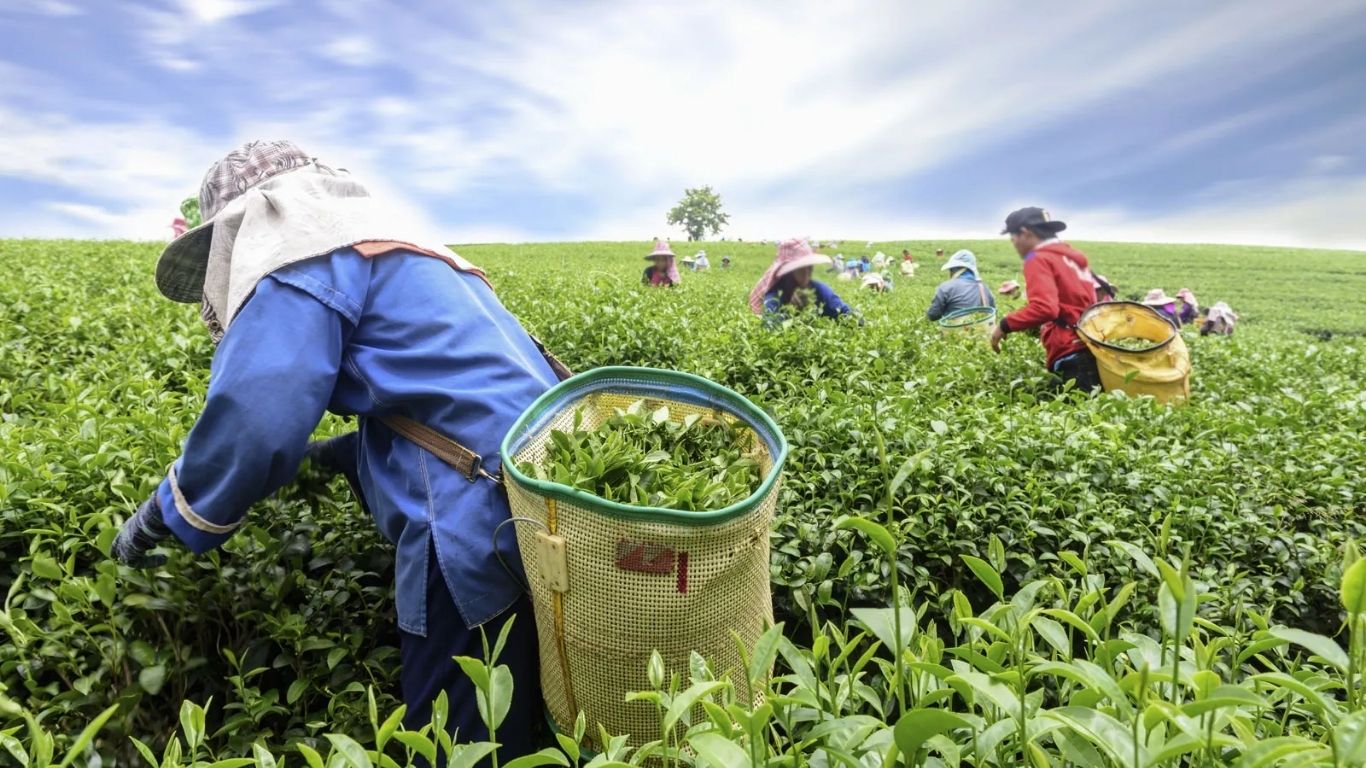
Not all of the transplanted Chinese tea plants thrived in India’s climate, but the imported knowledge of cultivation and processing proved invaluable. Combined with local tea varieties, particularly those in Assam, this expertise turned regions like Darjeeling into major tea‑producing centers known worldwide today.
As plantations expanded in India and later in places like Ceylon (now Sri Lanka), China’s stranglehold on global tea supply loosened. British‑controlled territories started exporting huge quantities of tea back to Europe, reshaping trade flows and accelerating the spread of tea as an everyday commodity rather than an elite luxury. The drink that had once symbolized Chinese imperial power now underpinned a global industry driven largely by European empires.
A global drink with local flavors
Today, tea is the second most consumed beverage on Earth after water, woven into daily routines and rituals across continents. Yet the beverage takes on very different personalities depending on the culture, climate, and ingredients surrounding it.
In Turkey, strong black tea from regions like Rize is often served in small tulip‑shaped glasses, usually sweetened with plenty of sugar and shared in social settings throughout the day. In Tibet and parts of the Himalayas, tea can appear as a hearty, salty drink enriched with yak butter and salt, designed to provide warmth and energy in harsh high‑altitude environments. From British afternoon tea with milk and biscuits to Moroccan mint tea poured from a height, each tradition translates the same plant into its own language.
One plant, countless stories
For all its variety, nearly all traditional teas—green, black, oolong, white, and others—come from the same species, Camellia sinensis, first domesticated in ancient China. What differs is how the leaves are grown, harvested, and processed, and how each culture chooses to brew and share them.
Looking back across legends, wars, secret missions, and quiet ceremonies, tea emerges as more than just a comforting cup at the end of a long day. It is a thread connecting farmers, sailors, monks, merchants, emperors, and everyday drinkers through thousands of years of shared habit and evolving taste. Every time a kettle boils or a pot is passed around a table, it quietly continues a story that began with a leaf drifting into a tired farmer’s mouth and has been unfolding ever since.