
In the vast and vibrant pantheon of Hindu mythology, few stories highlight the balance of power and compassion as poignantly as the story of Goddess Annapurna. This powerful narrative brings together cosmic energy, divine ego, and earthly needs—ultimately reminding us that even the gods are bound to the rhythms of nourishment and sustenance.
The Divine Union of Shiva and Parvati
Shiva, the formidable lord of destruction, and Parvati, the goddess of fertility and transformation, shared a union unlike any other. Together, they embodied Ardhanarishvara—an inseparable blend of masculine and feminine, thought and action, destruction and renewal. It was a relationship on which the harmony of the cosmos depended.
While Shiva represented detachment and spiritual awakening, Parvati governed the material world. She nurtured the Earth, brought growth to crops, and fostered the emotional and physical bonds among all living beings. Their divine partnership was the backbone of universal balance.
Shiva’s Dismissal of the Material World
But even the most sacred bonds can face strain. Over time, Shiva grew dismissive of Parvati’s worldly responsibilities. He questioned the relevance of her nurturing duties and began to belittle her connection with the material realm.
To Shiva, everything tangible—food, wealth, pleasure—was simply māyā, or illusion. He believed Brahma, the Creator, had designed the material plane for entertainment, not necessity. In his eyes, spiritual enlightenment was the only reality worth pursuing, and everything else was a distraction.
Parvati had long tolerated these philosophical disagreements. But one day, when Shiva’s disregard became too much to bear, she chose to teach him a lesson that would shake even the heavens.
Parvati Withdraws Her Energy
Without warning, Parvati vanished. She removed her half of the divine energy that sustained the Earth. With her absence, life on Earth began to unravel.
The skies dimmed. Rivers dried up. Crops withered. The land became barren and brittle. Hunger clawed at humanity’s core. Parents helplessly watched their children suffer, while communities dissolved into silence and despair. No more feasts, no laughter, no shared joy—just aching stomachs and empty fields.
Even Lord Shiva, the ascetic who once dismissed the world’s needs, felt the overwhelming weight of emptiness. Despite all his cosmic power, he found himself longing—not just for food, but for the warmth and life that Parvati had provided all along.
The Birth of Annapurna
Witnessing the Earth plunge into ruin and moved by Shiva’s realization, Parvati transformed. She re-emerged in a new divine form—Annapurna, the Goddess of Food and Nourishment.
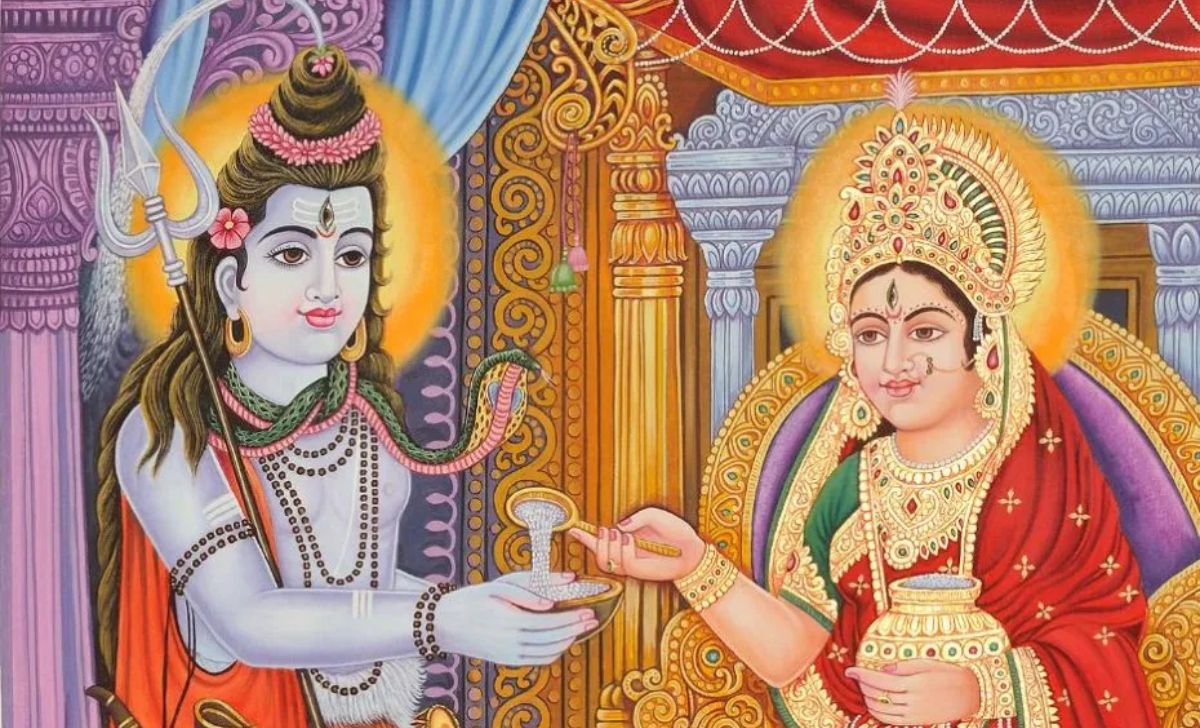
Clad in grace and compassion, Annapurna walked among the starving, cradling a golden bowl of porridge and wielding a jeweled ladle. Wherever she stepped, life sprang anew. Fertile lands returned. Rivers flowed again. Kitchens buzzed with activity, and people once again gathered in joy.
Her arrival brought more than just sustenance—it rekindled human connection and the spirit of community. People bowed in gratitude, praising her not only as the giver of food but as the nurturer of existence itself.
Annapurna in the City of Kashi
Legend has it that Annapurna first appeared in Kashi—the sacred city on the banks of the Ganges, also known as the Place of Freedom. There, she is said to have opened a grand kitchen, where she fed the hungry until no one remained unfed.
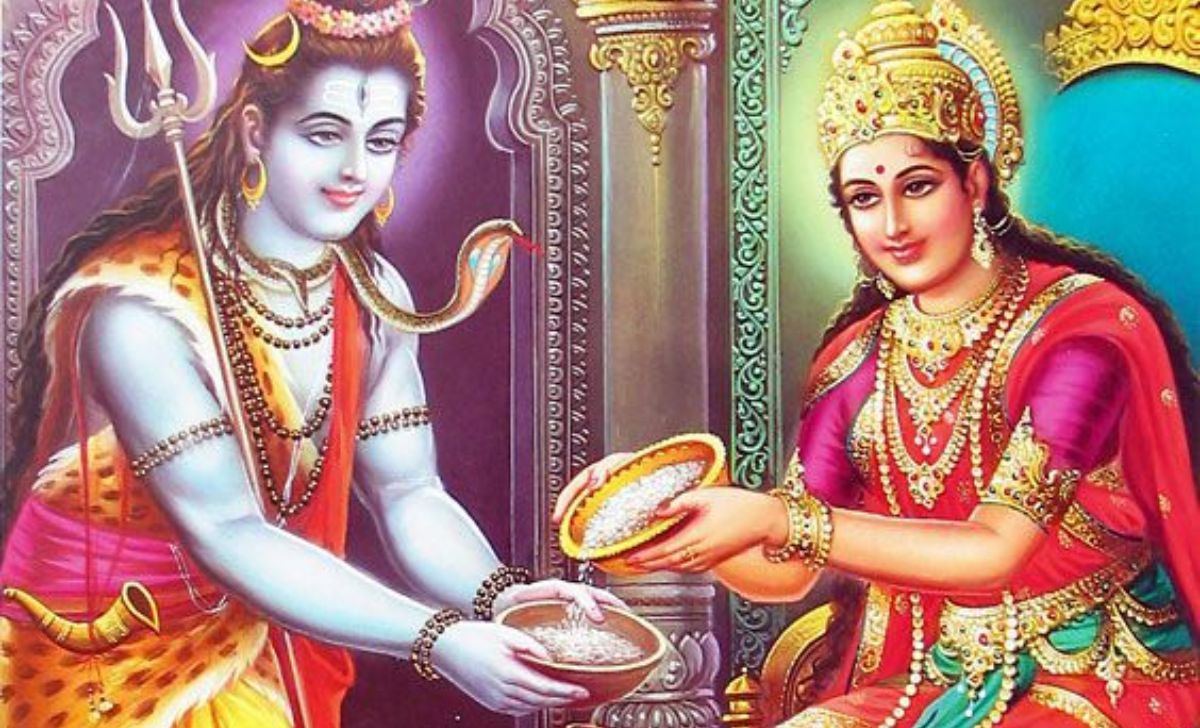
Her generosity didn’t stop with mortals. Even Lord Shiva, humbled and awakened by his experience, came to her—empty bowl in hand—seeking food and forgiveness.
It was a moment of divine humility: the great destroyer of the universe, kneeling before the goddess he had once underestimated. In this image, Annapurna holds the golden bowl in her left hand and forms the abhaya mudra—the gesture of protection and reassurance—with her right.
A Powerful Message Beyond Myth
This story isn’t just a tale of gods and goddesses—it is a reflection of life’s intricate balance. Annapurna’s form symbolizes a profound truth: the material world is not an illusion to be dismissed, but a sacred cycle that must be sustained.
From the act of feeding a hungry child to the communal joys of a shared meal, the physical world carries spiritual weight. And in nourishing others, we participate in the divine.