
For years, one of the biggest unanswered questions in the Star Wars universe has been what George Lucas originally planned for the sequel trilogy. When Lucas sold Lucasfilm to Disney in 2012, he didn’t walk away empty-handed—he left behind detailed ideas for Episodes VII, VIII, and IX. Yet when Disney launched its own sequel trilogy, those plans were largely set aside in favor of a new direction.
Now, more than a decade later, it appears that some of those long-forgotten concepts are finally finding their way back into the galaxy far, far away. The upcoming series Maul: Shadow Lord, set to release on April 6, is quietly reviving one of Lucas’ most ambitious ideas by placing Darth Maul back at the center of galactic power—and giving him a mysterious new protégé who echoes a character fans once thought would never exist on screen.
Darth Maul: From Fallen Sith to Shadow Emperor
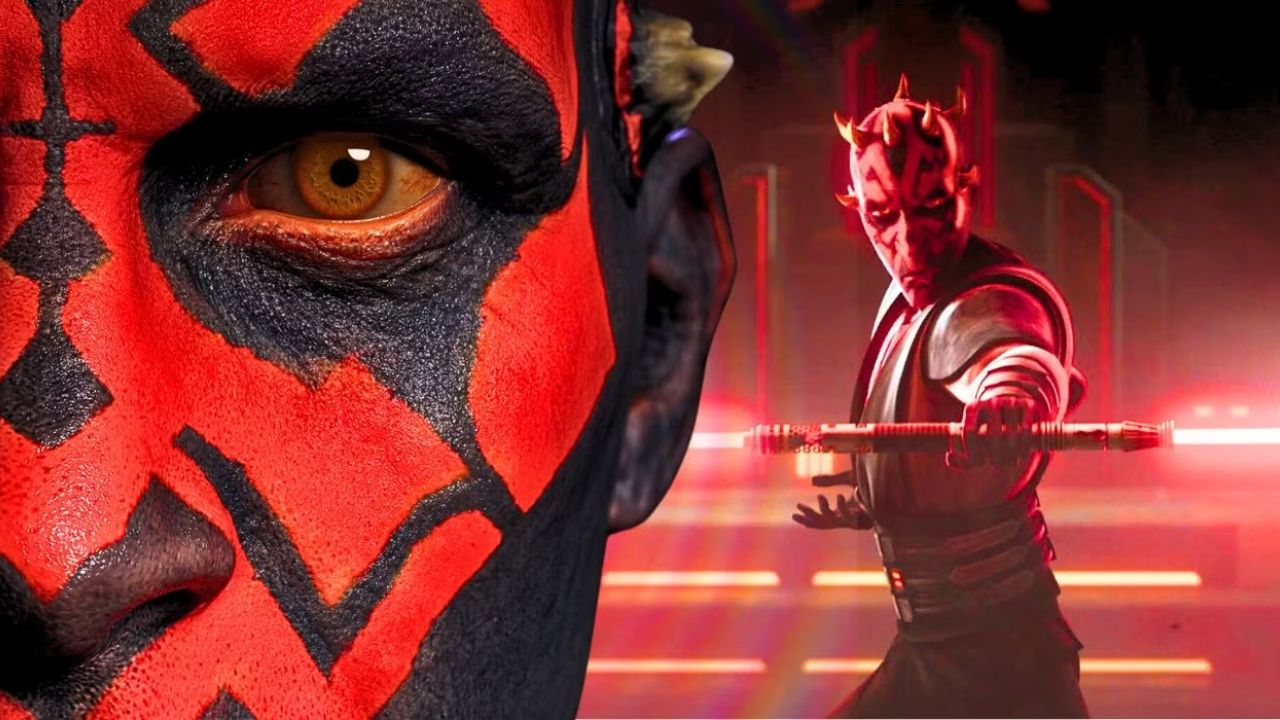
In Lucas’ unused sequel trilogy outline, Darth Maul was never meant to stay dead. Although he was cut down in The Phantom Menace, Lucas later reimagined Maul as a long-term villain whose power didn’t come from sitting on a throne, but from controlling the galaxy’s criminal underworld.
Rather than ruling openly as a Sith Lord, Maul would operate in secret, pulling the strings behind the scenes while chaos spread across the galaxy after the fall of the Empire. In this version of the story, Maul wasn’t the face of evil—he was its architect, much like Emperor Palpatine, but outside the traditional Sith hierarchy.
This idea never reached the big screen. Disney’s sequel trilogy chose a different path, ultimately reviving Palpatine and focusing on familiar legacy characters. But Maul’s abandoned storyline never truly vanished. It lived on in animation, comics, and fan discussions—until now.
The Return of a Forgotten Vision
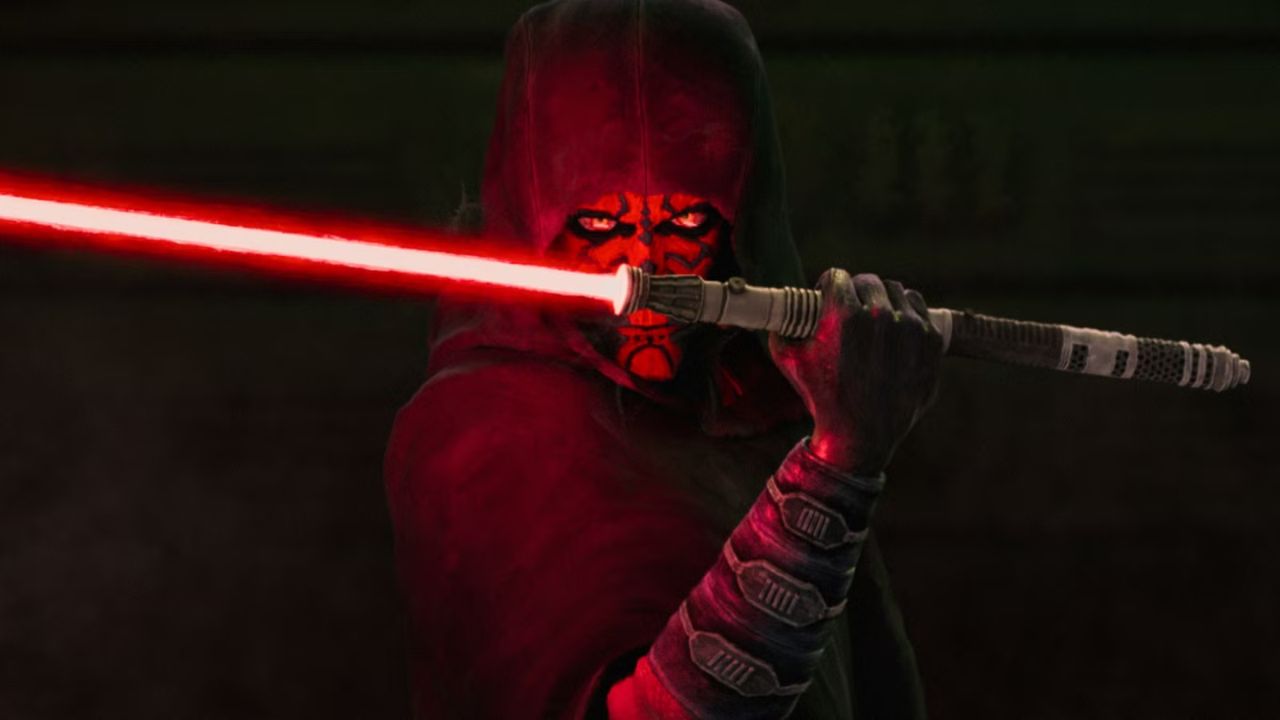
Maul: Shadow Lord picks up during the early days of the Empire and shows Maul rebuilding his power from the shadows. The trailer reveals him battling stormtroopers, confronting an Inquisitor, and asserting his dominance as a crime lord.
But the real surprise isn’t Maul himself—it’s a young Twi’lek woman named Devon Izara, who is seen training with him and wielding a lightsaber. Her presence has sparked immediate comparisons to a legendary character from the old Expanded Universe.
The Ghost of Darth Talon
Before Disney rebranded most of Star Wars’ extended lore as “Legends,” one of the standout stories was the Star Wars: Legacy comic series (2006–2010). Set more than a century after the original films, it introduced Darth Talon, a Twi’lek Sith Lady whose striking design and fierce presence made her a fan favorite.
Lucas reportedly became fascinated by Talon and decided to fold her into his sequel trilogy concept—though he drastically changed her place in the timeline. In his version, Talon would serve as Maul’s Sith apprentice and act as the primary physical villain of Episode VII.
Maul would rule from the shadows like an emperor, while Talon would be the enforcer—the Darth Vader of the new trilogy.
That plan was scrapped when Disney took over. But in Devon Izara, fans are seeing a clear reflection of what might have been. Like Talon, Devon is a Twi’lek tied to Maul’s rise. Like Talon, she acts as an extension of his power rather than a ruler in her own right. And like Talon, she stands at the center of Maul’s growing empire.
A New Kind of Apprentice
Where Devon differs is in her emotional depth. Lucas’ Talon was envisioned as completely devoted to the dark side. Devon, however, appears conflicted—torn between fear, loyalty, and doubt. She shares quiet, ritual-like moments with Maul, suggesting her training goes beyond combat and into something more psychological.
This shift reflects modern Star Wars storytelling, which leans heavily into moral ambiguity and character struggle. Devon may not carry the name Darth Talon, but she fills the same narrative role—reshaped for today’s canon.
A Larger Shift at Lucasfilm
The timing of Maul: Shadow Lord is also significant. It is the first major Star Wars project to release after Kathleen Kennedy stepped down as president of Lucasfilm. While the series was developed during her leadership, its creative tone closely aligns with the approach of Dave Filoni, who has repeatedly brought Legends concepts back into canon in new forms.
Filoni previously reintroduced Grand Admiral Thrawn, expanded Mandalorian lore, and canonized long-standing ideas from the old Expanded Universe—always with a modern twist. This new series continues that tradition by restoring Maul’s importance and giving him a legacy through a protégé.
Building on the Past, Not Replacing It
Rather than undoing Disney’s sequel trilogy or erasing Rey’s story, Maul: Shadow Lord represents a quiet recalibration. It draws from George Lucas’ original vision while adapting it to fit the current timeline.
Instead of relying on surprise resurrections or nostalgia alone, the series focuses on long-term power, influence, and succession—themes Lucas originally intended to explore. Maul’s return as a manipulator, and Devon’s role as his conflicted apprentice, suggest a future built on evolving threats rather than one-off villains.
A Second Life for an Abandoned Dream
For years, Lucas’ sequel-era ideas were treated like relics of a discarded plan. Now, with Maul: Shadow Lord, they are being reimagined as living parts of the franchise.
The series doesn’t rewrite Star Wars history—it builds forward from foundations that were laid long ago and left waiting. Whether this marks a permanent creative direction remains to be seen. But one thing is clear: Lucas’ vision is no longer being ignored.
It’s finally being used.