

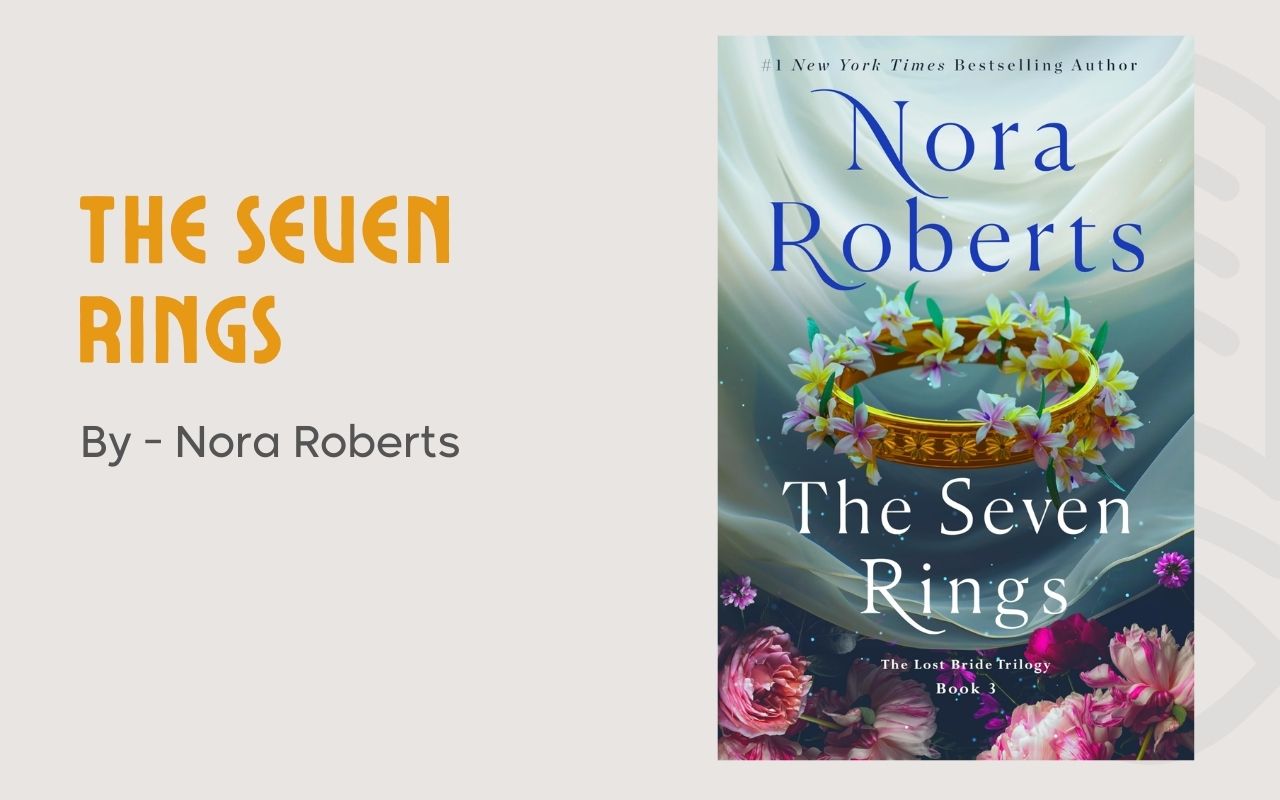
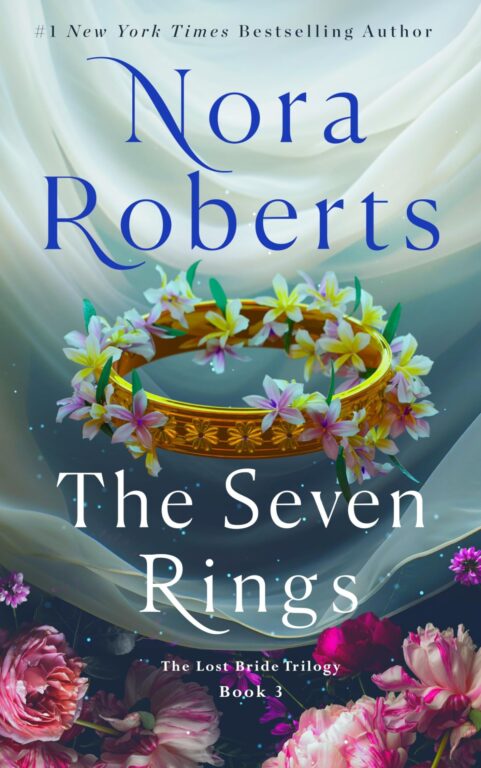
With The Seven Rings, Nora Roberts closes the door on The Lost Bride Trilogy—and it doesn’t whisper shut. It echoes. Set once again in Poole Manor, a windswept estate perched on the Maine coast, this third installment gathers every promise the series made and pushes it to a decisive end. There are ghosts who refuse to rest, a centuries-old curse born of obsession and rage, and a heroine determined to reclaim a house that has swallowed generations of women.
This is not a casual entry point. The novel stands firmly as the culminating chapter of a layered narrative begun in Inheritance and continued in The Mirror. It assumes familiarity with Sonya MacTavish and the strange, mournful world she has stepped into. For those who have followed the story from the beginning, this final volume feels less like a simple conclusion and more like an emotional reckoning.
The Premise: Seven Brides, Seven Rings, One Vengeful Witch
At the heart of the novel lies a brutal legacy. Arthur Poole’s grand manor came tied to a curse that doomed seven brides, each linked to his bloodline. Each death was sealed with a stolen wedding ring, taken as part of a cruel ritual that bound grief, jealousy, and dark magic together. The curse was not merely symbolic; it manifested in cold corridors, flickering lights, whispered warnings, and violent visions that replay past atrocities.
Sonya, the current heir, no longer doubts the house’s darkness. Instead, she embraces a clear mission: recover the seven rings, uncover the full truth behind the murdered brides, and confront the witch who unleashed this torment. Her task is less about surviving the haunting and more about restoring dignity to those who never had the chance to live fully.
Plot Snapshot: From Haunted Halls to High-Stakes Showdown
The narrative moves steadily toward confrontation. Sonya continues her exploration of Poole Manor, uncovering heirlooms, letters, and hidden spaces that reveal not just how the brides died, but who they were before tragedy claimed them. These moments transform the victims from spectral figures into women with dreams, fears, and fleeting happiness.
Her growing circle of allies plays a central role. Trey, her partner, remains a steady presence, while Cleo and Owen bring emotional ballast and dry humor. Even the ghosts take on active roles, guiding and warning the living as the supernatural tension thickens. What once felt like a mysterious slow burn now sharpens into something more volatile, as the witch’s presence grows increasingly aggressive.
As more rings are recovered, the house becomes both shield and battleground. Manifestations intensify — violent visions, surges of heat, and terrifying scenes from the past play out with greater clarity. The final act delivers a climactic confrontation where Sonya must confront the full scale of inherited power and decide what it truly means to end the curse. The resolution seeks to balance catharsis with continuity, honouring the dead without sacrificing the living.
Characters: Found Family in a Haunted House
The emotional strength of the novel lies in its ensemble. Sonya remains resolute and grounded, no longer the uncertain inheritor but a woman who has grown into her responsibility. Her evolution is subtle yet convincing, driven by compassion rather than bravado.
Trey provides stability that never overshadows Sonya’s autonomy. His role expands from romantic partner to active protector and planner, reinforcing the sense that this battle is shared. Cleo and Owen, meanwhile, bring a sense of domestic normalcy into the supernatural chaos, their presence reinforcing the recurring theme of chosen family.
The ghosts, too, contribute beyond mere atmosphere. They become collaborators in the quest for resolution, blurring the line between past and present and underscoring the idea that healing is a communal act, not a solitary feat.
Atmosphere and Setting: Gothic with a Modern Pulse
Poole Manor is more than a backdrop; it is a living, breathing character. Its long corridors, shadowed bedrooms, and storm-battered exterior create a gothic mood that feels both classic and accessible. Coastal fog, salt-laced winds, and moonlit nights amplify the sense of isolation while the warmth of shared meals and repaired rooms offers contrast.
What keeps the novel from becoming heavy-handed is its contemporary rhythm. Characters move seamlessly between debate over renovation plans and preparation for rituals. The ordinary and the extraordinary coexist, reflecting a world where terror does not erase daily life, it merely reshapes it. The manor stands as a symbol of history’s weight and the possibility of renewal.
Pacing and Plot Balance: Domestic Calm vs. Supernatural Chaos
The novel takes its time. There are stretches where everyday routines take centre stage — cooking, conversation, moments of intimacy — before the next supernatural blow lands. Some readers will appreciate the breathing space; others may find these calmer sections slow the momentum.
Yet this pacing reinforces the emotional investment. The quiet moments deepen relationships, making later danger feel more personal. When chaos does strike, it feels earned, grounded in the lives these characters are fighting to protect. The final chapters tighten the rhythm, delivering a surge of tension that justifies the deliberate build-up.
Themes: Legacy, Justice, and the Cost of Vengeance
Beyond the surface horror lies a story about inheritance and responsibility. Sonya is not simply battling a witch; she is challenging the idea that history must dictate the future. The narrative asks what it means to honour the dead without allowing their suffering to define the present.
Vengeance, once ignited, reveals its corrosive nature. The witch’s rage, though rooted in betrayal and loss, has warped over centuries into something monstrous. Sonya’s journey stands in contrast, driven by care, remembrance, and the belief that cycles can be broken.
There is, however, a lingering point of critique in the way villainy is framed, particularly where instability and cruelty intersect. For some, this portrayal may feel uneasy, blurring lines that deserve careful handling. Still, the overriding message remains focused on healing, community, and the reclaiming of narrative power.
Who Will Enjoy “The Seven Rings”?
This novel will resonate with readers who have followed the trilogy from the beginning and who enjoy paranormal romance grounded in atmosphere and emotional connection. Those who value layered relationships, historical mystery, and a slow-building sense of dread will find much to appreciate.
It may feel less satisfying for those seeking a standalone story or relentless pacing. The structure demands patience and familiarity, rewarding those willing to settle into its rhythm.
Final Verdict
The Seven Rings closes The Lost Bride Trilogy with a blend of menace and tenderness, weaving romance, suspense, and spectral history into a conclusion that feels thoughtful and earned. Though not without minor missteps, it offers a satisfying farewell to Poole Manor and the women whose lives were marked by its walls.
Roberts delivers a finale that honours both the living and the lost, reminding readers that even the darkest houses can find their light — once the truth is faced and the past is finally laid to rest.