
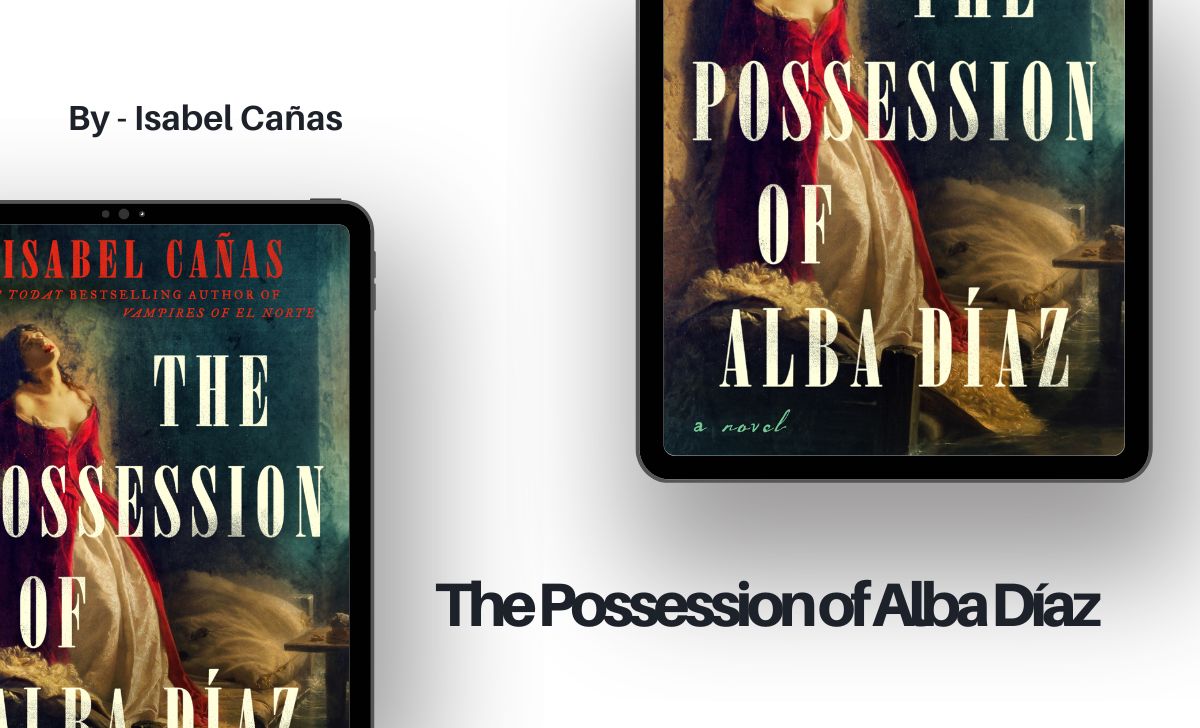
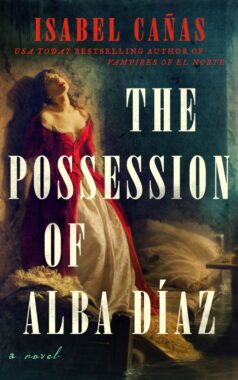
Isabel Cañas returns with a novel that fuses historical detail, simmering romance, and classic possession horror. The Possession of Alba Díaz follows a young woman uprooted by plague and expectation who finds herself at the center of a corrosive, otherworldly force in an isolated Mexican mining community. This book is less a parade of jump scares and more a slow, tactile erosion of safety — a story that lingers on scent, atmosphere, and the ways power and religion can twist grief into something monstrous.
Plot summary
Set in the 18th century, the story opens as a plague drives Alba Díaz and her devout family away from their city and toward Mina San Gabriel, the remote silver mine owned by her fiancé’s family. Alba, already pressured into a marriage and a prescribed life, begins to experience troubling sleepwalking episodes and hallucinations that quickly escalate. As the mine’s strange influence deepens, Alba and those around her are forced to confront whether what haunts her is a demon, an illness, or a consequence of human cruelty and greed. The narrative alternates perspectives (notably including Elías), which lets the reader see both the intimate — Alba’s shifting interior life — and the world that watches her, suspects her, and seeks to “fix” her through religious or social means. (Plot details following this paragraph avoid major spoilers for the ending; read on for more about how the novel builds tension and what it chooses to leave ambiguous.)
Setting and atmosphere
Cañas makes her setting into a character. The mine — its tunnels, mercury, cramped quarters, and the omnipresent threat of collapse — becomes a pressure chamber for dread. The author’s sensory prose leans into smell, metal, and the tactile reality of working with silver and mercury; these concrete details are what make the supernatural elements feel viscerally plausible. Reviewers have praised how the novel balances historical textures (plague, colonial social structures, Catholic ritual) with Gothic mood, producing an immersive experience that rewards patient readers rather than those seeking rapid, surface-level shocks.
Characters and relationships
Alba is written with soft, stubborn intelligence: someone who is taught to perform piety and submission but feels other desires and doubts under the skin. Elías — whose chapters significantly complement Alba’s — is more than a romantic foil; he functions as a moral counterpoint and an emotional anchor. Secondary figures (family members, clergy, miners) are not caricatures of superstition; instead, they are altered by fear and the economic pressures of colonial mining life. Many reviewers (and early readers on advance platforms) highlight how Cañas gives each character interiority, which helps the novel examine not just possession as supernatural event but possession as social phenomenon — how institutions and expectations can seize a person long before any demon might.
Themes and symbolism
This is a novel that uses traditional possession tropes to interrogate colonialism, gendered control, and the intersections of religion and science in a time of crisis. Mercury — literally and symbolically present — stands in for transformation, toxicity, and the alchemical promise of changing base metal into something “higher.” The mine’s economics and the household’s plans for marriage and social advancement make the story about more than an isolated haunting: it asks who profits when a body is declared “other” and who benefits when belief replaces care. Several reviewers note that Cañas is interested in where power is wielded, how confessions are extracted, and how a woman’s agency can be framed as pathology in a patriarchal order.
Pacing, prose, and the horror balance
Expect a slow-burn structure. Cañas favors an escalating, atmospheric dread over a checklist of shocks. The prose is often lush and sensuous — at times bordering on lyrical — which some readers will find intoxicating and others may find indulgent. This deliberate pacing means payoff is cumulative: the dread accrues, characters’ private lives are revealed in intimacy, and the horror arrives as a consequence rather than a set-piece. Critics who prefer immediate, relentless terror might be left wanting; readers who appreciate psychological layering and historical texture will likely find the novel deeply satisfying. Paste Magazine, for example, praised Cañas for crafting a “luxurious reading experience” that emphasizes immersion over constant jolts.
Strengths and small caveats
Strengths: the book’s voice and setting; the way Cañas renders domestic pressure and religious ritual; memorable secondary characters; and the novel’s willingness to let the horror emerge slowly from human systems as much as from the supernatural. Caveats: the slow pace means the book asks for patience; readers seeking a straight-up, modern exorcism thriller may find the rhythm mismatched to their expectations. A few readers also note that some romance beats read through a contemporary lens might feel familiar (Cañas has recurring character “vibes” across her work), but many argue those echoes are stylistic rather than derivative. Overall, the combination of atmosphere and moral complexity is what makes the book stand out in current historical horror offerings.
Final verdict
The Possession of Alba Díaz is best recommended to readers who enjoy immersive historical settings, character-forward horror, and novels that ask uncomfortable cultural questions while still delivering genuine chills. It’s not for every horror reader — it trades rapid-fire frights for slow, accumulating dread — but for those who like their horror with texture, sensual prose, and a moral undercurrent, this novel marks another confident entry from Isabel Cañas. It lingers after the last page, asking the reader to consider who, in a given society, gets labeled “possessed,” and to what end.author/show/19359055.Isabel_Ca_as”>