

When you think of Marvel’s most fearsome and chaotic alien creatures, the Symbiotes immediately come to mind. Best known for their role in creating characters like Venom and Carnage, these mysterious beings have a fascinating and surprisingly tragic origin. Far from being born as malevolent monsters, they began as a peaceful alien collective known as the Klyntar. Let’s dive into The Origin of Symbiotes, their fall from grace, and how they became some of the most infamous beings in the Marvel Universe.
The Peaceful Collective Known as the Klyntar
The Symbiotes’ true name is the Klyntar, which literally means “cage” in their own language. This is ironic, considering how their parasitic nature often feels like a prison to their hosts. Originally, the Klyntar were not violent parasites at all—they were a peaceful alien collective devoted to a noble purpose.
Their goal was to bond with worthy hosts from across the cosmos to create ideal warriors of virtue and honor. Only when paired with beings who possessed both moral strength and physical prowess could a Symbiote reach its true potential. When such a perfect pairing occurred, the Symbiote enhanced its host and became a hero alongside them.
However, if the pairing was flawed—if the host lacked moral integrity or had unstable emotions—the bond would fail. These bad pairings often corrupted the host and drove them toward aggression and chaos. In those cases, the Symbiote would sever the connection, leaving both it and its host damaged.
Galactus and the Fall of the Klyntar
The turning point for the Klyntar came with the arrival of Galactus, the world-eater. In a shocking act of destruction, Galactus devoured the Symbiotes’ homeworld, scattering the survivors across the galaxy.
Interestingly, Galactus could not consume the life force of the Symbiotes themselves. They survived—but not without consequences. The trauma of losing their world and collective purpose fractured their minds. Many became renegades, rejecting the peaceful ideals of the collective.
Some Symbiotes turned into nomads, wandering from planet to planet and bonding with any available host, regardless of morality. Others sought refuge on planets like Earth, where their influence would dramatically shape superhero history.
The Rebuilding of the Collective
While many Klyntar went rogue, some Symbiotes stayed true to their original mission. They regrouped in a remote, uncharted area of space and built a new artificial planet, also called Klyntar.
From this secret world, they continue to rehabilitate fallen Symbiotes, attempting to heal their minds and restore their noble purpose. Their hope is to someday reunite all Symbiotes under their original mission: to create protectors, not destroyers.
Symbiotes and Their Hosts
A Symbiote cannot survive or fulfill its purpose alone. It requires an intelligent organism as a host. Once bonded, the Symbiote can dramatically enhance its host’s capabilities:
- Removing toxins, diseases, and cancers from the host’s body
- Amplifying physical strength, speed, agility, and endurance
- Accelerating healing and resilience to damage
But the bond is a double-edged sword. If the host is not ideal, the Symbiote’s influence twists their mind and emotions, often bringing out darker tendencies. This is why so many Symbiote hosts spiral into villainy.
A classic example is Carnage, the offspring of Venom, who bonded with the psychopathic serial killer Cletus Kasady. Their union created one of Marvel’s most sadistic villains, driven by chaos and bloodlust.
Spider-Man, Venom, and the Rise of Symbiotes on Earth
The modern era of Symbiotes on Earth began with Spider-Man during the 1984 Secret Wars event. Peter Parker discovered a mysterious black costume that could change shape and never seemed to run out of webbing. It boosted his strength and allowed him to shift seamlessly between street clothes and his suit.
At first, it seemed like a miracle—but the truth was far darker. The Symbiote was secretly using his body while he slept, draining his energy. Peter grew increasingly aggressive and emotionally unstable until he realized what was happening.
Ultimately, Spider-Man rejected the alien, and it found a new host in Eddie Brock, merging with his hatred of Spider-Man to become Venom.
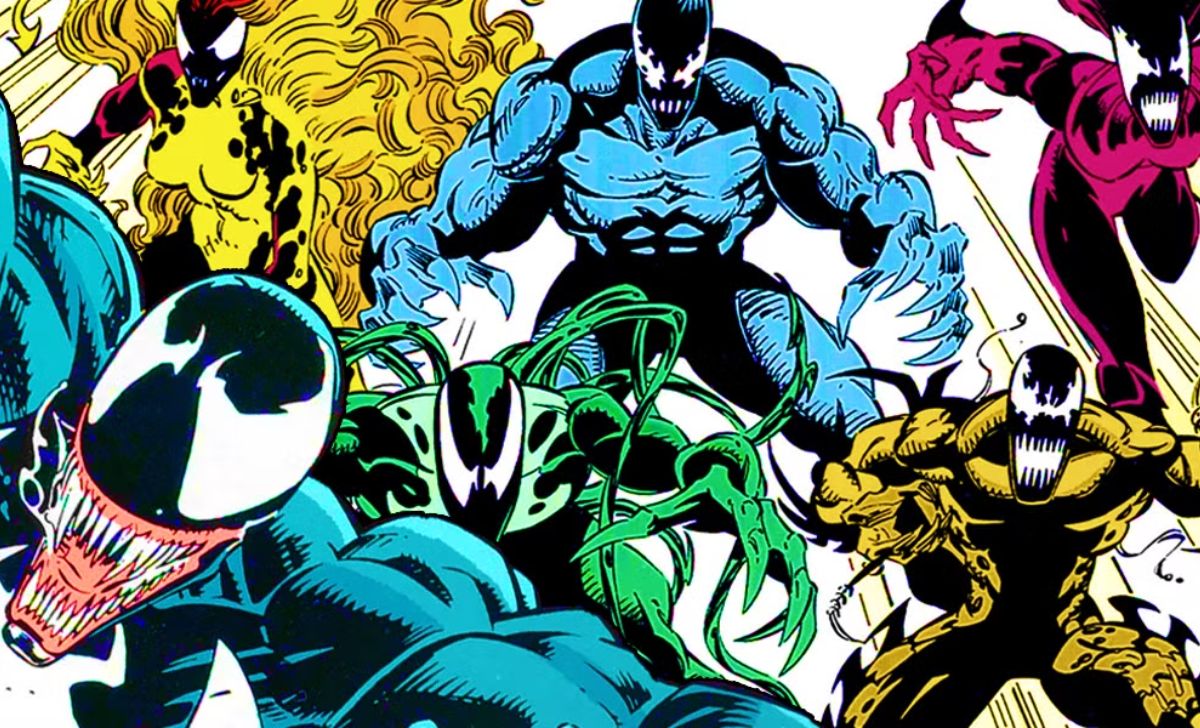
Venom became the progenitor of many other Symbiotes on Earth, including Carnage, Toxin, and others. These offspring inherited the Symbiotes’ parasitic nature but grew increasingly powerful with each generation.
Powers, Weaknesses, and Biological Traits
Symbiotes possess a range of incredible abilities that make them formidable:
- Superhuman strength, agility, and stamina
- Accelerated healing
- Shapeshifting and camouflage, allowing them to mimic clothing or even other people
- Absorption of traits from previous hosts (for example, Venom gained wall-crawling from Spider-Man)
They also have notable weaknesses:
- Vulnerability to intense sonic vibrations
- Vulnerability to extreme heat and fire
One of their most fascinating traits is that they reproduce asexually, creating offspring without traditional reproduction. Each new generation tends to be stronger and more aggressive than the last.
Symbiotes are also emotionally parasitic. They feed on a brain-produced chemical called phenethylamine (often shortened to “fentham” in comics). If deprived of it, both the Symbiote and its host can become unstable, violent, and mentally unhinged. This hunger often drives them to seek out violent or negative emotions, making them naturally drawn to unstable or angry individuals.