
The ancient Greek Odyssey is one of the most extraordinary stories ever told. Stretching across nearly 12,000 lines, it overflows with monsters, gods, clever tricks, heartbreak, and hope. There’s a one-eyed giant who eats men, a sorceress who turns sailors into animals, and a long-lost king fighting his way back to the life that was stolen from him.
But beneath all the magic and adventure lies something far more familiar: the story of a person trying to get home.
At first glance, the Odyssey can feel overwhelming. It comes from a world so distant from ours—one without books, electricity, or even writing as we know it. So how did such a massive, complex story survive? And how did ancient audiences understand it without reading a single word?
To answer that, we need to travel back to a time when stories lived not on pages, but in voices.
Before Books: When Stories Were Alive
Long before writing became common, stories were meant to be heard, not read. The Odyssey was born in an oral culture, likely centuries before the Greek alphabet became widespread in the 8th century BCE. In this world, storytelling was a performance—part memory, part music, part improvisation.
Poets known as rhapsodes traveled from place to place, performing heroic tales for crowds. The word “rhapsode” literally means “stitcher of songs,” and that’s exactly what they did—sewing together myths, legends, and traditional phrases into a living narrative.
To keep these massive stories straight, they relied on repetition. Familiar phrases like “rosy-fingered dawn” or “wine-dark sea” weren’t laziness—they were memory tools. They helped performers remember what came next and helped listeners stay grounded in the story.
Each performance could be slightly different. A rhapsode might emphasize one episode over another depending on the audience. In that sense, the Odyssey wasn’t a fixed text—it was a living thing, reshaped every time it was told.
Who Was Homer, Really?
The Odyssey is traditionally credited to Homer, but whether Homer was a real person remains one of literature’s greatest mysteries. No reliable records from his lifetime exist. Later generations spoke of him as a blind poet, but that image may be more legend than fact.
Many scholars believe “Homer” may represent a tradition rather than a single individual—a name given to generations of poets who refined and preserved these stories over time. Whoever he was (or wasn’t), the Odyssey we have today is the result of centuries of storytelling before it was finally written down.
In a way, the poem mirrors its hero: shaped by long journeys, many hands, and countless transformations.
When a Spoken Story Became Permanent
In the oral world, people didn’t always hear the Odyssey from beginning to end. One night, you might hear about the Cyclops. Another time, the reunion in Ithaca. The story existed in pieces.
That changed once writing took hold. Scribes began collecting and organizing these performances into a fixed sequence. What had once been fluid became permanent. The poem was preserved—but also frozen in time.
Something was lost in that transition: the energy of live performance, the interaction with the audience. But something powerful was gained too. The Odyssey could now survive centuries, languages, and cultures.
A Story After the War
The Odyssey is often described as the companion piece to the Iliad. While the Iliad focuses on rage, glory, and death on the battlefield, the Odyssey is about what comes after—the emotional cost of war and the long road back to normal life.
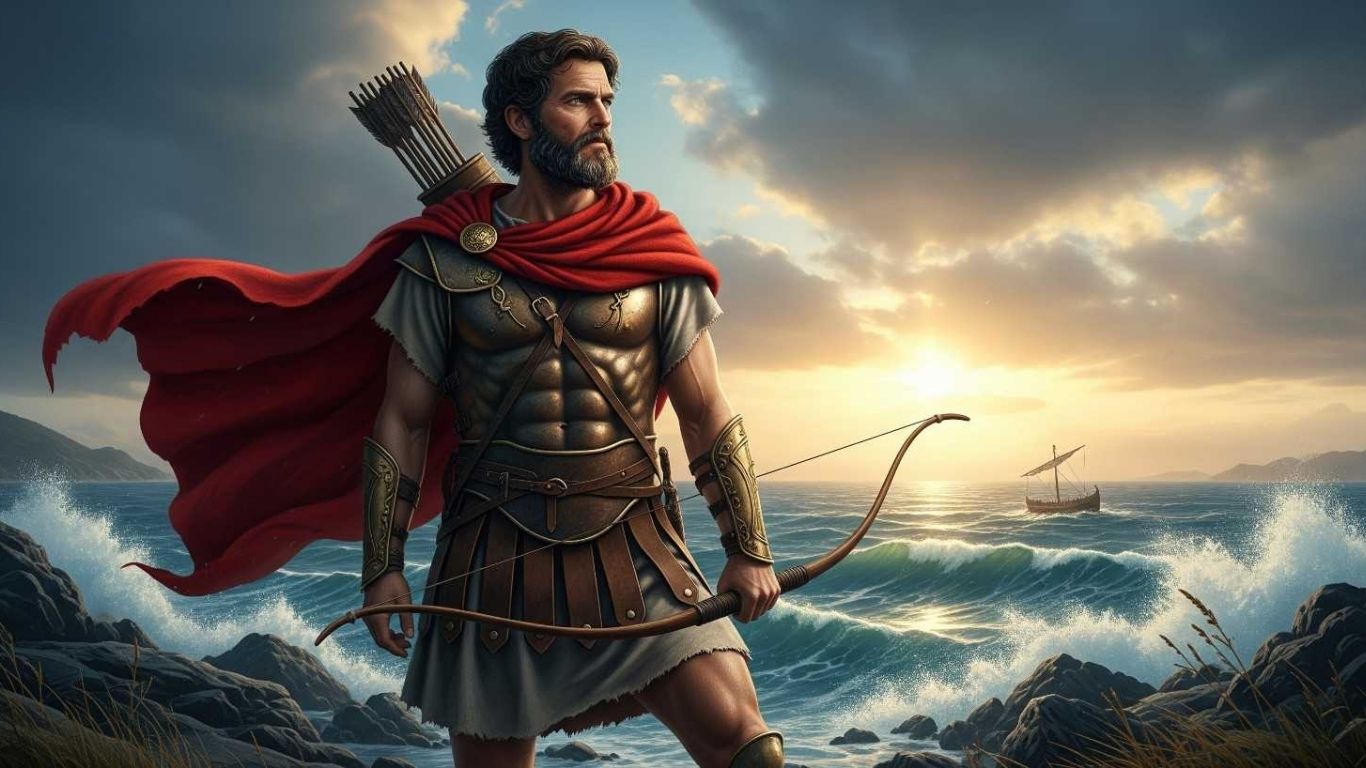
Its hero, Odysseus, isn’t the strongest warrior. He survives through intelligence, patience, and adaptability. When the poem begins, the Trojan War has been over for ten years, yet Odysseus is still lost, trapped far from his wife, Penelope, and his home, Ithaca.
The story famously begins in the middle. Through memories and flashbacks, we slowly piece together what went wrong. This structure feels surprisingly modern—it mirrors how humans actually remember their lives: in fragments, reflections, and emotional loops.
Gods, Pride, and Consequences
In the world of the Odyssey, the gods are everywhere—and they don’t forgive easily. The greatest danger a mortal can commit is hubris, or excessive pride.
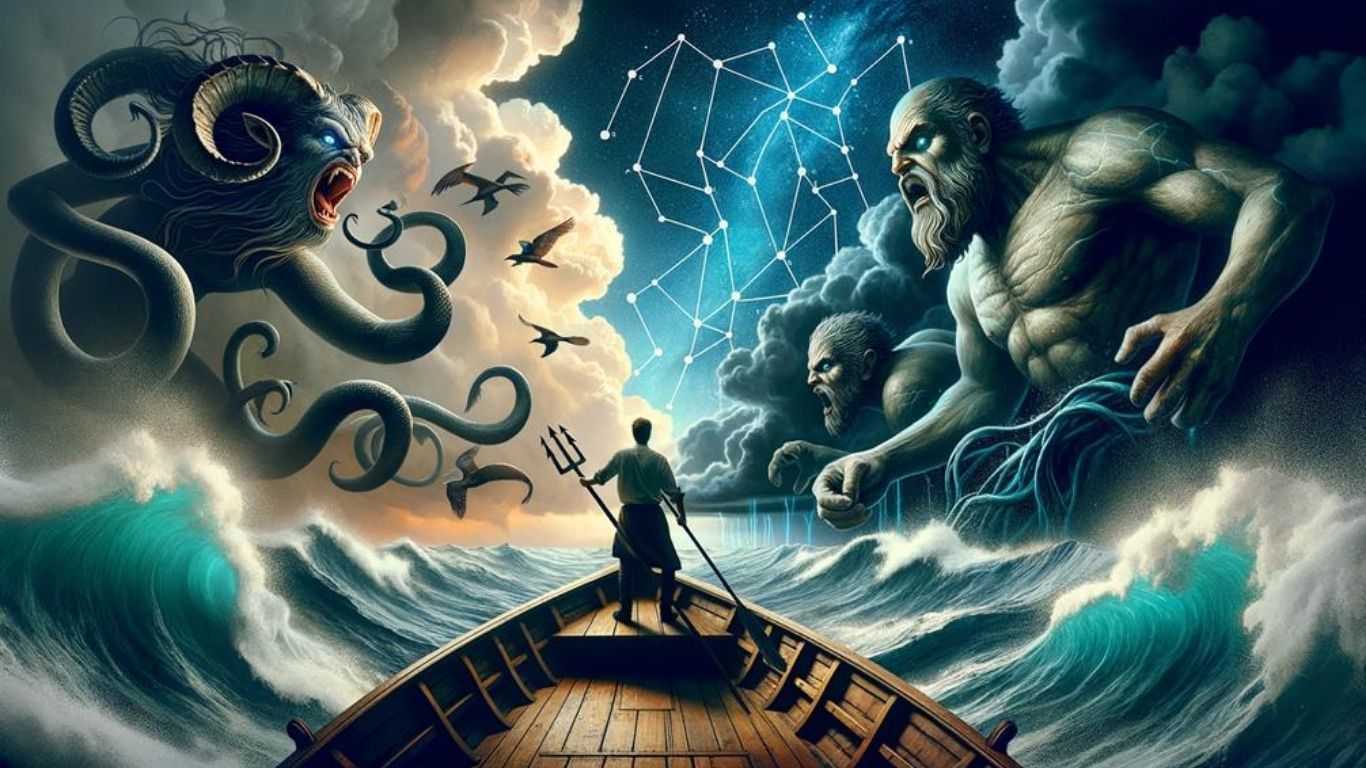
Odysseus makes this mistake when he blinds the Cyclops Polyphemus, then boasts about it. What he doesn’t realize is that Polyphemus is the son of Poseidon. The result? Years of storms, shipwrecks, and suffering.
The message is clear: intelligence and courage are admirable, but humility is essential. In Homer’s world, the universe is watching—and arrogance always carries a price.
Hospitality as a Moral Test
One of the Odyssey’s most revealing themes is xenia, the sacred code of hospitality. In ancient Greece, every stranger was treated as a potential guest of the gods.
Good hosts offer food, safety, and kindness. Bad hosts invite disaster.
Odysseus encounters both. The generous Phaeacians help him reach home. The Cyclops violates xenia by devouring his guests. Back in Ithaca, Penelope’s suitors abuse hospitality by overstaying their welcome and consuming Odysseus’s wealth.
Through these contrasts, the poem quietly asks a timeless question: How do we treat those who depend on us?
Two Minds, One Home
While Odysseus fights monsters at sea, Penelope fights despair at home. Surrounded by suitors who assume her husband is dead, she survives through patience and intelligence. Her famous weaving trick—unraveling her work each night—shows that she is every bit Odysseus’s equal.
Their reunion is not explosive or sentimental. It is careful. After so many disguises and lies, love itself must be tested. When recognition finally comes, it feels earned—quiet, deep, and human.
Myth, History, and Memory
For centuries, scholars have searched for the real places behind the Odyssey—ancient Troy, wandering Mediterranean routes, forgotten islands. While hard proof remains elusive, the poem still preserves echoes of a real world: social customs, geography, and fears that once shaped human lives.
Whether literal or symbolic, the Odyssey captures something more important than historical accuracy—it preserves emotional truth.
Why the Odyssey Still Matters
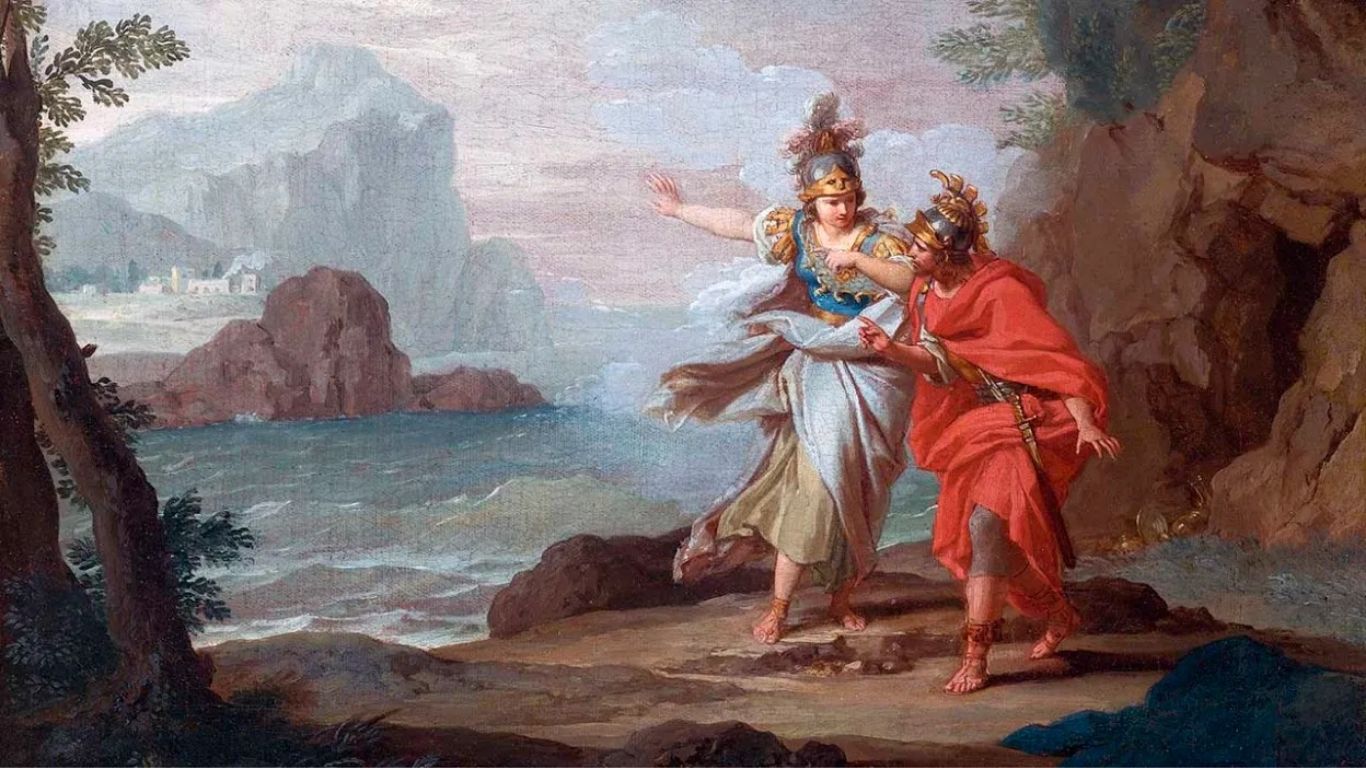
At its heart, the Odyssey isn’t about monsters or gods. It’s about endurance. About becoming someone new through hardship. About learning that home isn’t just a place—it’s a version of yourself you must fight to reclaim.
Odysseus returns changed. Wiser. More humble. And that is why his story still speaks to us.
Thousands of years later, we are still travelers—searching for meaning, belonging, and a place where we can finally rest.
A Story That Keeps Traveling
The Odyssey has journeyed across centuries just like its hero—retold, reimagined, and reinterpreted by every generation that encounters it. Each reader becomes a modern rhapsode, stitching new meaning into an ancient tale.
And perhaps that’s why it endures.
Because no matter how far we roam, we are always, in some way, trying to find our way home.