

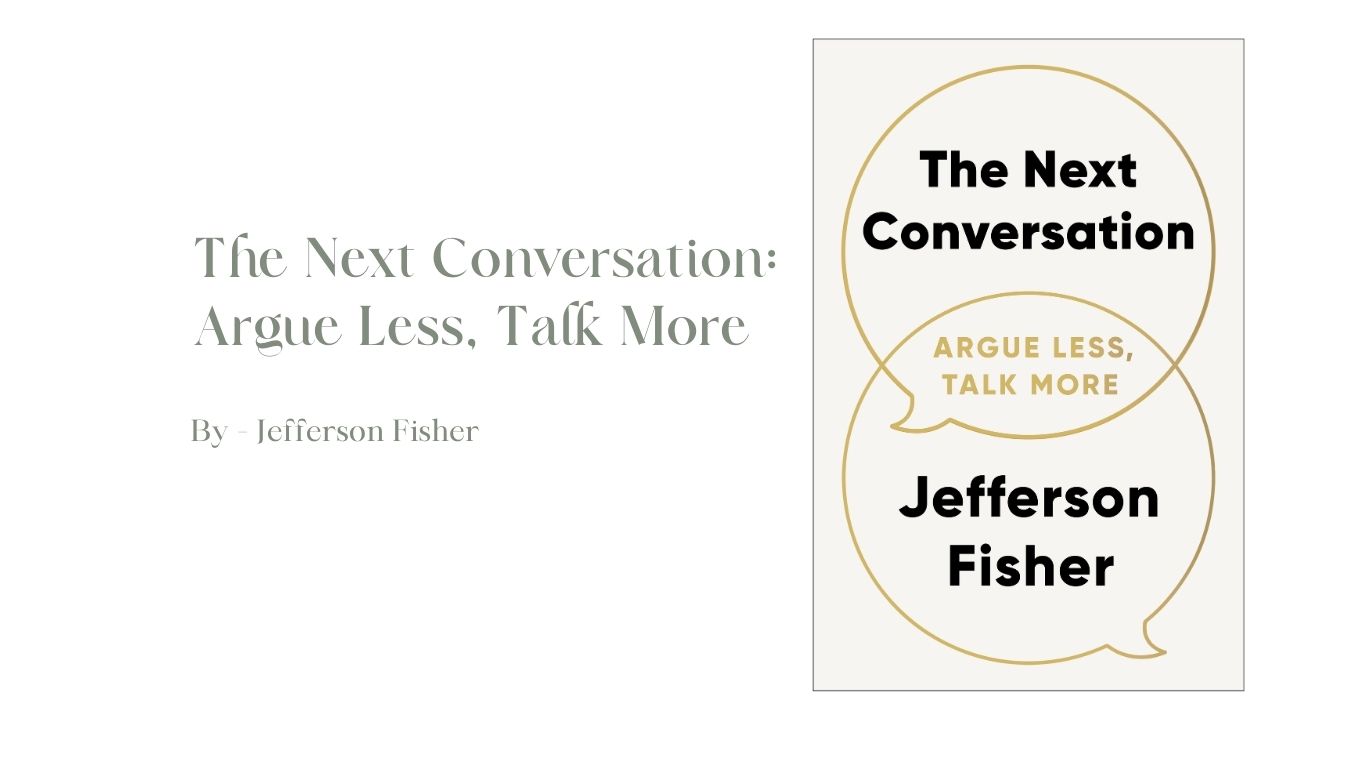
In a time when conversations are often rushed, reactive, and shaped by short messages or heated opinions, Jefferson Fisher’s The Next Conversation: Argue Less, Talk More feels timely and necessary. The book speaks directly to a modern frustration: why so many discussions turn into arguments and why, even when we “win,” relationships often lose. Fisher, a trial lawyer by profession, does not approach communication as a philosophical puzzle. Instead, he treats it as a skill that can be practiced, adjusted, and improved with small but intentional changes. This book is written for anyone who wants to communicate with clarity without escalating conflict.
What the book is — structure and approach
The Next Conversation is structured as a practical guide rather than a long narrative or academic study. The chapters are short and focused, each centered on a specific communication challenge: responding under pressure, setting boundaries, handling criticism, or choosing when not to engage. Fisher’s writing style is direct and conversational, mirroring the very principles he advocates. Instead of overwhelming the reader with theory, he introduces simple rules, habits, and phrases that can be applied immediately in real-life conversations.
The book’s organization allows readers to dip in and out rather than read straight through. This makes it useful as a reference tool — something to return to before a difficult conversation or after one goes wrong.
Information — the core ideas and progression
Although this is a non-fiction book, it follows a clear conceptual progression. It begins with the problem: most arguments fail because people enter them trying to win rather than to understand or move forward. Fisher explains how emotional reactions, defensive language, and poor timing derail conversations before they even begin.
From there, the book moves into solutions. Fisher introduces the idea that every interaction is preparation for the “next conversation” — the one that truly matters. The goal is not to dominate the current exchange but to preserve trust, credibility, and emotional balance so future communication remains possible. The book builds on this idea by offering strategies for slowing down reactions, reframing statements, asking better questions, and recognizing when disengagement is the most powerful response.
The “plot” concludes with a shift in mindset: communication is less about saying the perfect thing and more about creating conditions where meaningful dialogue can happen.
Key themes and lessons
One of the strongest themes in the book is restraint. Fisher emphasizes that silence, pauses, and delayed responses are often more effective than immediate replies. He introduces the idea of giving yourself a few seconds before responding, allowing emotion to settle so logic can take over.
Another central lesson is framing. Instead of beginning conversations with accusations or complaints, Fisher encourages stating outcomes and intentions clearly. This helps lower defensiveness and keeps discussions goal-oriented rather than emotionally charged.
The book also stresses boundaries. Talking more does not mean tolerating disrespect. Fisher explains how to calmly but firmly end conversations that are unproductive or harmful, reinforcing the idea that healthy communication includes knowing when to stop.
What works especially well
The book’s greatest strength lies in its practicality. Readers are not left wondering how to apply the advice; Fisher provides clear examples and usable language. The tone is reassuring rather than judgmental, which makes the guidance feel accessible even to readers who struggle with conflict.
Another advantage is the author’s professional background. Fisher’s experience in high-stakes legal environments gives weight to his advice. He understands how language shapes outcomes, and that insight translates well beyond the courtroom into everyday life — from workplace discussions to family disagreements.
The brevity of chapters also works in the book’s favor. Each idea is presented clearly, without unnecessary repetition, making it easy to remember and practice.
Limitations and criticisms
While the simplicity of the book is a strength, it can also be a limitation. Some readers may wish for deeper psychological explanations behind the techniques. The book focuses on what to do rather than extensively exploring why the strategies work on a cognitive or emotional level.
Additionally, communication styles vary across cultures and personalities. Some of the suggested phrases or approaches may need adaptation depending on context. Readers looking for nuanced discussions of cultural communication differences may find the book somewhat generalized.
That said, these limitations stem from the book’s purpose. It is designed as a practical manual, not a comprehensive academic study.
Who should read this book
The Next Conversation is well-suited for professionals, leaders, managers, parents, and anyone who frequently navigates emotionally charged discussions. It is particularly helpful for people who feel drained by conflict or who regret things they say in the heat of the moment.
Because the advice is easy to test in real situations, the book also works well for readers who prefer action over theory. Even implementing one or two techniques can lead to noticeable improvements in communication.
Standout techniques readers remember
Several strategies stand out as especially memorable. One is the intentional pause before responding, which helps prevent emotional escalation. Another is turning statements into questions to invite dialogue instead of resistance. Fisher also highlights the importance of stating expectations calmly and ending conversations respectfully when necessary.
These techniques are not presented as magic solutions but as habits that improve with repetition. The book encourages readers to practice gradually rather than attempt perfection.
Final thoughts
The Next Conversation: Argue Less, Talk More succeeds because it respects the reader’s time and intelligence. It does not promise to eliminate conflict but offers realistic tools to handle it better. The book reminds us that communication is not about winning arguments but about maintaining relationships, credibility, and emotional control.
For readers seeking clear, usable guidance on speaking with confidence and restraint, Jefferson Fisher’s book delivers a thoughtful and practical experience. It is a reminder that sometimes the most powerful thing you can say is less — said better, and said at the right time.