
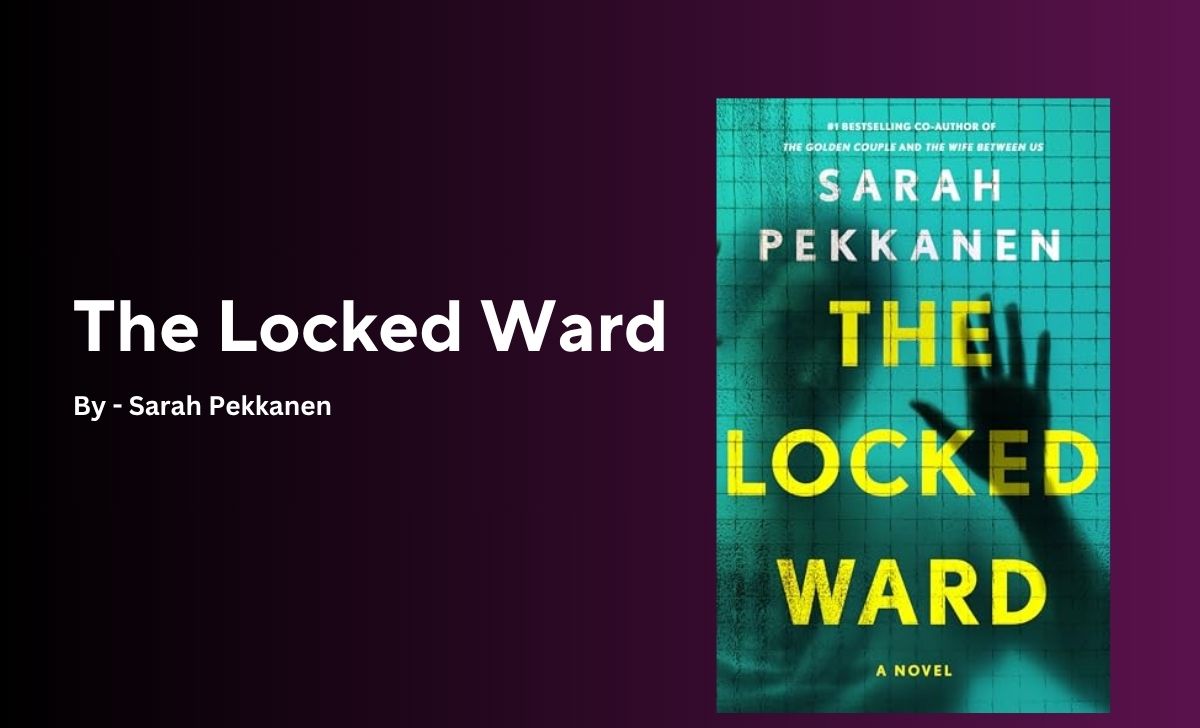
Sarah Pekkanen’s latest standalone thriller, The Locked Ward, is a chilling blend of family secrets, psychological tension, and twin dynamics that deliver a fast‑paced, twist‑driven reading experience. Published in early August 2025, the story centers on Georgia Cartwright, who finds herself trapped in a psychiatric institution accused of murdering her adoptive sister, Annabelle. Her only hope lies in her twin sister Amanda (Mandy), whom she has never met—until now. With dual perspectives and a setting that pulses with dread, this novel tests the boundaries of trust, identity, and what it means to belong. This review weaves together insights from independent book reviewers, highlighting praise, criticisms, and an in‑depth look at plot and structure—without spoiling key reveals.
Plot Overview
Georgia Cartwright wakes up in a locked psychiatric ward, one of the most secure facilities, under involuntary hold—accused of killing Annabelle, her adoptive family’s younger daughter. She claims she didn’t do it and reaches out to her long‑lost twin sister, Amanda Ravenel, who inherited her parents’ bar after their untimely death.
Amanda, living a quiet life far removed from Georgia’s affluent world, is shocked to learn she has a twin and even more shocked when Georgia insists she’s innocent. Georgia’s plea: “I didn’t do it. You’ve got to get me out of here.” Amanda reluctantly steps into a labyrinth of family drama, power plays, and psychological manipulation.
Alternating chapters recount Georgia’s eerie, claustrophobic days inside the ward—some in first person, others written in second person to place the reader in Georgia’s fractured mindset—and Amanda’s determined detective‑like efforts outside, gathering clues and questioning loyalty. Layer by layer, secrets unravel: about Georgia’s adoption, the family’s hidden ties, and Mandy’s own connection to this mysterious woman she never knew existed.

Voice and Structure
Pekkanen makes a bold stylistic choice by writing Amanda’s chapters in first person and Georgia’s in second person. Many reviewers found this unusual shift initially jarring—Georgia’s second‑person voice can feel disorienting—but others praised it as an effective way to create distance and immerse the reader in Georgia’s unstable psyche. The short, punchy chapters from both POVs sustain momentum and build suspense. As one reviewer noted, “short chapters… fast pacing… kept me turning pages”.
Atmospheric Setting: The Locked Ward
The psychiatric ward itself is practically a character. Multiple reviewers consistently described it as unsettling, claustrophobic, and unpredictable. From the creepy fellow patients to the menacing staff and the thin line between help and manipulation, the setting amplifies every moment of Georgia’s internal turmoil. One wrote that Pekkanen “nails that unsettling atmosphere” in the ward setting. Without overdoing medical jargon, the author draws you into an environment that feels dangerously real.
Tension, Twists & Reader Experience
Many critics called The Locked Ward “twisty,” “can’t‑put‑down,” and even “nail‑biting.” The plot is designed to mislead: just when you think you’ve figured out who can be trusted, another revelation flips everything again. One reviewer confessed they “knew what was happening but the ending still surprised me”. Another found the multiple reveals timed just right, providing a satisfying, page‑turning journey.
However, some readers noted that certain twists felt predictable or convenient—“drops in like lead bricks” was a metaphor used—while the ending felt anticlimactic or overly drawn out. A few felt some subplots and minor characters weren’t fully resolved or developed.
Character Dynamics and Emotional Depth
Georgia and Mandy’s relationship anchors the novel emotionally, but reader reactions were mixed. Some applauded the twin bond, Amanda’s resilience, and Georgia’s complex nature: are we meant to sympathize, fear, or suspect her? But others wished for more depth in the twins’ backstory—some felt their bond was surface-level and their development a bit thin.
Amanda—which many refer to as Mandy—deserves credit for being a strong, relatable narrator: she left a marketing career to run the bar and keeps digging despite her grief and confusion. Georgia’s chapters, though eerie and immersive, were seen by some as distancing when written in second person; it made emotional connection harder for a few readers.
What Works Well
- Gripping premise: twins separated at birth, one jailed in a psych ward, the other drawn in to help
- Unique narrative structure: first person vs second person creates tonal contrast
- Quick pacing and short chapters make it addictive
- Strong sense of dread and suspense in the locked ward environment
- Twists that keep most readers guessing until very near the end
Caveats to Consider
- Georgia’s second‑person POV may be off‑putting to readers unused to it
- Some find the twist elements predictable or the resolution lacking in surprise
- Not all minor characters or subplots are fully fleshed out
- The ending feels long or less potent for some—though still satisfying overall
Final Thoughts
The Locked Ward is not just another psychological thriller—it’s a portrait of distrust and hidden kinship, of family lies under a perfect surface. If you enjoy thrillers that rely on atmosphere, unreliable narrators, and a steady drip of suspense, this will deliver. But if you prefer deeply nuanced character arcs or clever, unexpected puzzle reveals, you may find it just okay—not Pekkanen’s most stirring work, though still strong.
Overall, it’s a compelling summer thriller: fast, tense, and twisty, with enough emotional undercurrents to keep most readers engaged. A solid 3.5–4 stars recommendation for fans of twin dynamics, institutional suspense, and dramatic family secrets.