

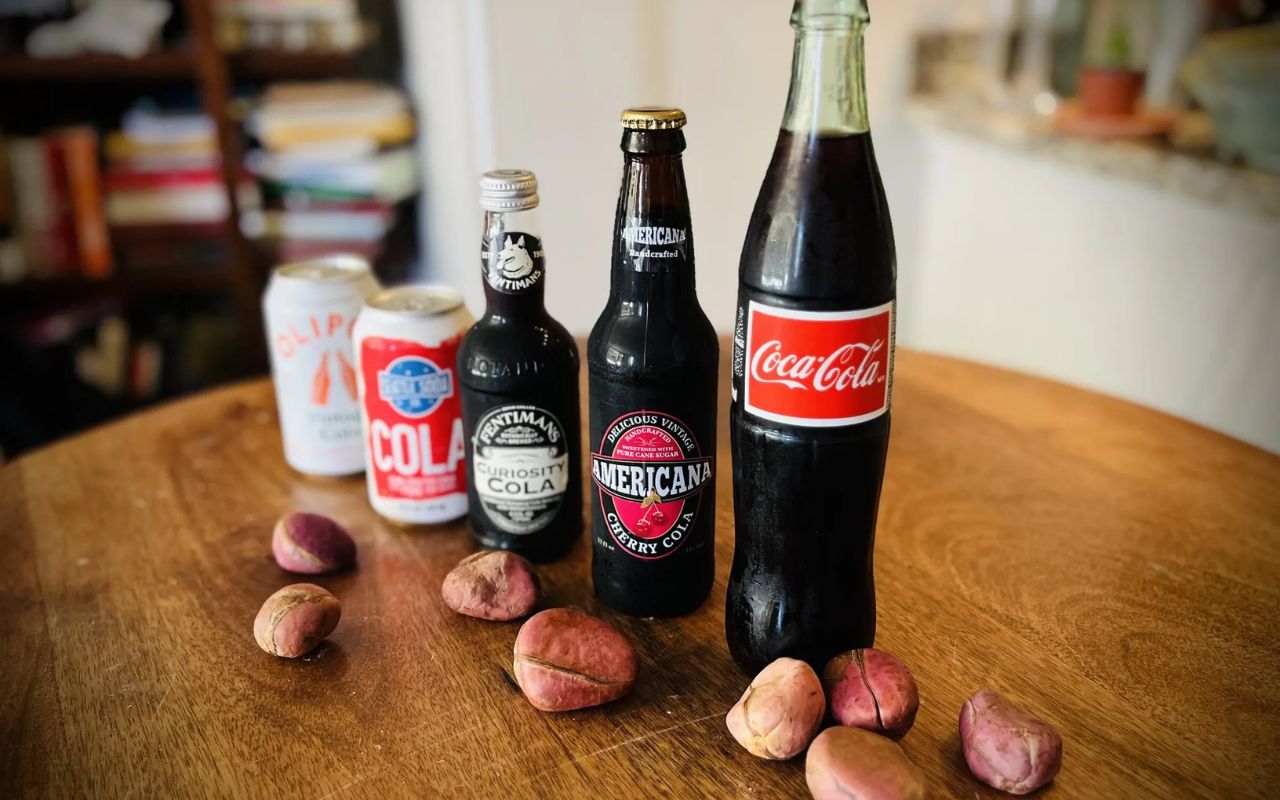
The kola nut is a small, bitter seed with an enormous global footprint, linking sacred West African rituals, the horrors of slavery, polar exploration, and one of the world’s most famous soft drinks. Rooted in rainforest communities, it evolved from a divine offering and social currency into a commercial stimulant and industrial flavoring agent that still carries deep cultural meaning today.
The sacred seed of West Africa
The kola nut comes from the kola tree, a small evergreen native to the tropical forests of West Africa, where the seed has been central to social life, ritual practice, and everyday hospitality for centuries. Within these communities, the nut is not simply a food item but a symbol of respect, welcome, and spiritual connection.
Among the Igbo people, the kola nut is often described as the “food of the gods,” reflecting its special status in ceremonies and gatherings. Hosts break and share kola to honor guests, turning a simple act of offering into a structured ritual of blessing, prayer, and communal bonding. In many households, the way kola is presented and divided carries layers of meaning about hierarchy, goodwill, and mutual obligation.
Within Yoruba communities, kola plays a similarly important role in religious and social life. It is used in weddings to bless new unions, in funerals to honor the dead, and in divination rituals linking the human and spiritual realms. Each of these contexts highlights the nut as a bridge between people, ancestors, and deities, embedding it deeply in the moral and spiritual fabric of society.
Chemistry of energy and endurance
Beyond its cultural symbolism, the kola nut is a potent natural stimulant. It can contain up to about 2.5% caffeine—roughly double the concentration typically found in coffee beans—as well as small amounts of theobromine, a compound structurally similar to caffeine. These molecules act on the central nervous system, increasing alertness, sharpening focus, and boosting blood flow to muscles and lungs.
The physiological effects of kola help explain its long-standing place in traditional medicine across West Africa. Chewing the nut can reduce fatigue, suppress hunger, and provide a sense of wakeful energy, which made it useful for travelers, laborers, and people engaged in demanding ritual practices. Over time, these perceived benefits translated into a reputation for enhancing endurance, lifting mood, and even supporting spiritual readiness during ceremonies.
Yet the same stimulant properties that made kola valuable in local contexts also made it attractive to outsiders seeking performance-enhancing substances. As global trade expanded and pharmacology developed, this once strictly local seed became a commodity that doctors, chemists, and entrepreneurs tried to bottle, market, and monetize.
Kola as currency and tool of control
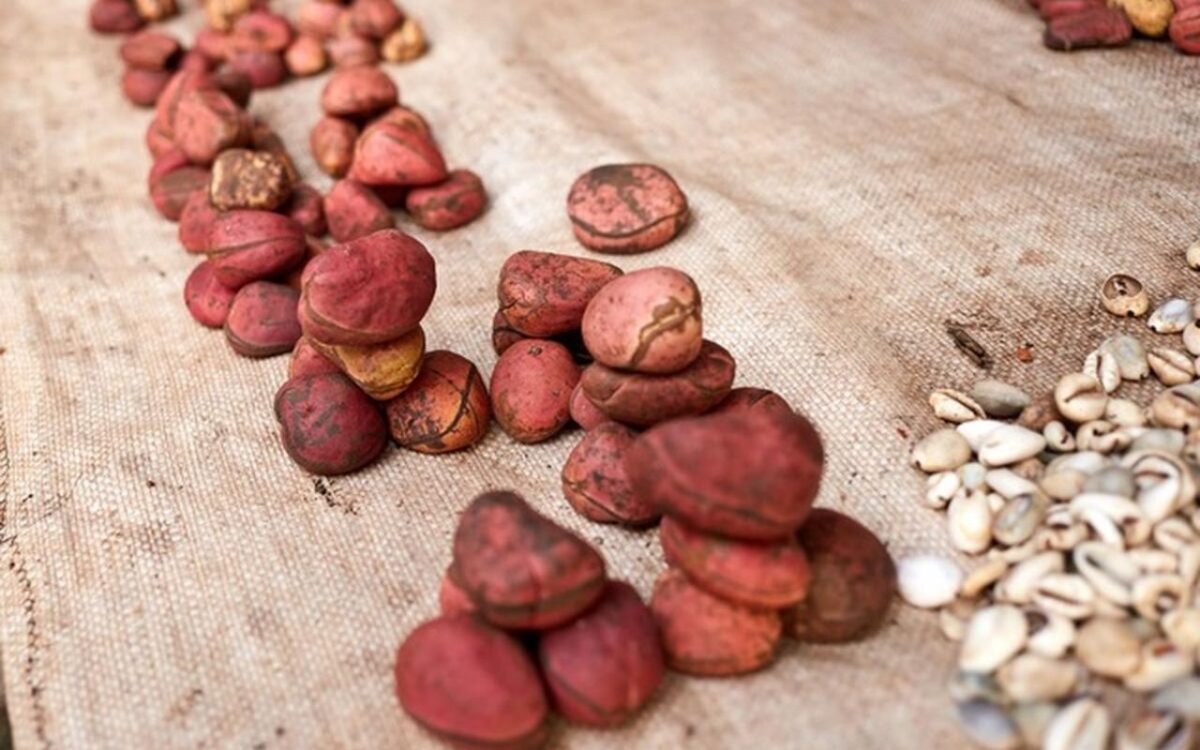
The history of kola is not only a story of ritual significance and medicinal use; it is also marked by exploitation and violence. As early as the 10th century, kola nuts were used as a form of currency in parts of West Africa. Traders used them to purchase captives who were forced across the Sahara, tying this sacred seed to the machinery of human trafficking and regional slave systems.
By the 16th century, Portuguese and Afro‑Portuguese traders adopted a similar pattern in coastal regions. They exchanged kola nuts for people who were then sold into transatlantic slavery, embedding the nut in the economic networks that fed the slave trade to Europe and the Americas. In this way, kola functioned not only as a stimulant and ritual object but as a unit of value in a brutal market that commodified human lives.
This dual role—sacred within communities yet instrumentalized in systems of oppression—illustrates the “bitter side” of kola’s past. The seed that once sealed bonds of welcome and alliance was also used to underwrite the capture and transport of countless enslaved people, leaving a legacy that cannot be understood apart from colonial trade and racial exploitation.
Crossing the Atlantic with the enslaved
By the 17th century, kola had firmly crossed the Atlantic. Oral traditions from Brazil tell of enslaved Africans who smuggled kola seeds across the ocean, hidden in their clothing or braided into their hair. This act of concealment and transport was more than simple resourcefulness; it was a deliberate attempt to preserve a key element of home, culture, and spiritual practice under unimaginably harsh conditions.
Enslavers quickly recognized the nut’s energizing properties and learned to weaponize them. They provided kola to enslaved laborers in order to push them through longer hours of exhausting work, turning a traditional stimulant into a tool for extracting more physical labor. In this context, kola’s ability to stave off hunger and fatigue became part of the machinery of plantation economies.
Yet even in this environment of coercion, enslaved communities in places like Jamaica, Cuba, and Brazil sometimes managed to cultivate kola trees for themselves. These groves and gardens allowed them to maintain rituals, honor ancestors, and sustain fragments of their original cultural practices. In such settings, kola became a living archive—a plant through which memory, identity, and communal resilience could survive across generations.
From rainforest ritual to pharmacy shelves
As European and North American interest in exotic botanicals grew in the 19th century, pharmacists and entrepreneurs turned their attention to the kola nut. In the late 1800s, chemists in these regions began to experiment with kola extracts, touting them as near‑miraculous ingredients with a long list of supposed medicinal and mind‑altering properties. These claims often rested on limited or poor-quality evidence but aligned perfectly with a booming market for patent medicines.
Soon, pharmacy shelves in Europe and North America featured kola‑infused products of every kind: tonics promising renewed vigor, chocolates marketed as energizing treats, and lozenges sold as remedies for fatigue, low mood, or vague nervous ailments. Kola’s caffeine and theobromine content offered real stimulant effects, but many advertisements vastly exaggerated what these products could do, blending scientific language with sensational marketing.
Pharmacists also began combining kola with extracts from the coca leaf, which contains cocaine. This pairing created powerful stimulant preparations that intensified wakefulness and suppressed appetite. Such mixtures were embraced in both civilian and military contexts, where endurance, alertness, and reduced hunger were considered strategic advantages.
Forced March tablets and polar survival
One of the starkest examples of kola’s pharmacological repurposing appears in the story of Ernest Shackleton’s Nimrod Expedition of 1910. Shackleton and his crew had pushed farther south than any previous explorers, setting a new record for the southernmost point reached at that time. But as they attempted to return to their supply depot, they realized they had miscalculated the journey and were running dangerously low on food.
Exhausted, hungry, and facing potentially fatal conditions, the team turned to their emergency medical kit. Among its contents were “Forced March tablets,” a proprietary product that combined cocaine with kola nut extract. These tablets were marketed as a way to mitigate hunger and extend endurance—claims rooted in both the stimulant pharmacology of kola and the powerful, if dangerous, effects of cocaine.
After taking the pills, Shackleton’s crew managed to push themselves hard enough to reach safety. Similar kola‑and‑cocaine preparations were later supplied to British soldiers during World War I, reflecting a broader pattern: military and exploratory ventures frequently relied on pharmacological aids to stretch the limits of human performance, often without fully understanding the long‑term risks.
Birth of Coca-Cola and the kola–cocaine formula
The fusion of kola nut and coca leaf also gave rise to one of the world’s most recognizable beverages. In 1886, Atlanta pharmacist John Pemberton devised a syrup that combined extracts of these two plants, promoting it as a medicinal drink. He claimed that his formula could relieve headaches, ease indigestion, and even address issues like impotence, framing it as a tonic rather than a mere refreshment.
The resulting product—Coca‑Cola—capitalized on the stimulant qualities of both ingredients. Kola contributed caffeine and flavor, while coca supplied a small amount of cocaine, a substance then widely used in tonics and touted as a therapeutic wonder. In a marketplace crowded with patent medicines, this combination stood out, appealing both to consumers seeking relief and to those attracted by its fashionable exoticism.
As Coca‑Cola grew from a pharmacy counter drink into a mass‑market soft beverage, public attitudes toward cocaine began to shift. Concerns over health, addiction, and morality pushed manufacturers to change their formulations. By 1903, the Coca‑Cola company had removed all cocaine from its recipe, although it continued to trade on the exotic prestige and stimulating reputation tied to its original ingredients.
Decline of kola in industry and rise of cocoa
By the 1920s, African exports of kola nuts began to slow. One significant factor was the increasing prominence of the cocoa bean, another stimulating seed from the same broad region. Cocoa, used to produce chocolate and cocoa powder, offered its own blend of cultural appeal, flavor, and mild stimulation, fitting neatly into global confectionery and beverage markets.
At roughly the same time, Coca‑Cola’s formula evolved in ways that distanced it from its botanical roots. It is widely believed that the company significantly reduced the actual kola nut content of its recipe during this period, although details remain speculative because the exact formula has long been kept as a closely guarded trade secret. What is clear is that modern versions of the drink rely on refined, standardized ingredients rather than the raw herbal materials that defined the original tonic.
Despite these changes, the legacy of kola remains embedded in the brand’s name and in the global category of “cola” soft drinks. Even when the physical presence of kola is minimal or absent, the word itself evokes the seed’s older associations with energy, exoticism, and medicinal promise—an echo of the nut’s complex journey from rainforest ritual to industrial flavor.
Survival in the African diaspora
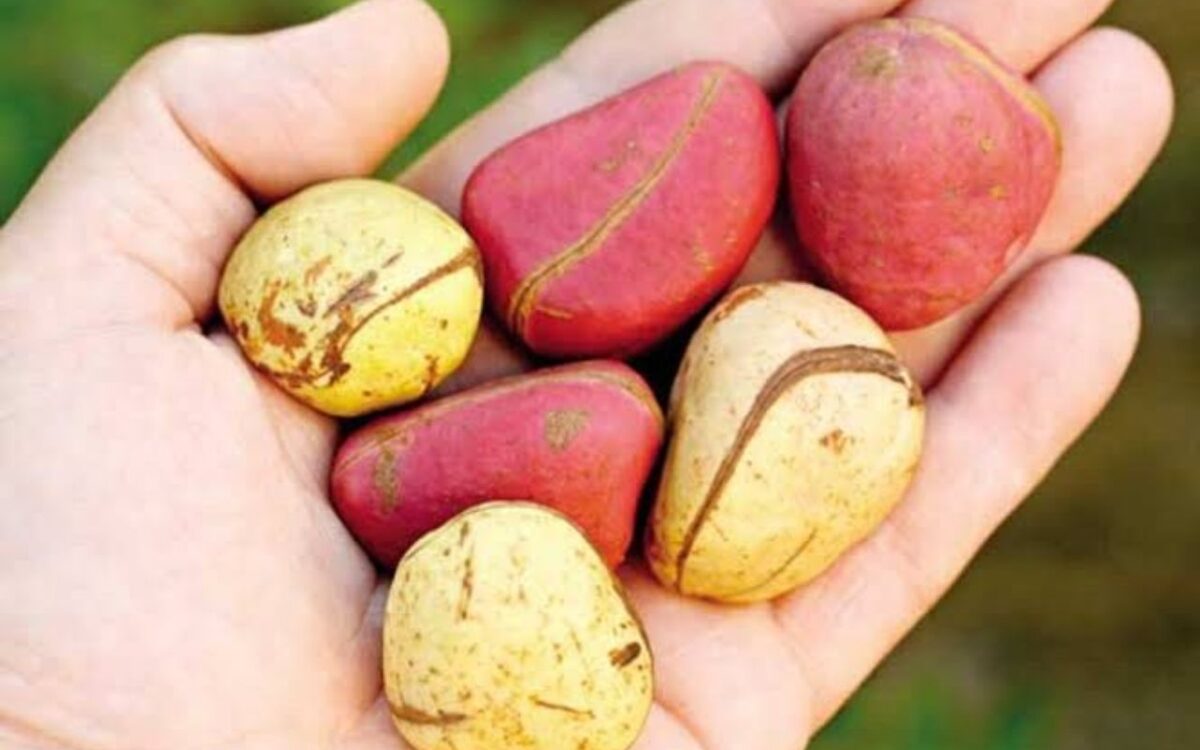
While industrial producers shifted away from traditional kola, the nut retained and even deepened its importance in Afro‑diasporic communities. In Jamaica, for example, kola is used to make Bissy tea, a preparation believed to have first reached the island aboard slave ships in the 17th century. Over centuries, this tea has become a household staple, used in many homes for its perceived energizing and health‑related benefits.
Bissy tea illustrates how enslaved and later free communities adapted kola to new environments while preserving ancestral knowledge. Preparing and drinking the tea can serve practical purposes—such as providing stimulation or supporting digestion—but it also operates as a quiet act of cultural continuity. Each cup connects contemporary Jamaicans to the experiences of their forebears who carried the seeds across the Atlantic under duress.
Similar patterns appear in other parts of the Americas where kola was cultivated by enslaved people and their descendants. Whether used in ritual, medicine, or everyday consumption, the nut functioned as a symbol of endurance, creativity, and resistance—proof that even under conditions of severe oppression, people could maintain a living link to their origins.
A symbol of memory and contradiction
Today, the kola nut occupies a paradoxical position. On one hand, it survives in niche products, traditional beverages, and dietary supplements marketed for energy, alertness, or detoxification. On the other, its name persists in global branding that often obscures the seed’s deep cultural roots and its entanglement with histories of slavery, colonialism, and scientific exploitation.
For communities in West Africa and the African diaspora, kola continues to be a powerful emblem of cultural preservation and remembrance. In rituals of hospitality, it signals respect and shared humanity; in diaspora practices like Bissy tea, it keeps alive stories of survival across the Middle Passage. The same seed that once served as currency for captors also became a vehicle through which the captured carried language, religion, and identity into new worlds.
Tracing the path of the kola nut—from sacred offering to slave‑trade currency, from polar expeditions to soda fountains—reveals how a single plant can embody both oppression and resilience. Its story reminds us that everyday substances, whether chewed at a family gathering or sipped from a bottle, can carry centuries of human struggle, adaptation, and memory within their bitter taste.