
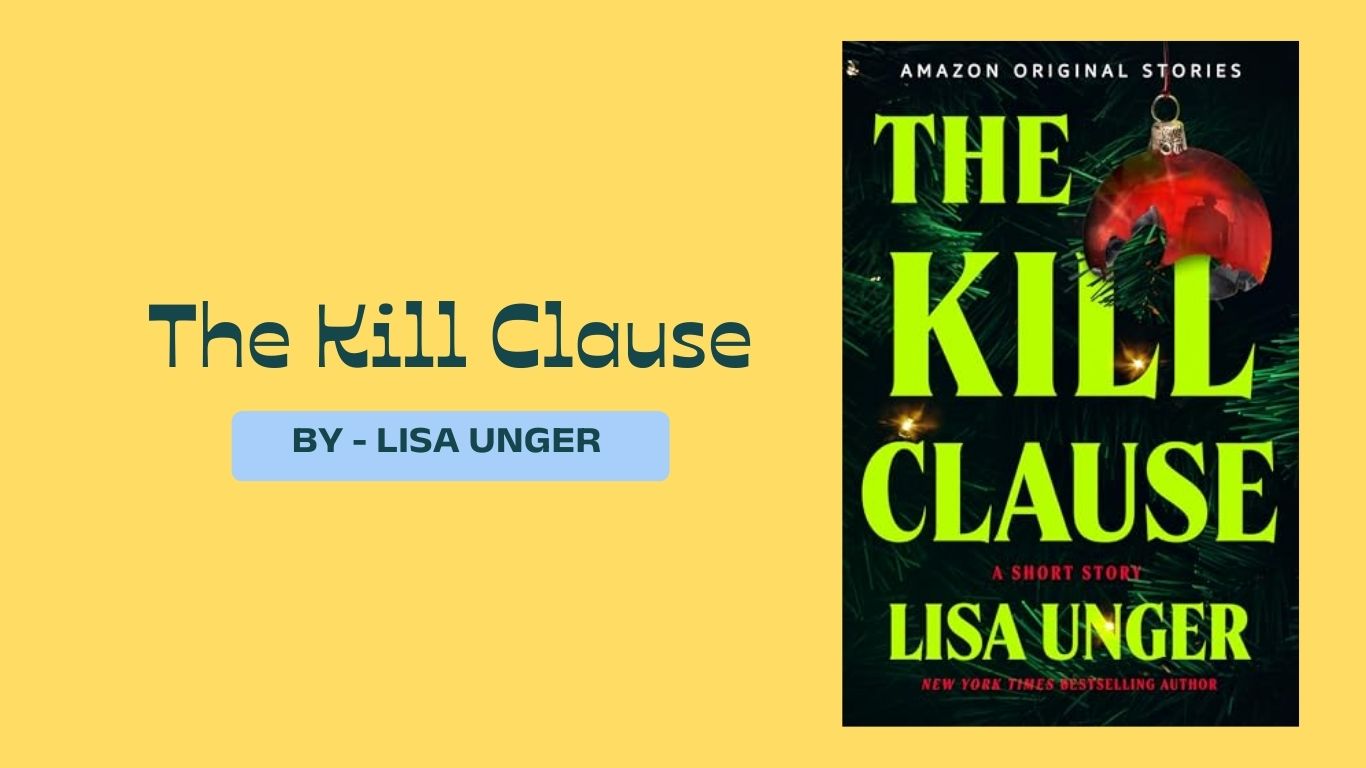
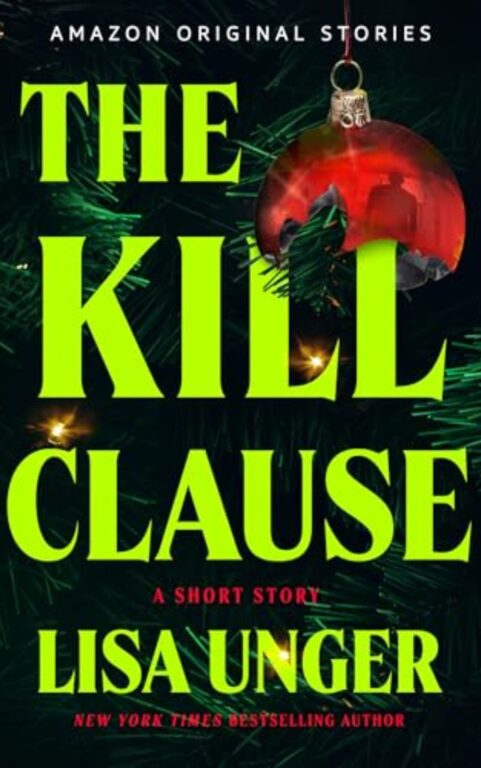
Lisa Unger’s The Kill Clause is a lean, wintry thriller that asks a sharp question: what happens when a professional killer finally hits a line she refuses to cross? Set against the backdrop of the holidays, this short story combines contract killing, emotional baggage, and a ticking clock to deliver a tense, morally charged read you can finish in one sitting.
At roughly seventy pages, it’s closer to a long short midnight-a-story-of-hope-justice-and-freedom-by-brittany-k-barnett/”>story or mini-novella than a full-length novel, but within that space Unger manages to build a complicated protagonist, a chilling criminal organization, and a scenario that feels both cinematic and painfully personal. If you like your holiday stories with snow, danger, and a lot of unresolved feelings, this one fits the bill.
What Is “The Kill Clause” About?
At the center of the story is Paige, a highly skilled contract killer working for an unnamed shadowy organization, often referred to simply as “the Company.” Her life runs like clockwork: assignments, surveillance, execution, disappear—no questions, no hesitation.
On a snowy December night, as the days of an advent calendar run down, Paige infiltrates a luxurious home to complete another job. Her phone keeps buzzing with messages from her ex-husband Julian, who always gets sentimental and erratic at this time of year, reminding her of the messy emotional life she keeps trying to compartmentalize.
The routine collapses when Paige discovers that her target isn’t alone. His diary-of-a-young-girl-by-anne-frank/”>young daughter is there too, awake and present. The girl sees Paige. To finish the job, Paige would have to either kill the child or risk leaving a witness.
Instead of pulling the trigger, Paige walks away.
That single moment of hesitation breaks the Company’s ultimate rule. In response, her employers invoke “the kill clause”—their policy that any operative who becomes a liability must be eliminated. Paige goes from hunter to hunted in an instant. Her manipulative boss Nora orders her own colleagues to take her out, and Paige has to stay one step ahead of the killers she used to work beside.
To survive, she’s forced to reconnect with Julian, whose history with Paige is tangled up with guilt, secrets, and the very reasons she became a killer in the first place. As Christmas Eve approaches, Paige must confront old trauma, outthink Nora, and decide whether there’s still a version of herself worth saving.
A Killer With a Conscience: Paige as Protagonist
One of the most compelling parts of The Kill Clause is Paige herself. Professional assassins in fiction can easily become stylish clichés, but Unger makes her feel textured and human:
- She’s ruthlessly competent at her job, but not cold-blooded for the sake of it.
- There’s a clear emotional history that informs why she works for the Company, and why children are a hard line she refuses to cross.
- Her relationship with Julian is messy—still tender in places, but weighed down by secrets, lies, and the emotional fallout of the work she does.
Paige is caught between roles: weapon, ex-wife, damaged survivor, potential protector. Unger lets that contradiction drive the story. When the kill clause is activated, we’re not just watching a cat-and-mouse chase; we’re watching a woman try to reclaim a self that might never have truly existed outside her job.
Even in such a short format, the side characters feel specific. Nora, the icy handler, represents the Company’s worldview—calculating, practical, and utterly indifferent to human cost. Julian, on the other hand, brings vulnerability and emotional history into a story that could otherwise be purely action-driven. He’s not just “the ex”; he’s a living reminder of who Paige used to be, and of the life she’ll never fully have while working as a killer.
Themes: Morality, Trauma, and the Price of Walking Away
Beneath the gunfights and narrow escapes, The Kill Clause is really about boundaries and consequence.
- Where do you draw the line? Paige has likely killed many people in the past, yet it’s the presence of a child that flips a switch in her. The story explores what happens when a person whose whole job is violence suddenly refuses to be the weapon she’s been trained to be.
- Can you leave this life without becoming someone’s target? In the criminal underworld Unger sketches, there’s no such thing as clean resignation. Once you belong to the Company, you either keep working or you die.
- Trauma and triggers. Paige’s decision not to harm the child is clearly linked to her own past trauma, which the story reveals gradually. Unger doesn’t spell everything out in exhaustive detail, but you get enough hints to see the emotional landmines beneath her choices.
- Holiday contrast. The Christmas setting is more than just aesthetic. The idea of peace, family, and second chances collides with an industry built on contract killing. Lights, ornaments, and snow sit next to silenced pistols and burner phones, giving the whole story a bittersweet, almost haunted atmosphere.
The “kill clause” itself works as both a literal rule and a metaphor. It’s the harsh, fine-print reality of living outside ordinary morality: once you sign up, there’s no gentle way out.
Pacing and Structure: A Thriller You Can Read in One Night
Because The Kill Clause is a short story, the pacing is tight and focused. There’s no room for slow build-up or extensive subplots, so Unger moves quickly:
- The setup—Paige, the target, the child—is established within the opening pages.
- The moment she refuses to complete the job, the story shifts into survival mode.
- From there, it’s chase sequences, tense confrontations, and strategic maneuvering as Paige tries to stay ahead of her former colleagues and Nora’s plans.
Different reviews and early reader reactions often mention how much the story manages to pack into its length: action, emotional beats, and a surprisingly layered moral dilemma in about seventy pages. Some readers have even commented that the premise and characters are strong enough that this could easily have been expanded into a full-length novel, with more time to explore the Company, its operatives, and Paige’s backstory in greater depth.
As it is, the structure feels like a tight episode of a prestige TV thriller—self-contained, but big enough in scope that you can imagine a whole season built around this world.
Atmosphere: Holiday Noir With Emotional Weight
One of the pleasures of The Kill Clause is its holiday noir vibe. The story uses:
- A snow-covered, upscale home as the opening crime scene
- The countdown of the advent calendar as a quiet time-marker in the background
- Christmas Eve as a symbolic deadline—survive until morning, or don’t survive at all
There’s a nice contrast between the warm, almost sentimental imagery of the season and the cold reality of Paige’s work. Instead of cozy fireside scenes, we get break-ins, stakeouts, and tense conversations in the shadows of Christmas lights.
If you enjoy thrillers like Christmas Presents or other winter-set crime stories that mix festive aesthetics with danger and darkness, this short story fits perfectly into that niche.
What Works Especially Well
A few standout strengths:
- A morally complex lead. Paige is neither hero nor villain; she’s something in between, and that ambiguity makes her decisions more gripping.
- Emotional undercurrent. The story isn’t just about escaping a death order. It’s about grief, regret, and whether someone who has done terrible things is still allowed to choose a different path.
- Efficient world-building. Unger sketches the Company, its rules, and its informal culture with just a few well-chosen details. We understand the stakes without long exposition.
- Holiday twist. Setting the story at Christmas gives it a memorable hook and adds thematic weight—ideas of redemption, ghosts of the past, and what “family” means to someone like Paige.
- Audiobook performance (if you listen instead of read). Early listeners have pointed out how the narration enhances tension and emotion, making it feel like a high-budget audio drama rather than just a straight read-through.
Where It Might Fall Short
No story is perfect, and The Kill Clause may not hit the mark for every reader:
- Length limitations. Because it’s short, there isn’t much room to explore the wider world of the Company or dig deeply into supporting characters like Nora and Julian. Readers who love super detailed world-building and long emotional arcs might wish for a full novel.
- Action vs. introspection balance. Some thriller readers might want even more “on the job” scenes or complex, twisty plotting. Others might prefer more time inside Paige’s head, processing her trauma. The story tries to do both in a compressed space, which can make some elements feel only lightly touched.
- Standalone intensity. This is very much a single-night, high-tension scenario. If you prefer sprawling conspiracy plots or multiple timelines over a long period, this tighter frame may feel a bit constrained.
That said, most early reactions lean positive, praising its pace, character work, and the way it blends action with feeling.
Who Should Read “The Kill Clause”?
You’ll likely enjoy The Kill Clause if:
- You like short, high-stakes thrillers you can finish in one or two sittings.
- You’re a fan of morally grey protagonists, especially professional criminals forced to confront their own conscience.
- You enjoy holiday-adjacent crime fiction—stories with Christmas or winter elements but plenty of darkness.
- You’re already a Lisa Unger reader and want to see what she does in a shorter, sharper format.
- You’re looking for an audiobook or ebook that delivers a full, satisfying story without committing to a 400-page novel.
If any of that sounds like your thing, this makes a great “between big books” read—or a perfect thriller for a cold December evening.
Final Verdict
The Kill Clause by Lisa Unger is a compact, emotionally charged thriller that makes the most of its short length. With a morally conflicted hitwoman at its center, a ruthless criminal organization closing in, and a snowy holiday setting loaded with irony and symbolism, it delivers tension, heart, and a memorable moral question: once you’ve been the weapon, can you ever truly put it down?
It won’t replace a full-length novel if you’re craving a huge, layered saga, but as a focused, atmospheric story, it’s very satisfying. Think of it as a sharp, suspenseful shot of espresso rather than a slow-brewed pot of coffee—quick, strong, and likely to linger in your system long after you’ve finished the last page.
If you like the idea of a thriller that fits into one winter night but still gives you something to think about, The Kill Clause is absolutely worth adding to your reading list.