
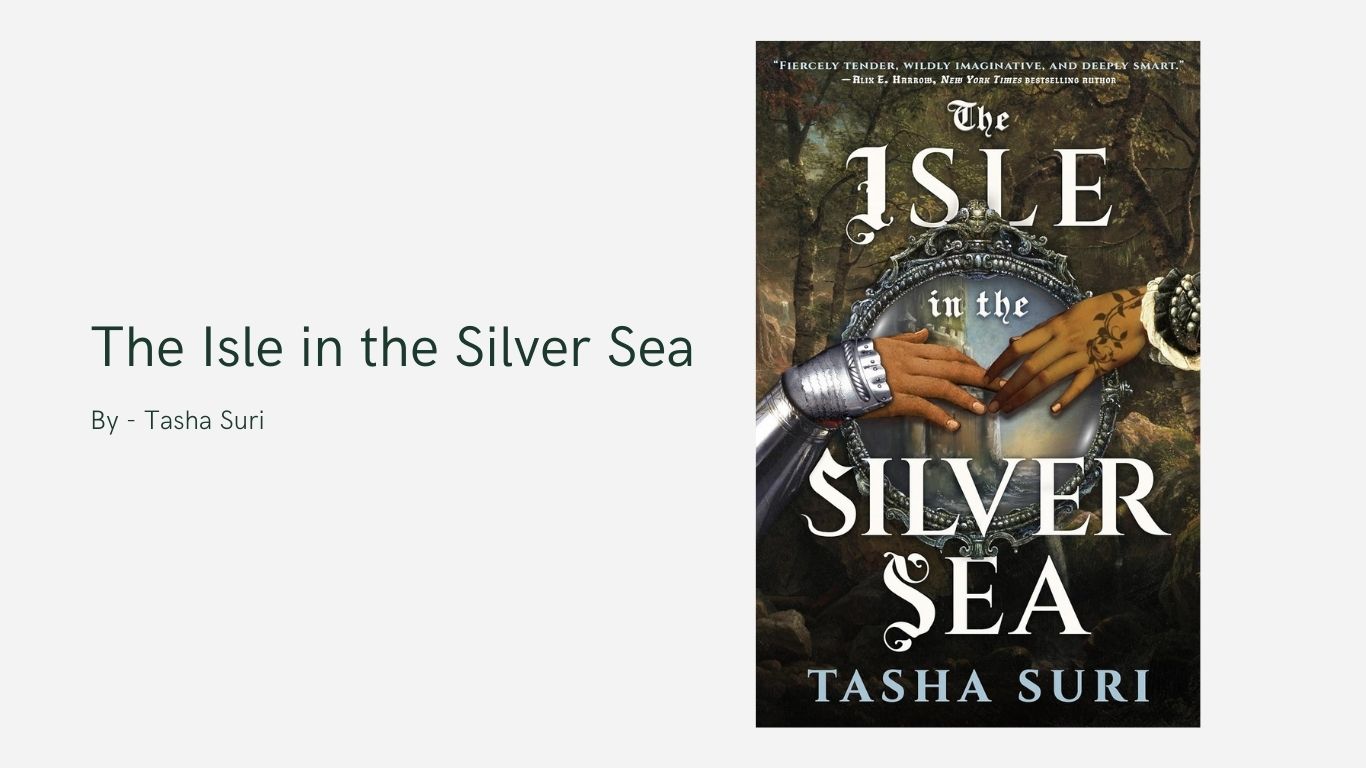
Reading Tasha Suri’s The Isle in the Silver Sea feels less like consuming a standard fantasy novel and more like listening to a secret whispered in the dark. It is a book that doesn’t shout; instead, it draws you in with a quiet, heavy intensity. It doesn’t rely on flashy magic battles or massive spectacle to keep you turning pages. Instead, it hooks you with atmosphere, the terrifying weight of fate, and the uneasy friction between loving someone and honoring your heritage.
This is a story about memory, about who gets sacrificed to keep the peace, and what happens when a country refuses to let its old ghost stories die. If you are the type of reader who gravitates toward folklore-heavy fantasy, sapphic romance that hurts in a good way, and worlds that operate in shades of grey, you are going to want to pick this up.
The Heart of the Story
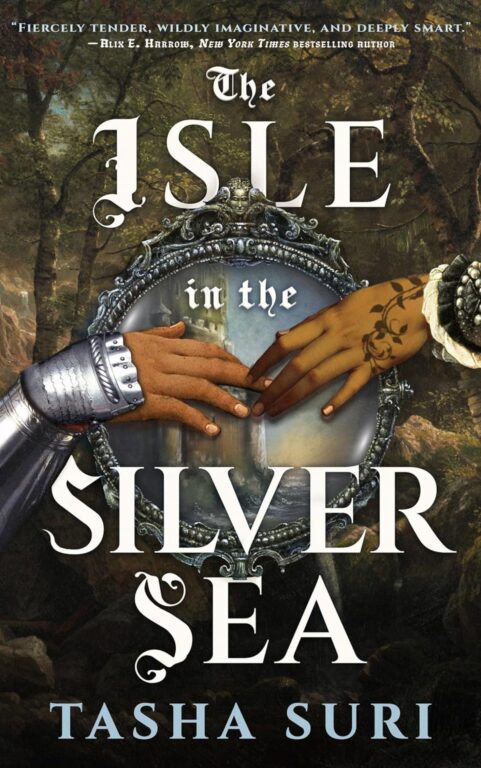
At the core of the novel are two women tethered together across time: Simran, a witch whose magic is knotted into the land’s history, and Lavinia (Vina), a knight sworn to protect the very traditions that bind them.
The concept here is fascinating. In this world, stories aren’t just bedtime tales or cultural artifacts—they are the literal glue holding the nation together. To maintain stability, certain narratives have to be reenacted endlessly. It’s a cycle that demands balance, even if that balance requires condemning people to repeat the same tragedies over and over again. Simran and Vina are trapped in one of these loops, doomed to find each other, fall in love, and lose one another across multiple lifetimes.
The book catches them in their current incarnation, exploring their growing affection and their desperate resistance against the roles the world has assigned them. It poses a dangerous question: is changing the story worth the risk of destroying the world?
A World Built on Stories and Bones
One of the things that really stuck with me was the world-building. The idea that a country is powered by folklore is such a unique, slightly unsettling concept. It forces you to think about how often societies rely on “the way things have always been” to maintain order, and who suffers for that stability.
The magic system here feels incredibly organic. It’s not about mana bars or rigid rules; it’s rooted in myth, emotion, and blood. It feels ancient and often cruel, a perfect mirror for how stories can preserve a culture while simultaneously acting as a cage. It gives the whole reading experience a sense of quiet menace—a reminder that beauty and brutality often walk hand in hand.
The Romance
Let’s be honest: Simran and Vina are the soul of this book. Their romance isn’t a whirlwind of instant passion; it’s a slow burn, built on shared glances and quiet moments rather than grand, sweeping declarations. There is a genuine warmth to their connection, but it’s layered with a constant, thrumming sense of dread. Both characters are painfully aware that history is against them.
What makes their dynamic so compelling is that it isn’t idealized. Their love isn’t a magical fix-it button that saves the day. It feels stubborn, fragile, and deeply human. The tenderness they share stands in such sharp contrast to the rigid, demanding world around them, which makes you root for them even harder.
Pacing and Rhythm
If I have a critique, it lies in the pacing. For most of the book, the rhythm is deliberate and slow, allowing you to really sink into the setting and the emotional lives of the characters. I loved that. However, as the story hurtles toward the end, things accelerate a bit too much for my taste.
Some of the conflicts wrap up faster than I expected, and there were certain political and philosophical threads that I felt deserved a bit more space to breathe. The ending is emotionally satisfying—it lands the punch—but it left me wishing the book had lingered just a little longer on the fallout. It’s not a dealbreaker, but the shift in speed is noticeable.
Themes of Power and Ownership
Underneath the fantasy elements, The Isle in the Silver Sea is a meditation on who controls the narrative. It looks at how dominant cultures preserve themselves by freezing stories in time, even when those stories no longer serve the people living them.
There are strong threads of belonging, assimilation, and resistance running through the entire text. Simran’s position as a witch—someone viewed as both essential for the magic but expendable as a person—mirrors so many real-world histories of marginalized groups. Suri weaves these themes into the plot seamlessly, so it never feels like you’re being preached at; it just adds a layer of emotional weight to the story.
Final Thoughts
Tasha Suri’s prose is, as always, beautiful. She balances lyricism with restraint, never over-writing but always painting a vivid picture. The tone is mournful and reflective, hopeful but realistic about the cost of change.
Ultimately, The Isle in the Silver Sea is a thoughtful, emotionally charged fantasy that values meaning over action. It asks difficult questions about tradition and the price of stability, all while telling a deeply personal story of two women trying to choose each other in a world determined to write their ending for them.
While the pacing at the end might leave you wanting a little more, the ideas and the emotions of this book will linger in your head long after you close the cover.