

- Their real names are Simon and Jenny, and they are wanted for the brutal murder of Jenny’s parents.
- Stevens has always excelled at creating characters whose emotional lives feel real, and that strength shines here.
- Alice and Tom’s loss shapes every decision they make.
- Their vulnerability is both their strength and their undoing.
- • Characters with emotional weightThe story is anchored by believable, emotionally layered characters whose pasts deep…
- Their internal struggles elevate the entire narrative.
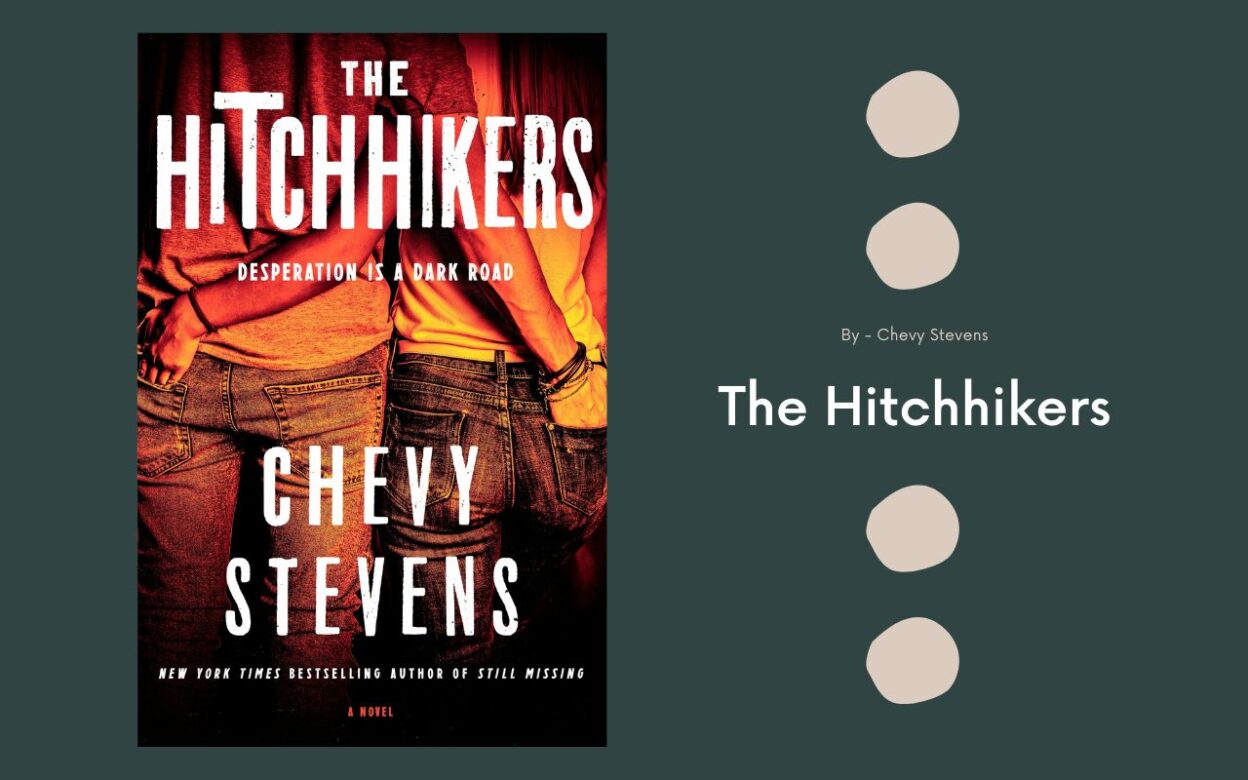
Chevy Stevens is best known for tightly wound psychological thrillers that turn ordinary settings into pressure cookers. In The Hitchhikers, she shifts the suspense onto the open road: an RV, a grieving couple trying to mend their fractured relationship, and two young strangers whose presence turns healing into horror. The novel poses unsettling questions about trust, guilt, trauma, and emotional survival, building toward a dangerous journey that tests every weakness the characters carry. This review explores the story, the characters, and the strengths and shortcomings of the novel, offering an honest look at who will enjoy this book and why.
How the Story Unfolds (Plot Information)
The novel begins in the summer of 1976. Tom and Alice, a couple from Seattle, are drowning in sorrow after the loss of their newborn daughter. Hoping that distance and quiet might help them reconnect, they buy an RV and set out on a long road trip across Canada.
During the early days of their journey, they meet two hitchhikers at a campground — a confident, charming young man who introduces himself as Blue, and a quiet girl he calls Ocean. Both seem friendly, even grateful for the ride, and Tom and Alice, longing for distraction from their grief, welcome the company.
But their comfort is short-lived. Soon Alice recognizes the pair from a newspaper photo. Their real names are Simon and Jenny, and they are wanted for the brutal murder of Jenny’s parents. The easy companionship turns to terror as Tom and Alice realize they are trapped inside their own RV with two fugitives who have nothing to lose.
What follows is a relentless, claustrophobic road trip across isolated highways, where every mile increases the danger. The story alternates between present-day captivity and flashbacks that reveal Simon and Jenny’s troubled pasts — trauma, manipulation, desperate loyalty — as well as Tom and Alice’s emotional wounds. Each revelation adds complexity to the characters, blurring the lines between victim, survivor, and perpetrator.

Characters and Voices: Who Carries the Book
Stevens has always excelled at creating characters whose emotional lives feel real, and that strength shines here. Alice’s grief is written with subtlety: her memories, small routines, and quiet struggles give weight to her perspective. Tom’s guilt and desire to hold his marriage together provide another emotional layer.
Simon is a chilling antagonist — unpredictable yet undeniably charismatic — while Jenny is portrayed with haunting ambiguity, shaped by years of abuse and emotional dependence. The dual viewpoint structure gives readers insight into both the victims and the criminals, allowing the tension to build from multiple angles.
Many readers appreciate the emotional depth the author brings to these characters, which makes the danger feel more personal and the stakes more intense.
Pacing, Tension, and the Use of Repetition
The pacing is one of the more debated elements of the novel. There are sections of the book that feel incredibly tight — confrontations, sudden eruptions of violence, and moments where small choices lead to startling consequences.
However, the story also includes repetitive cycles of similar violent encounters, which some readers will find atmospheric while others may find them drawn out. These sequences contribute to the sense of exhaustion and dread, but they occasionally slow the momentum.
Still, the book maintains steady tension overall, especially through its emotional undercurrents and the unpredictability of the hitchhikers.
Themes: Grief, Survival, and Moral Gray
Although the book is structured like a kidnapping thriller, the emotional foundation is grief. Alice and Tom’s loss shapes every decision they make. Their vulnerability is both their strength and their undoing.
Stevens also explores how trauma influences behavior. Simon and Jenny’s pasts do not excuse their crimes, but the author shows how cycles of violence and manipulation can create damaged individuals who learn the wrong lessons about love and loyalty.
The novel ultimately asks how far someone can be pushed before they break — and how much empathy a reader is willing to extend to morally conflicted characters.
What Works Best
• Characters with emotional weight
The story is anchored by believable, emotionally layered characters whose pasts deeply influence the present. Their internal struggles elevate the entire narrative.
• The unsettling atmosphere of constant travel
An RV becomes both prison and battleground. The confined space mixed with endless roads creates a unique kind of tension.
• Moral complexity
The antagonists are not flat villains; they carry histories that complicate how readers interpret their actions.
Where the Book May Frustrate Some Readers
The most frequent criticism is that certain violent episodes become repetitive, slightly dulling the sense of shock. Some readers also find the ending predictable or less explosive than expected.
This is not a twist-heavy thriller. Instead, it relies on character pressure, emotional wounds, and steadily building dread. Readers seeking a puzzle-box structure may find it less satisfying, while those drawn to psychological tension will appreciate its approach.
Final Verdict
The Hitchhikers is an emotionally charged, character-centered thriller that blends grief with danger in a way that feels gritty and human. Its greatest strengths lie in its character development and its exploration of trauma. The weaker points involve occasional pacing issues and twists that might not catch every reader off guard.
Overall, it’s a gripping read that will appeal to fans of psychological suspense, emotionally layered storytelling, and morally complicated characters. If you enjoy thrillers that focus as much on internal struggle as external threat, this book will stay with you long after you put it down.