

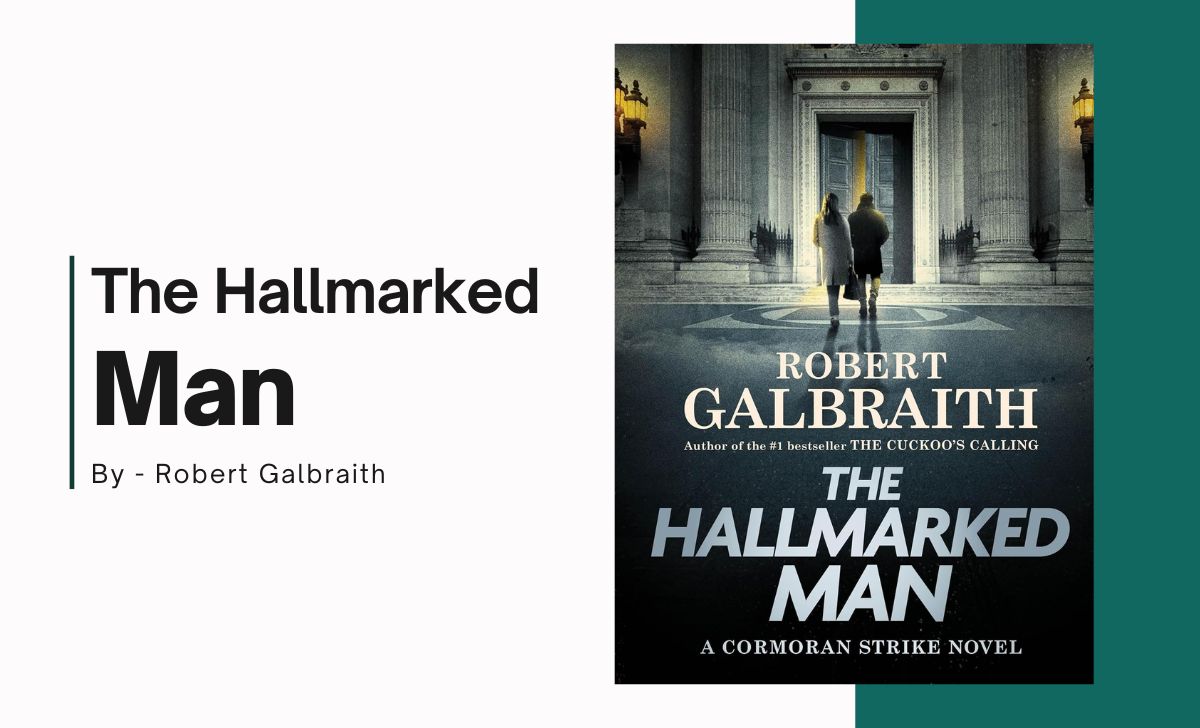
Robert Galbraith’s The Hallmarked Man lands as the eighth novel in the Cormoran Strike series and will feel familiar to anyone who’s followed Strike and Robin through earlier cases: meticulous procedural work, long emotional arcs, and a densely populated London that acts as character as much as setting. Yet this instalment widens the book’s emotional lens — bringing trauma, grief and the characters’ private lives into sharper focus — while still delivering the puzzle-driven chase that fans expect. The result is a rewarding, if sometimes unwieldy, entry in a series that has never shied away from scale.
What happens (plot overview)
The novel opens with a grim and arresting discovery: a badly mutilated body found in the vault of Ramsay Silver, a shop tucked behind Freemasons’ Hall that specialises in Masonic silverware. The body’s mutilations and the mysterious letter “G” carved into it point to symbols associated with Freemasonry — and the police think the dead man is one identity while the woman who hires Strike, Decima Mullins, insists the corpse is someone else entirely: her missing partner, Rupert Fleetwood. As Strike and Robin dig in, they encounter a tangle of missing men, possible murders, and a network of secrets that stretches beyond a single crime scene. Subplots braid in — Robin’s recovery and complicated personal life, Strike’s bruised but loyal circle, and an escalating public smear campaign that threatens the detectives’ reputations.
Strengths: character, atmosphere, and plotting
Galbraith (J.K. Rowling writing as Robert Galbraith) is at her best when she balances meticulous clue-gathering with humane character moments. The investigative work in The Hallmarked Man feels methodical and plausible — from the tiny forensic clues to the more old-fashioned legwork — and the London locations are written with the series’ usual textured specificity. Crucially, the book gives Robin and Strike room to breathe as people, not just detectives: their tangle of affection, professional respect, and missed opportunities is threaded through scenes that make readers care about outcomes beyond whodunit. Many reviewers praise how emotional stakes and investigative logic are held in tension without one completely overshadowing the other.
Themes and tone
Under the procedural surface sit sustained examinations of trauma, vulnerability and the aftershocks of sexual violence — material the series has confronted before and returns to here with empathy and careful attention. There are also recurring motifs of secrecy and ritual (the Freemasonry symbols and ciphers play into this), which feed the book’s atmosphere of hidden hierarchies and private loyalties. Galbraith’s prose tends toward exact description rather than flourish; that restraint suits the novel’s tone, keeping it anchored even during long stretches of exposition.
What doesn’t quite land
Ambition is both the novel’s virtue and its burden. At roughly nine hundred pages, The Hallmarked Man asks readers to hold a large cast of characters in mind — several of whom appear only briefly before receding — and to track interlocking timelines and motives. Critics and many readers note that new name introductions and side threads can sometimes dilute forward momentum, making the middle sections feel slower than the electric opening and the payoff. A few reviewers also argue that the novel’s increasing attention to the will-they/won’t-they dynamic between Strike and Robin occasionally overshadows the central mystery, shifting the book’s center of gravity from puzzle to relationship drama.
Pacing and structure
Galbraith’s structural choices — layered flashbacks, chapter-opening epigraphs, and nested reveals — reward patient readers. The pacing is nimble during investigation sequences and slower during domestic/relationship-focused chapters; some readers will appreciate the emotional patience, others will find the dips frustrating. The narrative’s tendency to accumulate threads before resolving them creates a satisfying mosaic for those who enjoy complexity, but it also increases the chance that a reader will forget minor players introduced early on. The novel’s ending delivers answers, but it leaves deliberate emotional and relational openness for the series to continue.
Tone and language choices
Galbraith’s language is plain but observant: she often signals emotion through small gestures or domestic details rather than sweeping statements. That approach gives the book a lived-in quality; however, it can also make some chapters feel like functional set pieces rather than moments of dramatic revelation. The author leans into Victorian and early 20th-century poetry as a recurring motif, which some readers will find enriching and others unnecessary.
Final verdict
If you come to The Hallmarked Man for detective work and a carefully mapped mystery, you’ll find both in abundance. If you come for a lean, quick-paced thriller, you may be surprised by the book’s scope and by how much it asks you to live inside its characters’ private lives. For longtime fans of Strike and Robin, this is a gratifying continuation: it deepens their emotional arcs while still offering the intellectual pleasures of a classic puzzle. For readers who like their crime fiction tightly focused, the book’s length and sprawling cast may be a test of patience — but also a generous reward if you’re willing to stay the course.