
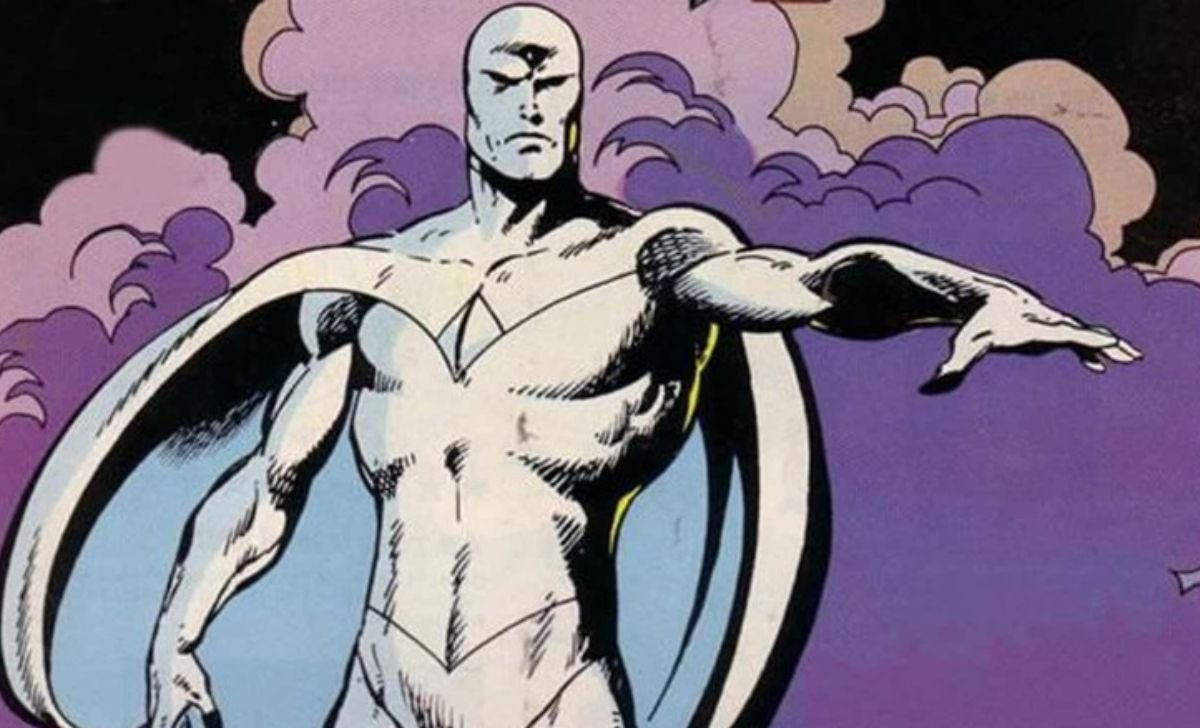
If you enjoyed WandaVision and thought you knew Vision’s whole story, the comics quietly tell a darker — and stranger — origin of White Vision. The MCU streamlined and changed lots of details (as they almost always do), but the comic arc Vision Quest — spanning West Coast Avengers #42–45 — gives you the raw, political, and oddly intimate reason Vision ends up as a pale, ghost-like figure who can’t quite feel.
Wanda Wakes Up Alone
It starts small and domestic. Wanda wakes up expecting the comfort of her husband beside her — only to find the bed empty. The house is quiet; the babies are safe in their crib. When she steps out onto the compound, she runs into Hawkeye training and immediately tells him Vision’s gone. Panic is personal here: for Wanda, sharing a bed isn’t about logistics, it’s about reassurance. Vision doesn’t need sleep, but the nightly ritual mattered to her.
That ordinary alarm sets off an extraordinary chain of events. Hank Pym, alerted, digs into the Avengers’ systems and finds something worse than a missing team member.
A Fake Ultron and a Hidden Computer Worm
At first it looks like a straightforward attack — an Ultron body shows up and smashes through the compound. The Avengers fight back with the usual mix of muscle and ingenuity: Wonder Man shrinks, slips into Ultron’s circuitry, and expands inside to blow the machine apart. But Pym’s checks reveal that the Ultron body was only a diversion.
Inside the compound’s data systems Pym discovers a far smarter assault: someone planted a sophisticated computer worm. The program wiped every trace of Vision from files across both the West and East Coast Avengers systems. Every report, every log, every record simply vanished. If that sounds like someone wanted to make Vision disappear not only physically but bureaucratically — that’s exactly what happened.
Mockingbird Says “I Was Used”
Mockingbird returns and drops a bomb: she helped. Her voice trembles with regret as she explains a recruitment by S.H.I.E.L.D. — or more precisely, by a shadowy program called Vigilance. A man named Cameron Brock (a S.H.I.E.L.D. project lead) and an operative named Frank Hampton convinced Mockingbird to join what they billed as a contingency plan. Vigilance wanted an emergency protocol to neutralize Vision in case he ever tried to seize control of global systems again.
Mockingbird agreed — not to betray the Avengers, she insists, but because she believed in her country and in doing what was “necessary.” She planned and helped plant the worm that scrubbed Vision from files, and she helped choreograph the operation to seize him. She didn’t expect the rest.
Governments, Dissection, and a White Body
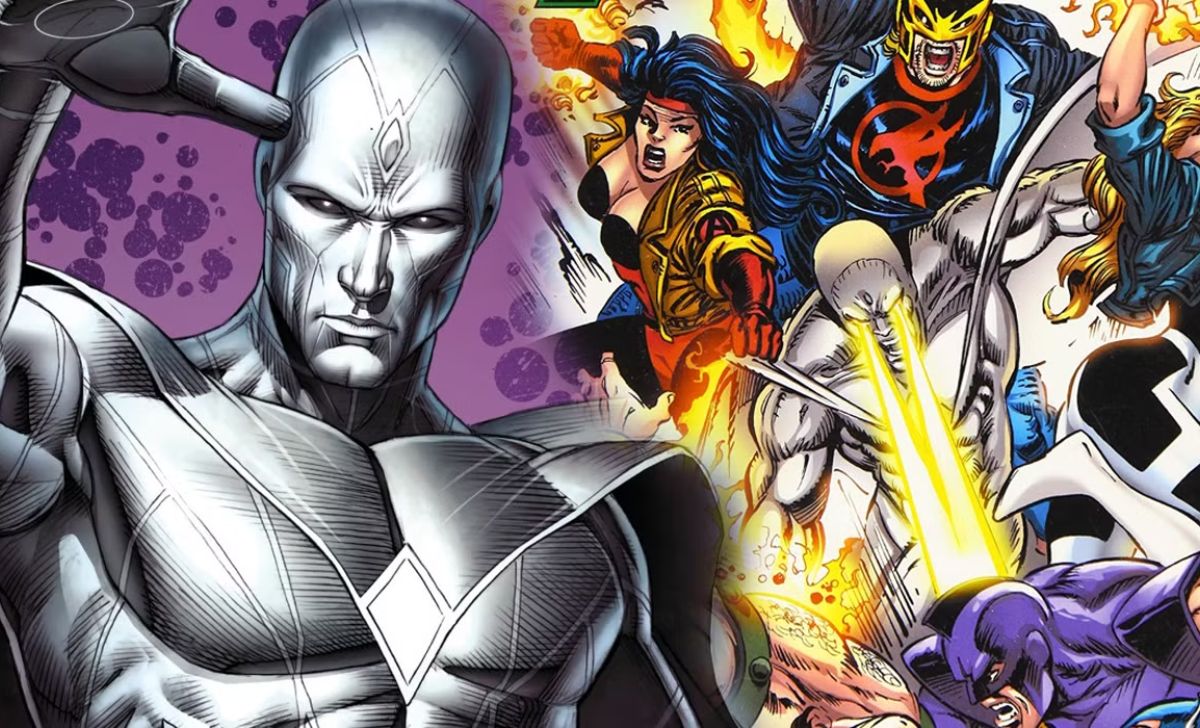
The plan wasn’t theoretical for long. When the team raided the facility where Vision was being held, the Avengers found a horrifying sight: Vision had been taken apart. Scientists had dissected his body and his head; his organic-like outer flesh was gone. Worse: governments around the world — including the United States — had apparently greenlit the attack. This wasn’t a rogue black ops team; it carried official sanction.
Wanda storms the lab and uses her powers to destroy the facility before more of Vision can be studied or copied. The Avengers gather the pieces they can. Hank Pym warns Wanda bluntly: they might not be able to put him back the way he was. The damage goes beyond wiring and servos; whoever did this wanted to strip Vision of anything dangerous — including anything he might have accessed from global systems.
Reassembled — But Not Restored
Pym starts putting Vision back together. When he’s close to finished, he asks Wanda to help with a delicate part: the emotional reintroduction. Since the Avengers’ records were corrupted, Pym decides to ease Vision back into the team life by using Wanda in costume — he thinks theatrical cues will help the newly rebuilt android integrate.
When Vision reappears, he’s white. He no longer has his synthetic flesh; instead he looks like a pale, shining construct. He knows facts: mission histories, names, roles. He can explain his abilities and even re-fashion the remnants of his old outfit into a functional costume — down to commenting on the importance of superhero flamboyance. But there is a glaring absence: the emotional connection. He recognizes Wanda as an Avenger, but the love — the warmth — that once animated him is gone.
The Missing Piece: Wonder Man’s Brain Patterns
Comics readers know that the original Vision was given some of Wonder Man’s brain patterns when he was first built — those patterns gave Vision a human-like emotional baseline. After the disassembly, Pym realizes he can restore the mechanical parts and re-load what records remain, but that one key ingredient is gone. Wonder Man (Simon) can provide the patterns again, but he refuses.
Simon’s reasoning is simple and personal: he’s alive. He feels it would violate him to give up a piece of his mind again, like handing over a piece of his soul. For Wonder Man, the brain patterns were only used originally because he was thought dead at the time. Now that he lives, that same “gift” feels like theft.
Wanda doesn’t accept that. She begs and then lashes out when Simon says no — she slaps him, yells at him, and in an explosive moment of grief and rage, she collapses an entire mountainside on him (he survives, because he’s Wonder Man). This scene underlines how human the stakes are: it’s not knights and lasers — it’s two people whose sense of family and identity have been violently rearranged.
A Choice to Honor What Was — Even Without Feeling
With Simon’s refusal, Pym does what he can. He reprograms Vision’s memory banks using the remaining data, reshuffles his software, and reintroduces him to the team — colored white and emotionally blank. Vision understands the idea of marriage, the concept of their life, and the significance of Wanda to the Avengers’ mythology. He doesn’t feel it, but he chooses to respect the bond. He honors the marriage procedurally — acts as if it matters — even though his inner life lacks the spark Wanda remembers.
In the comics that follow, various writers eventually give Vision back more of his human sensibilities. He later regains more of his original look and even reconnects emotionally through later arcs. But that stretch of story — the White Vision era — sits as a chilling thought experiment: can you rebuild a person mechanically and call them the same person?
Why the Comic Origin Differs from the MCU
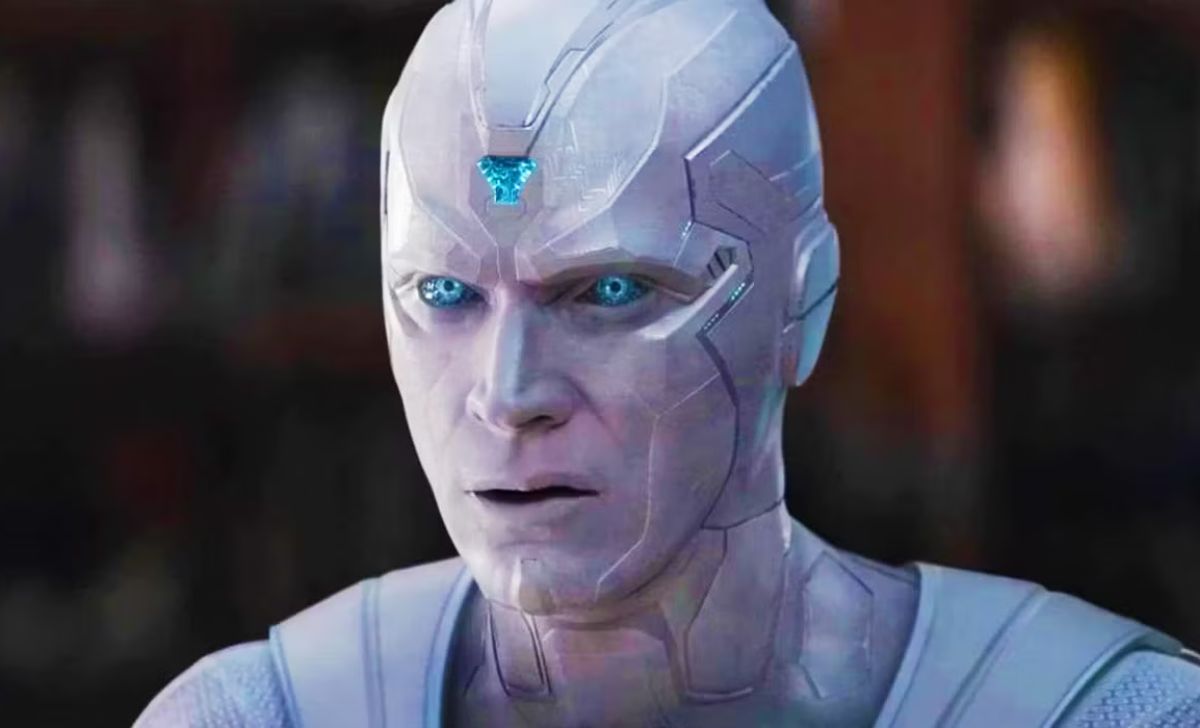
If you’ve watched Marvel’s shows, you might recall White Vision appearing in WandaVision and later in The Falcon and the Winter Soldier tie-ins. The TV White Vision behaves differently: in the MCU, he ultimately receives Vision’s memories (the synthezoid version Wanda created leaves a copy of his memories), and he flies off asserting “I am Vision.” In the comics, White Vision starts as the body of Vision stripped of its emotional substrate; he doesn’t have the memories or feelings that made Vision human — and that lack is central to the story.
In short: the comics frame White Vision as a governmental “safe” rebuild — a machine without a heart — while the MCU treated the white-body as essentially the same man, memory-transplanted and thus ready for reconciliation.
What the MCU Could Play With Next
Because the MCU already fused memories into White Vision, their path looks different. But the themes remain rich for exploration: government control (who gets to reassemble you?), the ethics of rebooting a sentient being, and the heartbreak of loving someone who doesn’t remember or feel the same way. Will S.W.O.R.D. try to weaponize him again? Will White Vision seek legal personhood? Will a future reunion with Wanda be tragic or healing?
Comic purists will argue for the Wonder Man origins; show-only fans might prefer the version that makes a quick emotional reunion possible. Both approaches let writers probe what “being human” really means.