

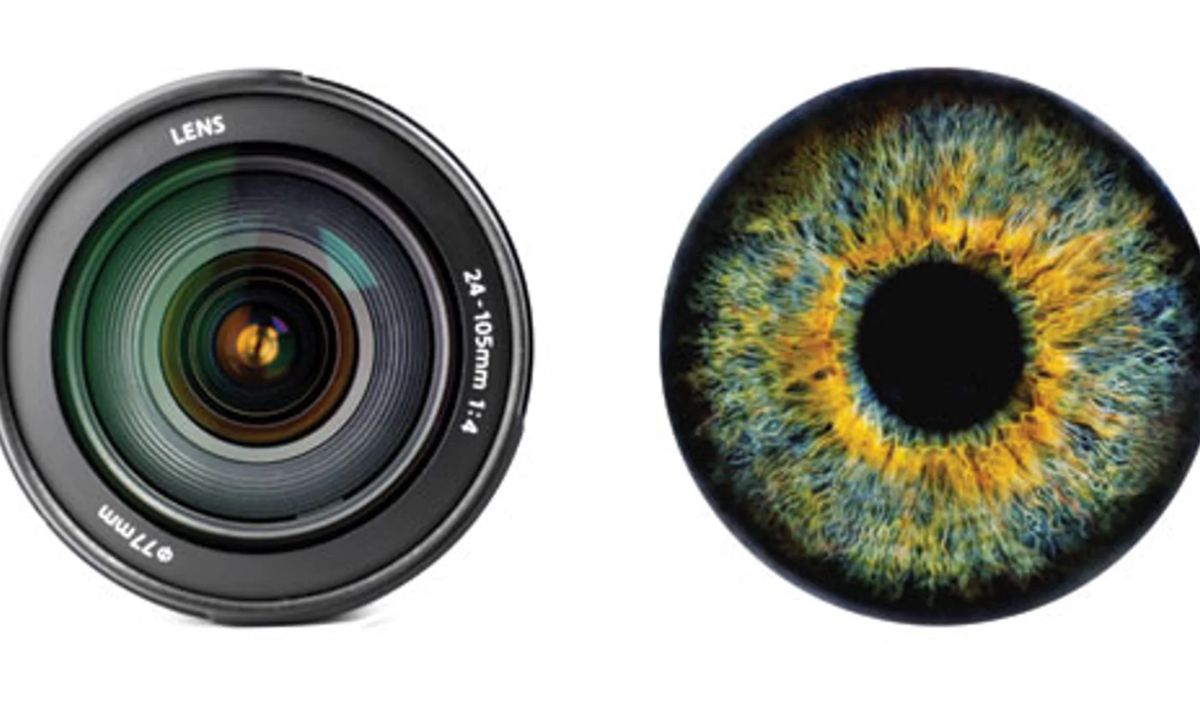
The human eye stands as nature’s most sophisticated optical instrument, capturing the world around us with remarkable precision and adaptability. In The Eye vs. The Megapixel Camera debate, as digital cameras advance toward higher megapixel counts and improved sensors, photographers and scientists alike wonder: how do our biological vision systems compare to these technological marvels? Understanding this comparison reveals fascinating insights about both human perception and camera technology, while highlighting the fundamental differences between biological and digital image processing.
The Megapixel Mystery: Quantifying Human Vision
Scientists estimate that the human eye processes visual information equivalent to approximately 576 megapixels. This calculation assumes optimal visual acuity across the entire field of view, accounting for the eye’s ability to move around a scene and gather detailed information. The mathematical foundation for this estimate considers the eye’s horizontal field of view of approximately 120 degrees and vertical coverage of similar scope.
However, this figure represents a theoretical maximum rather than practical visual capability. The calculation assumes perfect vision conditions and accounts for the eye’s dynamic scanning behavior rather than a single instantaneous snapshot. Modern high-end digital cameras typically feature sensors ranging from 20 to 100 megapixels, with specialized industrial sensors pushing beyond 400 megapixels. This suggests that while human vision excels in theoretical resolution potential, camera technology continues advancing toward and beyond human-equivalent specifications.
The Architecture of Vision: Fovea vs. Peripheral Processing
Human visual architecture operates fundamentally differently from camera sensors. The fovea centralis, a small depression measuring approximately 0.35 mm in diameter, contains the highest concentration of cone photoreceptors and produces our sharpest vision. This tiny region represents less than 1% of the visual field yet consumes over 50% of the visual cortex in the brain.
Central vision through the fovea achieves remarkable acuity equivalent to 20/20 vision, but this sharp focus covers only about 2 degrees of the visual field. Visual acuity drops dramatically outside this central zone – at just 2 degrees off-center, acuity falls to half the foveal value, and by 20 degrees, it reaches only one-tenth the central resolution. In contrast, camera sensors distribute pixels uniformly across the entire frame, capturing consistent detail throughout the image area.
The peripheral vision system specializes in motion detection, contrast sensitivity, and spatial awareness rather than fine detail resolution. This biological design prioritizes survival functions – detecting approaching threats or changes in the environment – over uniform high-resolution capture across the visual field.

Dynamic Range: The Eye’s Adaptive Advantage
Dynamic range represents the ratio between the brightest and darkest areas an imaging system can capture simultaneously. Human eyes demonstrate exceptional dynamic range capabilities, estimated at approximately 20 stops in a single scene, with the ability to adapt to lighting variations spanning up to 24 stops through pupil adjustment.
Modern digital cameras typically achieve 12-15 stops of dynamic range, with high-end professional models reaching 15-17 stops. The human eye’s advantage stems from its continuous adaptation mechanisms – pupils dilate and constrict automatically, photoreceptor sensitivity adjusts chemically, and the brain processes information from both eyes to enhance overall dynamic range performance.
This biological adaptability enables humans to perceive detail in both shadows and highlights simultaneously, a capability that cameras attempt to replicate through HDR processing techniques. However, camera HDR requires multiple exposures or specialized sensor technology, while human vision achieves this naturally through integrated biological systems.
Processing Power: Brain vs. Silicon
The fundamental difference between human vision and camera systems lies in information processing. Cameras capture static images with fixed parameters – shutter speed, aperture, and ISO sensitivity determine the final result. The human visual system operates more like a sophisticated video processing unit combined with artificial intelligence.
Brain processing involves approximately 86 billion neurons making trillions of connections, with roughly half the nerve fibers in the optic nerve carrying information from the tiny fovea alone. This massive parallel processing power enables real-time image enhancement, motion prediction, pattern recognition, and seamless integration of information from both eyes.
Visual perception involves complex hierarchical processing where different brain regions analyze specific image components – orientation, color, motion, shape, and object recognition. The brain constructs a coherent visual experience by combining these distributed processing results, filling in gaps, correcting distortions, and maintaining perceptual stability despite constant eye movements.
Saccadic Movements: The Eye’s Scanning Strategy
Human eyes perform rapid jumping movements called saccades approximately 3-4 times per second, repositioning the fovea to gather detailed information from different parts of the visual scene. These ballistic movements occur so quickly that the brain suppresses visual processing during the movement itself, preventing motion blur awareness.
Saccadic eye movements enable humans to build a comprehensive high-resolution mental map of the environment despite having only a tiny area of true high-acuity vision. This scanning strategy allows the visual system to achieve the theoretical 576-megapixel capability by sequentially capturing detailed snapshots and integrating them into a unified perceptual experience.
Cameras lack this dynamic scanning capability and must capture the entire scene simultaneously at maximum resolution. This fundamental difference explains why camera sensors require uniform pixel distribution across the frame, while human vision can achieve high perceived resolution through strategic sampling and intelligent processing.
Color Perception and Sensitivity
Human color vision relies on three types of cone cells sensitive to different wavelengths, enabling perception of approximately 10 million distinct colors. The eye’s color sensitivity peaks in daylight conditions, with cone cells concentrated heavily in the foveal region. Color perception degrades significantly in peripheral vision, with strong color discrimination limited to approximately 20 degrees from the center.
Digital camera sensors typically use RGB filter arrays over silicon photodetectors, attempting to replicate human color vision through computational processing. Modern cameras can capture extensive color gamuts and often exceed human color reproduction capabilities in controlled conditions. However, cameras lack the adaptive color processing that human vision provides through brain interpretation and contextual adjustment.

Low-Light Performance: Rods vs. Pixels
Human night vision operates through rod photoreceptors, which peak in density at approximately 18 degrees from the foveal center. Rod cells provide exceptional sensitivity to dim light but cannot distinguish colors, creating the familiar phenomenon where peripheral vision detects faint objects better than direct central viewing.
This biological design explains why pilots train to use peripheral vision for spotting distant aircraft at night – the rod-rich peripheral retina offers superior light sensitivity compared to the cone-dominated fovea. Camera sensors attempt to match this low-light performance through larger pixel sizes, higher ISO capabilities, and noise reduction algorithms.
Modern full-frame camera sensors with larger pixels can achieve impressive low-light performance, sometimes exceeding human night vision capabilities in extremely dark conditions. However, cameras lack the automatic sensitivity switching between photopic (daylight) and scotopic (nighttime) vision modes that human eyes perform seamlessly.
Modern Camera Technology: Chasing Human Performance
Contemporary camera sensors demonstrate remarkable technological advancement. Sony’s latest industrial sensors achieve 105 megapixels at 100 frames per second, while Canon has demonstrated 410-megapixel full-frame sensors for specialized applications. Smartphone cameras now incorporate sophisticated computational photography, HDR processing, and AI-enhanced image processing to compensate for their smaller sensor limitations.
The largest smartphone sensors, such as the 1-inch Sony IMX989 and LYT900, approach the light-gathering capability of professional cameras while maintaining compact form factors. Advanced CMOS technologies enable features like global shutters, high-speed readout, and integrated image processing that rival or exceed specific aspects of human visual performance.
The Convergence Question: Will Cameras Surpass Human Vision?
Camera technology continues advancing rapidly, but human vision maintains significant advantages in several key areas. The brain’s parallel processing power, adaptive dynamic range, intelligent scene analysis, and seamless integration of multiple sensory inputs create a visual experience that cameras struggle to replicate fully.
However, cameras excel in areas where human vision shows limitations: uniform resolution across the frame, extended spectral sensitivity beyond visible light, precise exposure control, and the ability to freeze fast motion without blur. Industrial and scientific applications already utilize camera systems that exceed human visual capabilities in specific metrics.
The comparison ultimately reveals that human vision and camera technology serve different purposes and excel in complementary areas. Human vision prioritizes survival, adaptation, and intelligent interpretation, while cameras focus on accurate recording, consistent performance, and technical precision.
Understanding the Practical Implications
For photographers and visual professionals, understanding these differences helps optimize both human perception and camera technology. The eye’s foveal concentration suggests that viewers focus primarily on central image areas, making composition and focal points crucial for visual impact. The brain’s gap-filling and pattern recognition capabilities mean that technical perfection matters less than compelling content and emotional resonance.
Camera technology offers advantages in capturing moments that human vision cannot perceive – high-speed events, extended dynamic range through HDR, and consistent quality across varied lighting conditions. Modern computational photography combines multiple exposures, AI processing, and advanced algorithms to create images that often exceed what humans perceived in the original scene.
The Future of Visual Technology
As camera sensors continue improving and computational photography advances, the gap between human vision and artificial imaging systems will likely narrow in some areas while widening in others. Future developments in sensor technology, processing power, and AI integration may eventually produce imaging systems that exceed human visual capabilities across multiple dimensions simultaneously.
However, the human visual system’s billion-year evolutionary optimization for survival, adaptation, and intelligent interpretation suggests that biological vision will maintain unique advantages in contextual understanding, scene analysis, and perceptual integration. The most effective visual technologies will likely combine the technical precision of advanced cameras with computational systems that mimic the brain’s sophisticated processing capabilities.
The comparison between the eye and megapixel cameras reveals not a simple winner, but rather two remarkable systems optimized for different purposes. Understanding both their capabilities and limitations enables better appreciation of human perception while informing the continued development of visual technologies that enhance rather than simply replicate our natural visual abilities.