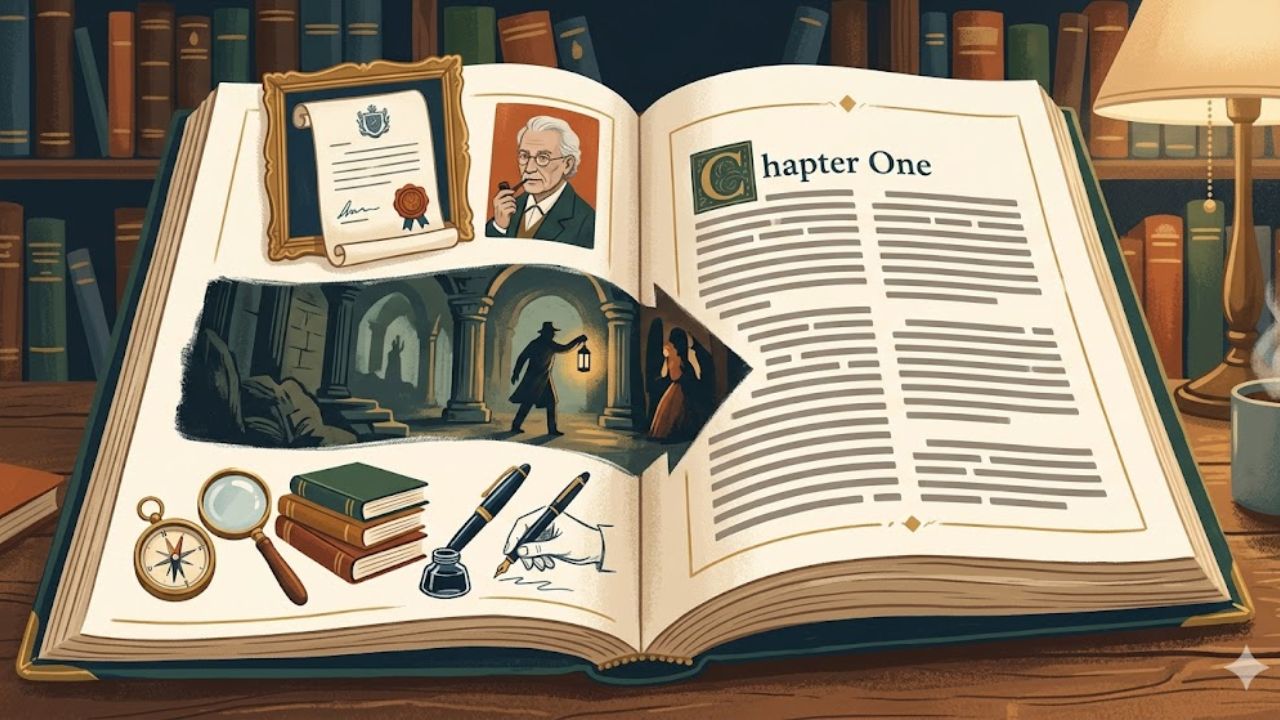
Most readers flip past the opening pages of a book without a second thought. But those pages carry names — Prologue, Foreword, Introduction — and most people use them interchangeably. They shouldn’t. Each one is a distinct literary device with a different purpose, a different author, and a different relationship with the reader. Get them confused, and you risk undermining your credibility as a writer before the first real chapter even begins.
Why This Confusion Exists
Walk into any bookstore, pick up ten books at random, and you’ll find these terms used inconsistently — sometimes deliberately, sometimes by mistake. Publishers have been bending the rules for decades. Authors slap “Introduction” on what is clearly a foreword. Novelists title their scene-setting opening a “Preface” when it should be a “Prologue.”
The confusion is understandable. All three appear at the front of a book. All three come before the “real” content begins. And all three, at a glance, seem to do roughly the same thing: prepare the reader for what’s ahead.
But look closer, and the differences become not just clear — they become essential.
The Prologue: A Story Before the Story
The prologue belongs almost exclusively to the world of fiction, though it occasionally appears in narrative nonfiction and memoirs. It is, in every meaningful sense, part of the story itself.
A prologue is written from within the narrative universe of the book. It may be penned in the same voice as the rest of the novel, or it may shift perspective — but it always lives inside the fictional world. The events, characters, or atmosphere it contains are directly tied to the main narrative.
What a Prologue Does
A prologue typically serves one or more of the following functions:
- Sets the stage before the story’s main timeline begins. It might show a scene from the distant past that explains a character’s motivation, or reveal an event whose consequences ripple through the entire plot.
- Creates dramatic tension or mystery. Many thrillers open with a prologue showing a crime, a death, or a conflict — then jump back in time to show how the story arrived there.
- Establishes tone and atmosphere. A Gothic novel might use a prologue to drench the reader in dread before the first chapter properly begins.
- Introduces a narrator or framing device. Sometimes the prologue is told by a different voice — an older version of the protagonist, a minor character, or even an omniscient observer.
A Classic Example
In Romeo and Juliet, Shakespeare opens with a prologue spoken by a Chorus — a poetic summary that tells the audience exactly how the story will end before it begins. Rather than killing the suspense, it deepens it. The reader watches every scene knowing what’s coming, which creates an unbearable dramatic irony.
Similarly, modern thrillers like Gone Girl by Gillian Flynn famously use prologues to plant questions and disorientation in the reader’s mind from the very first page.
What a Prologue Is NOT
A prologue is not the author stepping out from behind the curtain to explain the book. The moment you see “I spent three years researching this novel” or “This book is structured in four parts” — that is not a prologue. That’s a preface or introduction.
The rule of thumb: If it could appear as a scene or chapter in the book itself, it’s a prologue. If it couldn’t, it isn’t.

The Foreword: Someone Else’s Voice
Here is the simplest way to remember what a foreword is: you didn’t write it.
A foreword is always written by someone other than the book’s primary author. It is, essentially, a letter of endorsement — an introduction to the book written by a person whose name, expertise, or reputation lends credibility, context, or prestige to the work.
What a Foreword Does
- Establishes the book’s credibility. A medical memoir with a foreword by a respected physician carries more weight. A business book with a foreword by a Fortune 500 CEO signals authority.
- Contextualizes the book within a larger conversation. The foreword writer might explain why this book is needed now, how it fits into the existing literature on a subject, or what makes it different from everything else on the shelf.
- Builds the author’s ethos. For debut authors especially, a foreword from a well-known figure can be the difference between a book being taken seriously or overlooked.
- Creates an emotional entry point. A foreword to a memoir written by someone who knew the subject personally can give readers an intimate window into the story before it starts.
Who Writes Forewords?
Forewords are typically written by:
- Experts in the book’s subject matter
- Fellow authors, especially more famous or established ones
- Colleagues, mentors, or collaborators of the author
- Public figures with a stake in the book’s message
- Editors or translators in the case of classic or translated works
A Note on Spelling
It is “foreword” — not “forward.” This is one of the most common typos in publishing, and it matters more than you think. The word is literally a compound of “fore” (before) and “word” — it is the word that comes before the book. Submitting a manuscript with “Forward” written on that page is an immediate red flag to any literary agent or editor.
What a Foreword Is NOT
A foreword is not written by the author of the book. Full stop. If the primary author writes the opening section themselves, it is something else — likely a preface or an introduction.
It is also not a review. A foreword is curated, intentional, and collaborative. The author and publisher typically choose the foreword writer carefully, and the writer usually has access to the manuscript before writing it.
The Introduction: The Author’s Handshake with the Reader
The introduction is the most practical of the three. It is written by the book’s author — or, in some academic or anthology cases, by an editor — and it serves as a direct, honest orientation to the book itself.
If the prologue is part of the story and the foreword is someone else’s testimony, the introduction is the author’s personal briefing to the reader before the content begins.
What an Introduction Does
- Explains the book’s purpose. What problem does it solve? What question does it answer? Why does it exist?
- Describes the book’s structure. The author may walk the reader through how the chapters are organized, what each section covers, and how to get the most out of the book.
- Shares the author’s credentials or journey. Especially in nonfiction, the author often explains why they are the right person to write this book — their research, their experience, or their personal connection to the subject.
- Sets expectations. A good introduction tells readers what the book is and what it is not. It defines the scope, acknowledges limitations, and frames the conversation.
- Establishes the author’s voice. Before the reader commits to hundreds of pages, the introduction allows the author to make a case for the relationship between them.
Introduction vs. Chapter One
One question writers frequently wrestle with: When does an introduction become the first chapter?
The line is blurry, but here is a useful distinction. A chapter one dives into the content — it begins to make arguments, tell stories, or build cases. An introduction explains why you’re about to hear those arguments, stories, or cases. The introduction is the map; chapter one is when the journey begins.
If you find yourself writing an introduction that is more engaging and narrative-driven than functional, consider whether it should simply be chapter one.
Where Introductions Appear Most
Introductions are standard in:
- Nonfiction and self-help books, where context and credibility matter enormously
- Academic texts, where the methodology, scope, and argument structure must be stated upfront
- Essay collections and anthologies, where the editor introduces the theme, the contributors, and the curatorial vision
- Revised or anniversary editions, where the original introduction is sometimes preserved and a new one added to address updates or reflect on the book’s legacy
Side-by-Side Comparison
| Feature | Prologue | Foreword | Introduction |
|---|---|---|---|
| Who writes it? | The book’s author | Someone other than the author | The book’s author (or editor) |
| What genre? | Fiction (mostly) | Nonfiction (mostly) | Both |
| Part of the story? | Yes | No | No |
| Purpose | Narrative setup | Endorsement & context | Orientation & explanation |
| Tone | Literary / narrative | Personal / testimonial | Direct / informational |
| Indexed separately? | Sometimes | Sometimes | Yes |
Common Mistakes Writers Make
1. Using “Prologue” as an excuse for a slow start
Some writers use prologues to dump backstory, world-building, or exposition that couldn’t fit naturally into chapter one. Readers — and agents — see through this immediately. A prologue should earn its place with tension, intrigue, or narrative necessity. If it doesn’t, cut it and fold what’s essential into the body of the book.
2. Writing their own foreword
This happens more than you’d think, especially with self-published authors. An author writing their own foreword defeats the entire purpose of the device. If no one else is available to write it, write an introduction instead and call it what it is.
3. Making the introduction too long
Introductions, especially in nonfiction, have a way of swelling. The author, eager to establish context and credibility, keeps adding layers — backstory, methodology, caveats, explanations of what the book won’t cover. Readers begin to skim. A strong introduction is tight, purposeful, and leaves the reader wanting to move forward, not backward.
4. Skipping front matter entirely
Some authors — especially fiction writers — assume they can skip all of this and jump straight into chapter one. Sometimes this is the right call. But for many books, especially in nonfiction, the front matter is where trust is built. It’s where the reader decides whether to commit. Underestimate it at your peril.

When Do You Need Each One?
Not every book needs all three. Here’s a practical guide:
You likely need a Prologue if:
- You’re writing a novel or narrative nonfiction
- There’s a scene, timeline, or perspective outside the main narrative that is essential context
- You want to open with a hook that the first chapter structurally can’t provide
You likely need a Foreword if:
- You’re writing nonfiction and have access to a credible person in your field
- Your book addresses an audience that values institutional endorsement
- You are a first-time author building credibility
- You are writing about someone you knew, and another person close to the subject wants to speak first
You likely need an Introduction if:
- You’re writing nonfiction, self-help, memoir, or academic work
- Your book requires context, methodology, or scope-setting before the content lands properly
- You want to speak directly to the reader before the main content begins
Final Thoughts
The front matter of a book is often where readers decide whether to trust you. Whether it’s the shiver of a well-crafted prologue that drops them into another world, the credibility of a foreword that tells them this book matters, or the clarity of an introduction that tells them exactly what they’re about to experience — each element, when used correctly, does something the others cannot.
The difference isn’t just semantic. It’s structural. It’s about knowing what you’re doing and why you’re doing it.
The best writers don’t stumble into their openings. They architect them.
Now that you know the difference — use that knowledge well.