
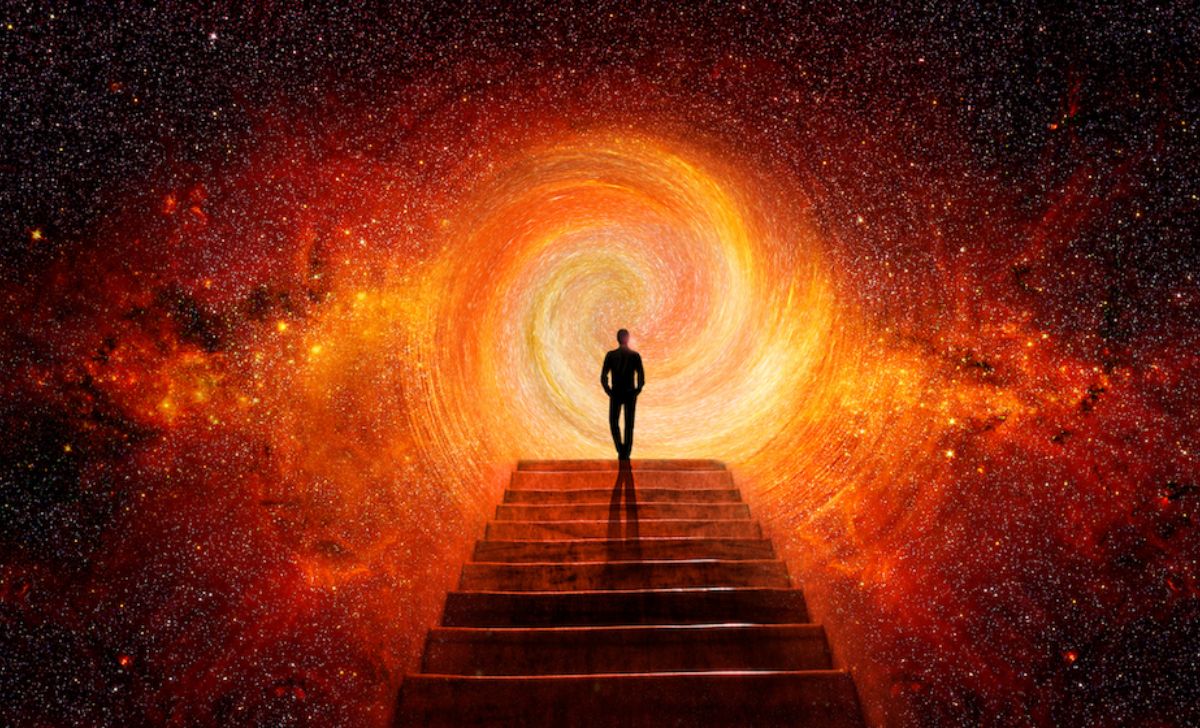
Immortality is often portrayed as the ultimate gift—a dream pursued by kings, heroes, and villains alike in stories and cinema. But what if we stopped to truly think about it? What would life look like if you could never die? Would it really be a blessing… or a curse in disguise? Let’s explore the many dimensions—emotional, physical, and social—of what it truly means to live forever, and perhaps uncover its darker side, based entirely on a compelling thought experiment.
What Even Is Time When You Live Forever?
To a ten-year-old, a single year makes up 10% of his entire life. For his forty-year-old mother, that same year is only 2.5%. Clearly, time feels different depending on your age and life experience.
Now, stretch that out to someone living for 30,000 years. Suddenly, one year becomes just a fleeting moment—much like a day feels to us. In fact, living millions of years would likely warp your sense of time so dramatically that decades might blur together like passing minutes. The emotional weight of time, of waiting, of missing someone, would either dull… or become unbearable.
The Heavy Toll of Loneliness
If you’re immortal, chances are you’ll outlive everyone you love. Your parents, siblings, partners, friends, children—they’ll all age, and eventually die, while you keep going.
Imagine the emotional weight of that. Grief becomes a regular companion. Forming deep, meaningful relationships would become emotionally exhausting, knowing loss is inevitable. Even if you found a new partner every hundred years, that adds up to 10,000 relationships over a million years. But how many of their names could you even remember?
Immortality would twist our very definition of what it means to love or form bonds. Would connection lose its value when it’s destined to fade over and over?
What If Everyone Was Immortal?
Let’s flip the script. What if everyone lived forever?
Well, Earth is only so big. Space would quickly become a premium. Imagine cities stacked to the sky, oceans crowded with floating homes, or even underground civilizations to handle the overflow. Your morning commute might resemble sardines stuffed in a can—“Excuse me!” “That’s my face!” “Tight in here!”
Resources like food, water, and energy would be stretched to the limit. Not to mention, there’d be no room for newborns if no one ever left the world.

Memory: The Fragile Thread of Identity
Think back to when you were five years old. Do you remember everything from that time? Most of us don’t. Human brains naturally discard what they deem “irrelevant” information—like your middle school locker combination.
If you’re alive for a thousand, or even a million years, imagine how much of your past would vanish. Important moments might fade into oblivion. Even pivotal relationships could dissolve in memory, making your own identity feel like a puzzle with missing pieces. Who are you if you can’t remember what shaped you?
Evolution Would Leave You Behind
Darwin’s theory of evolution teaches us that species change over time based on which traits are passed on. If taller people keep reproducing more, for example, future generations will naturally become taller.
Now, consider a static immortal human—unchanging for millions of years. As humanity continues to evolve physically and culturally, you’ll stay the same. Eventually, you may look and behave so differently from the rest of society that you’d stand out like an alien.
If one of our ape-like ancestors were still alive today, would people befriend it—or put it in a museum?
Immortality ≠ Invincibility
Here’s a harsh truth: immortality means you can’t die, but it doesn’t mean you won’t be injured—or worse.
Every scar you have now is permanent. Now imagine how many you’d gather in a thousand years. What about a million? The average person in the U.S. faces 185,000 amputation-related hospital discharges every year. Over millennia, the odds of keeping all your limbs, teeth, fingers, and organs are frighteningly low.
Eventually, you might resemble a cobbled-together Mr. Potato Head, missing key pieces and patched up with artificial parts. Forever alive—but far from whole.
So… Do You Really Want to Live Forever?
Immortality sounds magical at first glance—an endless life to see the world, gain wisdom, and explore every curiosity. But peel back the surface and what remains is isolation, memory decay, physical degradation, and emotional exhaustion.
Living forever might mean slowly watching the world move on without you, losing touch with your humanity, and carrying an ever-growing burden of pain and loss.