

Among Batman’s rogues’ gallery, filled with iconic villains like the Joker, Two-Face, and the Penguin, one name stands out for a very specific reason—fear. Jonathan Crane, better known as the Scarecrow, is not the strongest or most physically intimidating villain. But his genius lies in exploiting the deepest anxieties of the human mind. His story is one of tragedy, cruelty, and obsession that shaped him into one of Gotham’s most haunting adversaries. Let’s take a look at the twisted journey of how Dr. Jonathan Crane became the Scarecrow, why he remains one of Batman’s greatest foes, and the different ways The Dark Origins of Scarecrow has been told over the decades.
The First Appearance of Scarecrow
Scarecrow first appeared in World’s Finest Comics #3 in the fall of 1941. Created by Bill Finger and Bob Kane, the same creative duo behind Batman, he entered the scene even before some of Gotham’s better-known villains like the Riddler and Penguin.
Interestingly, Bill Finger also co-created the original Green Lantern, Alan Scott, showing how influential his hand was in shaping DC Comics’ early years.
After appearing in World’s Finest Comics and Detective Comics #73 (1943), Scarecrow disappeared from the spotlight for over two decades. It wasn’t until 1967, in Batman #189, that writer Gardner Fox and artist Sheldon Moldoff revived him. From then on, Scarecrow became a recurring menace, showing up not only in comics but also in Batman’s animated series, Christopher Nolan’s Batman Begins, and the hugely popular Arkham video game franchise.
Jonathan Crane’s Early Origins
In his original Golden Age incarnation, Jonathan Crane was a professor of psychology at Gotham University. Obsessed with the study of fear, Crane spent all his money on books instead of his appearance, which led to ridicule from fellow faculty members.
His downfall came when he fired a gun during class to demonstrate the psychology of fear. Unsurprisingly, the university dismissed him. Embittered, Crane embraced the persona of the Scarecrow—combining his interest in psychology with a grim symbol of poverty and terror. At first, he relied more on weapons than chemicals, but this laid the foundation for his fear-based villainy.

A Darker Childhood: Scarecrow Year One
Later retellings gave Scarecrow a far darker and more tragic backstory. In Batman: Scarecrow Year One, we learn that Jonathan’s childhood was shaped by neglect and cruelty.
- Unloved by his mother and abandoned by his father, Jonathan grew up under the care of his grandmother, a strict religious zealot.
- Whenever he misbehaved, she would lock him inside a church filled with crows, which would swarm and attack him. This horrifying punishment left him traumatized and deeply tied his fears to birds and scarecrows.
At school, his tall, lanky frame made him the target of relentless bullying. One day, Jonathan discovered that his grandmother used a strange mixture to attract the crows. Fascinated, he began experimenting with chemicals in secret, eventually developing his own concoctions.
Testing it on a school bully, Jonathan watched with grim satisfaction as the boy was attacked by birds and partially blinded. But this only earned him more brutal beatings. Over time, Crane’s experiments grew stronger and deadlier—eventually culminating in him killing his grandmother.
This marked the birth of the Scarecrow’s obsession: finding pleasure in terrifying others, sometimes literally to death.
The New 52 Origin: A Father’s Cruel Experiments
In 2012, DC Comics rebooted much of its universe with The New 52, and Scarecrow’s story was reimagined again.
In this version, Jonathan’s father, Dr. Crane, worked for the U.S. government on a secret fear-toxin project. To further his experiments, he used his own son as a test subject. Jonathan was locked in a basement surrounded by corpses, masks, and horrifying objects while his father monitored his fear levels.
Tragedy struck when Dr. Crane suddenly died—leaving Jonathan trapped in the basement for days until authorities discovered him. That level of trauma, combined with years of bullying at school, ensured Jonathan’s descent into madness.
As an adult, he became a professor but was eventually fired after a controversial classroom experiment where he threw spiders onto a student in an attempt to “cure” her arachnophobia. After killing a patient during his work as a private psychologist, Crane fully embraced his alter ego, the Scarecrow.
Scarecrow in Blackest Night
One of Scarecrow’s most unique appearances came during the Blackest Night storyline. Because he had lost the ability to feel most emotions, Scarecrow was immune to the terrifying influence of the Black Lanterns.
He confessed that only Batman could still inspire fear in him. During the chaos, he was even chosen by a Sinestro Corps ring, which harnesses fear as its power source. For 24 hours, Scarecrow wielded one of the most dangerous weapons in the universe—a perfect match for his obsession.
Powers and Abilities
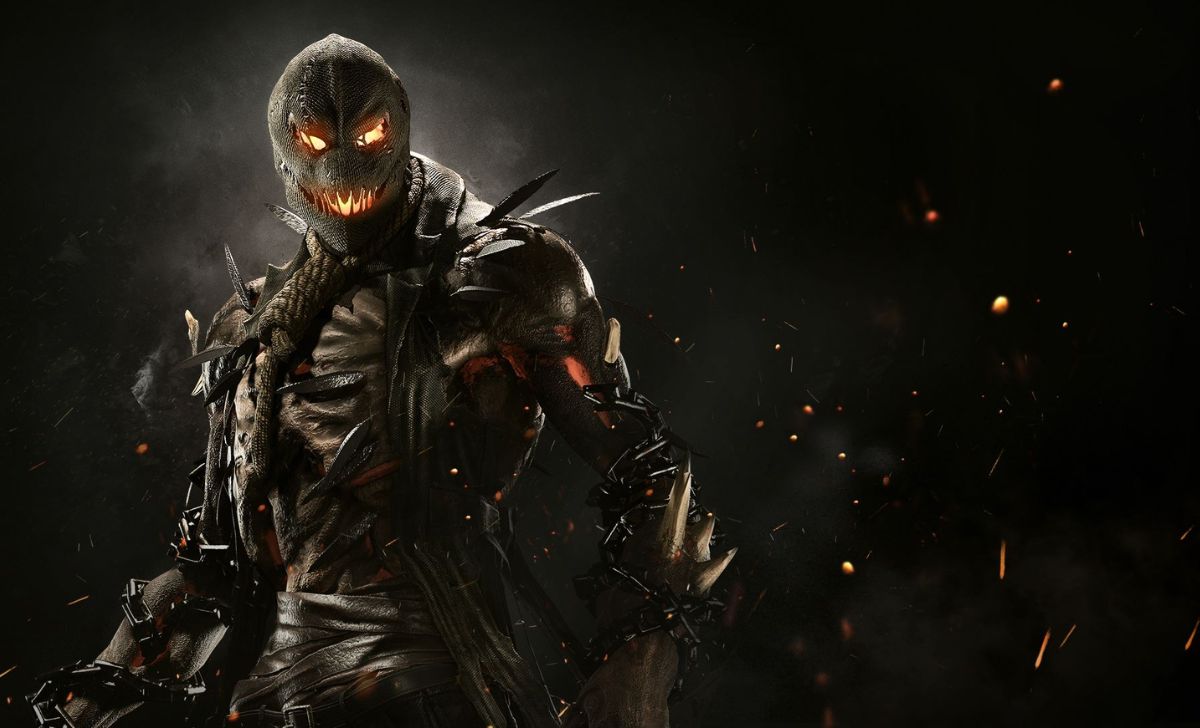
Scarecrow isn’t superhuman, but his brilliance and obsession with fear make him one of Batman’s most psychologically dangerous enemies.
- Master Chemist: Creator of his infamous fear toxins, which force victims to hallucinate their worst nightmares.
- Psychological Manipulator: As a trained psychologist, Crane expertly exploits weaknesses in the human mind.
- Fighting Style: Though usually portrayed as physically weak, some versions depict him as a skilled fighter who developed his own “Crane Style” of combat.
- Immunity to Emotion: In certain storylines, Scarecrow admits he cannot feel emotions, heightening his fixation on trying to recreate the sensation of fear—especially through Batman.
Recommended Scarecrow Stories
For readers who want to dive deeper into the twisted world of Scarecrow, here are some standout titles worth checking out:
- World’s Finest Comics #3 – His very first appearance.
- Batman #189 – His Silver Age revival.
- Detective Comics #503: The Six Days of Scarecrow
- Detective Comics #571: Fear for Sale
- Batman: Scarecrow Year One
- Batman Eternal
- Scarecrow Tales