


Water is one of the most ordinary yet extraordinary substances in our lives. It has no color, no taste, and no smell, and because of its abundance, we often overlook its significance. It flows through rivers, fills our oceans, falls from the sky, and even makes up about 60% of the human body. But while water feels ordinary on Earth, in the rest of the solar system liquid water is almost impossible to find. That mystery raises a fascinating question scientists have long explored: The Cosmic Journey of Earth’s Water: How Did It Get Here?
The Building Blocks of Water
To understand water’s story, we need to go back to the very beginning of the universe. Water is made of two elements: hydrogen and oxygen.
Hydrogen, the simplest element, has been present since the earliest moments after the Big Bang. Oxygen, on the other hand, appeared later, once stars began to form. Inside these stars, extreme pressure forced hydrogen atoms to fuse into helium. Over time, helium fused into heavier elements, such as beryllium, carbon, and eventually oxygen. This process, called nucleosynthesis, acted as the universe’s forge, creating the essential ingredients of water.
When these stars eventually collapsed and exploded into supernovas, they scattered newly formed elements across the cosmos. Among the debris were oxygen atoms that eventually paired with hydrogen, giving rise to the water molecules we now know as H2O. These molecules drifted through space, present in the giant cloud of dust and gas that would one day form our solar system.
Earth’s Fiery Beginnings
When Earth first took shape, it was a hot, molten rock surrounded by chaos. If small amounts of water were present at that stage, the extreme heat and the absence of a protective atmosphere would have caused it to evaporate into space. Water could not have stayed on the planet’s surface in such hostile conditions.
It wasn’t until hundreds of millions of years later that things began to change. As Earth’s core remained molten, volcanic eruptions released gases to the surface. This process, known as outgassing, gradually created our first atmosphere. With a layer of gases finally surrounding the planet, water molecules could be trapped instead of escaping into space. But the question remained: how did more water arrive?

The Role of Asteroids and Comets
For a long time, scientists suspected that icy comets and water-rich asteroids were responsible for delivering water to Earth. Over millions of years, these space rocks bombarded the planet, leaving behind ice and minerals that melted into liquid water. This theory explained how Earth could have accumulated vast oceans despite its fiery origins.
But new evidence has added more depth to this story. Researchers studying carbonaceous chondrite meteorites—ancient rocks formed shortly after the birth of the solar system—discovered they contained water. Even more striking, the chemical composition of these meteorites matched not only the rocks found on Earth but also samples from an asteroid that formed around the same time as our planet.
This suggests that Earth may have carried a significant amount of water within its building blocks from the very beginning. Instead of arriving solely through later impacts, water could have been locked into the planet’s minerals and gradually released as the planet cooled and its atmosphere stabilized.
Did Earth Always Have Water?
If Earth truly held water from its earliest formation, life may have had a chance to appear much earlier than previously believed. Instead of waiting for countless comets and asteroids to deliver hydration, our planet may have nurtured water right from the start.
Of course, the bombardment of asteroids likely added more water along the way, enriching Earth’s reservoirs. The real answer may be a combination: some water was built into the planet itself, while more arrived from space impacts over eons.
The Mystery Remains
Despite decades of research, scientists still cannot say with certainty how much water came from Earth’s original formation and how much arrived later. The truth may lie in a blend of theories. What is clear, though, is that the water we drink, bathe in, and watch tumble down waterfalls took a cosmic journey that began billions of years ago in the heart of stars.
Why Earth’s Water Matters
Every sip of water from a glass, every drop that falls from a raincloud, and every wave that crashes on a beach represents more than just a local cycle of evaporation and condensation. It is part of a story that began with the birth of the universe itself. The water we depend on traveled across space, survived Earth’s violent beginnings, and managed to remain here long enough to sustain life.
Without this incredible journey, life on Earth—whether microscopic organisms or human civilizations—would never have existed. Our oceans, rivers, and even the water inside our cells carry echoes of a time when stars forged elements in their fiery hearts and scattered them across the universe.
A Cosmic Perspective
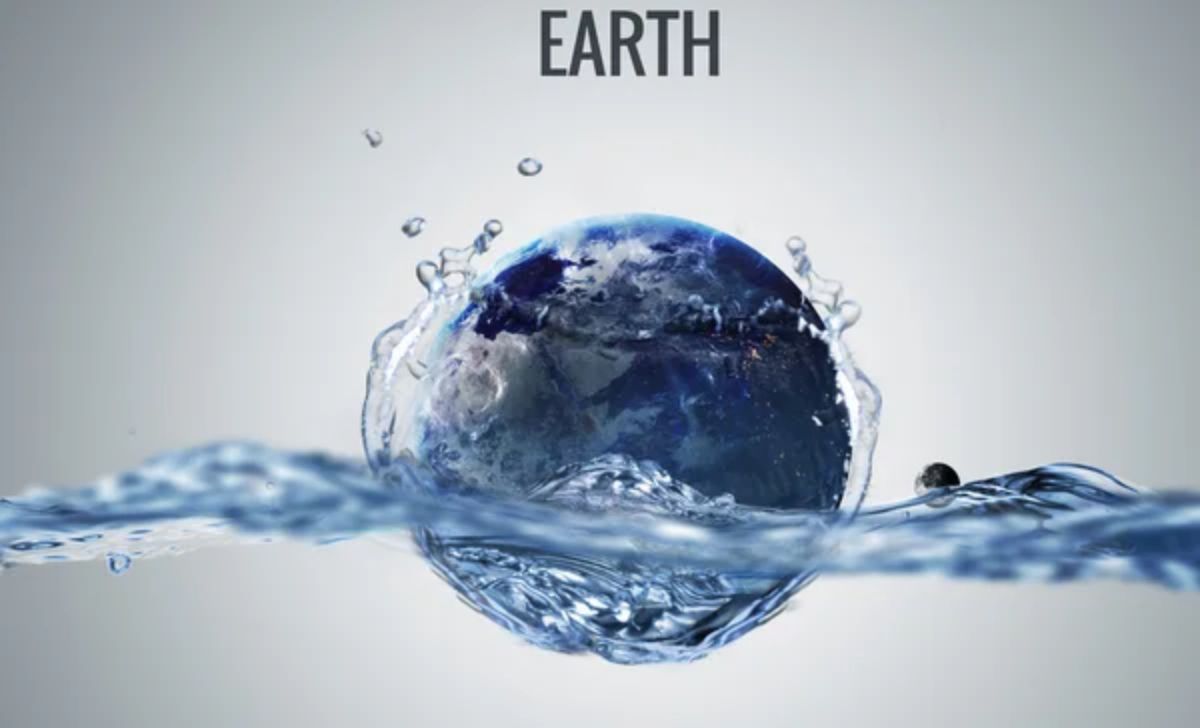
So the next time you pour a glass of water, pause for a moment. That clear, simple liquid didn’t just come from a nearby lake or river. It arrived here after billions of years of cosmic processes, from star explosions to asteroid impacts to volcanic eruptions. It is a reminder that something as ordinary as water is, in fact, extraordinary—a gift from the universe that makes Earth uniquely alive.