

The Fantastic Four aren’t just a superhero team—they’re a legacy, a family, and the foundation of Marvel Comics as we know it today. In this blog, we’ll take you through their real-world creation, their in-universe origin, their greatest storylines, heartbreaking losses, unforgettable villains, and iconic moments—in short, the complete history of the Fantastic Four.
How the Fantastic Four Were Created: A Response to Justice League
Back in the early 1960s, Stan Lee’s publisher learned that DC Comics (then National Comics) was seeing huge success with the Justice League of America. Inspired by the team-up format, Lee was instructed to create a superhero group for Marvel. But Stan didn’t want to follow the usual formula of capes, secret identities, and damsels in distress. He wanted something different—something more human.
Here’s how he broke the mold:
- No secret identities – Everyone knew who they were.
- A strong female team member – Susan Storm would be as essential as any male hero.
- A realistic romantic dynamic – Reed and Sue were engaged and fully aware of each other’s powers and roles.
- A teenage member with a real family connection – Johnny Storm, Sue’s younger brother.
- A unique, monstrous member – Ben Grimm, “The Thing,” brought strength and comic relief.
Lee worked with legendary artist Jack Kirby using what became known as The Marvel Method. Stan wrote a loose plot, Kirby drew it, then Stan added dialogue. This method defined Marvel’s creative style for years to come.
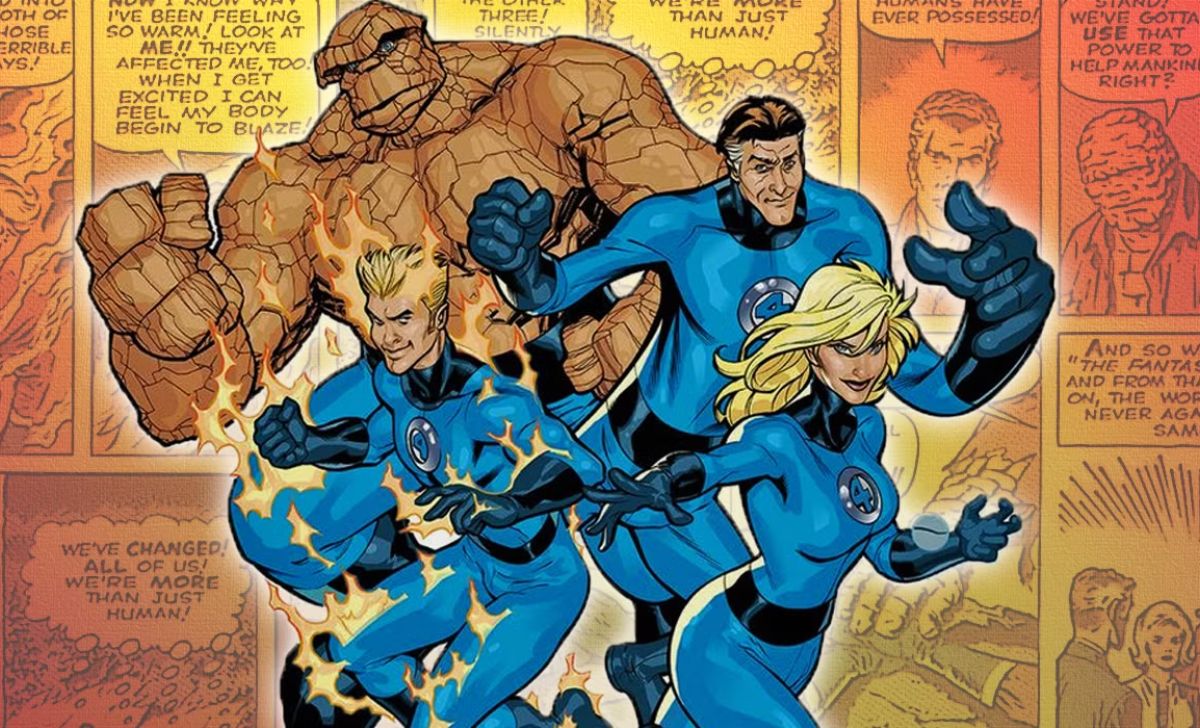
The Fantastic Four’s Comic Book Origin
The Fantastic Four debuted in Fantastic Four #1 (November 1961). The comic introduced us to four ordinary humans who took an extraordinary journey.
- Reed Richards, a brilliant scientist, developed a spacecraft to reach other planets.
- The government threatened to pull funding, so Reed rushed a secret launch with:
- His fiancée Sue Storm
- Her brother Johnny Storm
- His best friend and former Air Force pilot Ben Grimm
They launched into space but were bombarded by unexpected cosmic rays during a subspace storm, forcing them to return to Earth. Upon crashing, they discovered their bodies had changed dramatically:
- Reed could stretch his body like rubber.
- Sue could turn invisible.
- Johnny could burst into flames and fly.
- Ben had transformed into a rocky, monstrous brute with incredible strength.
They chose to use these powers for good, forming a superhero team:
- Mr. Fantastic (Reed)
- Invisible Girl, later Invisible Woman (Sue)
- Human Torch (Johnny)
- The Thing (Ben)
And just like that, Marvel’s first superhero family was born.
Their Headquarters and Costumes
Every team needs a home base. While they’ve had several over the years, the most famous is the Baxter Building in New York City. It’s not just home—it’s a hub of innovation where Reed invents everything from the Fantasticar to the famous unstable molecule costumes.
These special suits adapt to each member’s powers:
- They stretch with Mr. Fantastic
- They become invisible with Sue
- They don’t burn with the Human Torch
They even have built-in tech. But fun fact: they didn’t wear costumes until Fantastic Four #3!
No Masks, No Secrets, Just Fame (and Family Drama)
The Fantastic Four broke the superhero stereotype by staying in the public eye. They embraced fame and recognition, not hiding behind masks. But that didn’t mean they were perfect.
They often bickered and fought—just like a real family—but when danger struck, they came together like no one else could.
In Fantastic Four Annual #3 (1965), Reed and Sue tied the knot in a public celebrity wedding. Later, they welcomed their son Franklin Richards, one of the most powerful beings in the Marvel Universe. As a child, Franklin was revealed to be an Omega-level mutant with reality-warping powers.
When the Human Torch Died
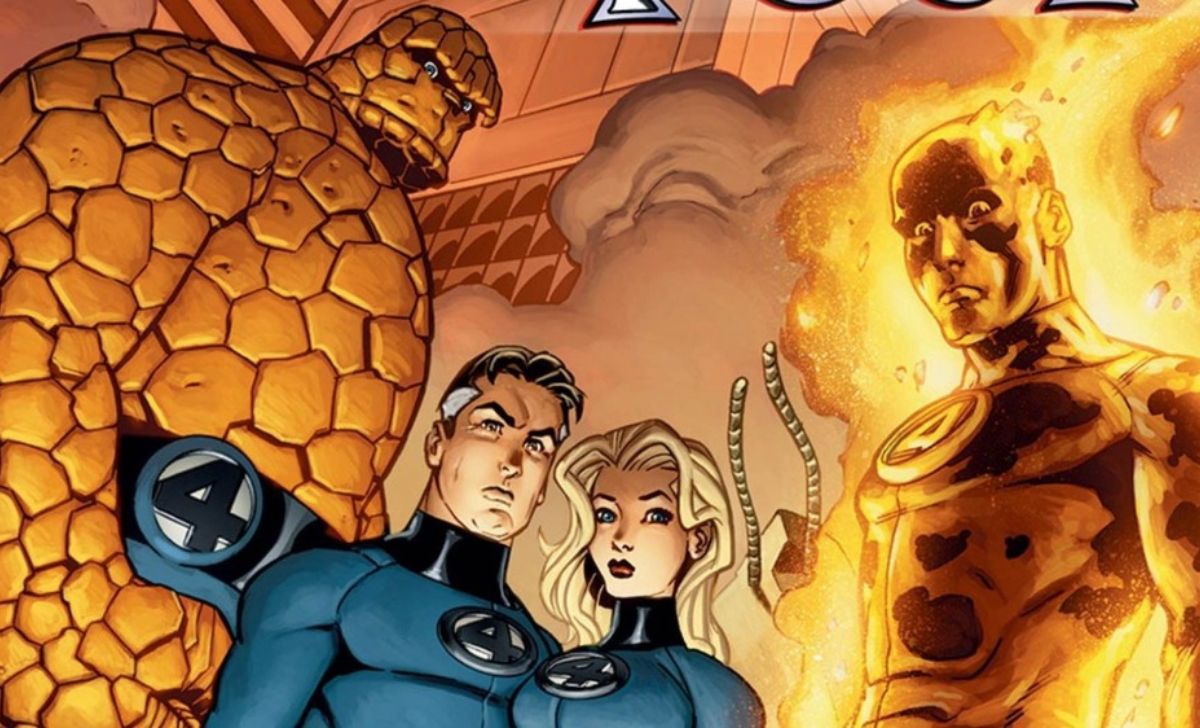
In one of Marvel’s most emotional arcs, Johnny Storm died.
While in the Negative Zone, he sacrificed himself to manually close a portal to stop an invading army called the Annihilation Wave. Johnny’s death tore the team apart and led to the disbanding of both the Fantastic Four and the Future Foundation, a think-tank team of young geniuses created by Reed.
In Johnny’s absence, Spider-Man joined the Future Foundation.
But as is often the case in comics, death wasn’t permanent. During an attack on the Baxter Building, Johnny escaped his prison in the Negative Zone and rejoined his family—flaming into the sky with a bold number “4” to mark his return.
The Silver Surfer and Epic Villains
You can’t talk about the Fantastic Four without mentioning the Silver Surfer. Introduced in Fantastic Four #48, he served as the Herald of Galactus, scouting planets for his master to consume.
But the Surfer had a change of heart. After meeting the Fantastic Four and seeing Earth’s beauty, he turned on Galactus and helped save the planet. This arc—known as “The Coming of Galactus”—is one of the most iconic in Marvel history.
As for villains, the team has faced a who’s who of comic book threats:
- Doctor Doom – Arguably Marvel’s greatest villain and Reed’s ultimate rival
- Galactus – The world-devouring cosmic god
- The Skrulls – Alien shapeshifters
- Namor, Annihilus, Klaw, Dragon Man, and more
Reading Recommendations for New Fans
Want to dive deeper? Start here:
- Fantastic Four Masterworks Vol. 1
- The Coming of Galactus (Fantastic Four #48–50)
- This Land Is Mine (Fantastic Four #246–247)
- Fantastic Four Annual #3 (Reed & Sue’s wedding)
- Fantastic Four Vol. 1: New Departure, New Arrivals
- Ultimate Fantastic Four Vol. 1
- FF Vol. 1 (the Future Foundation arc)