
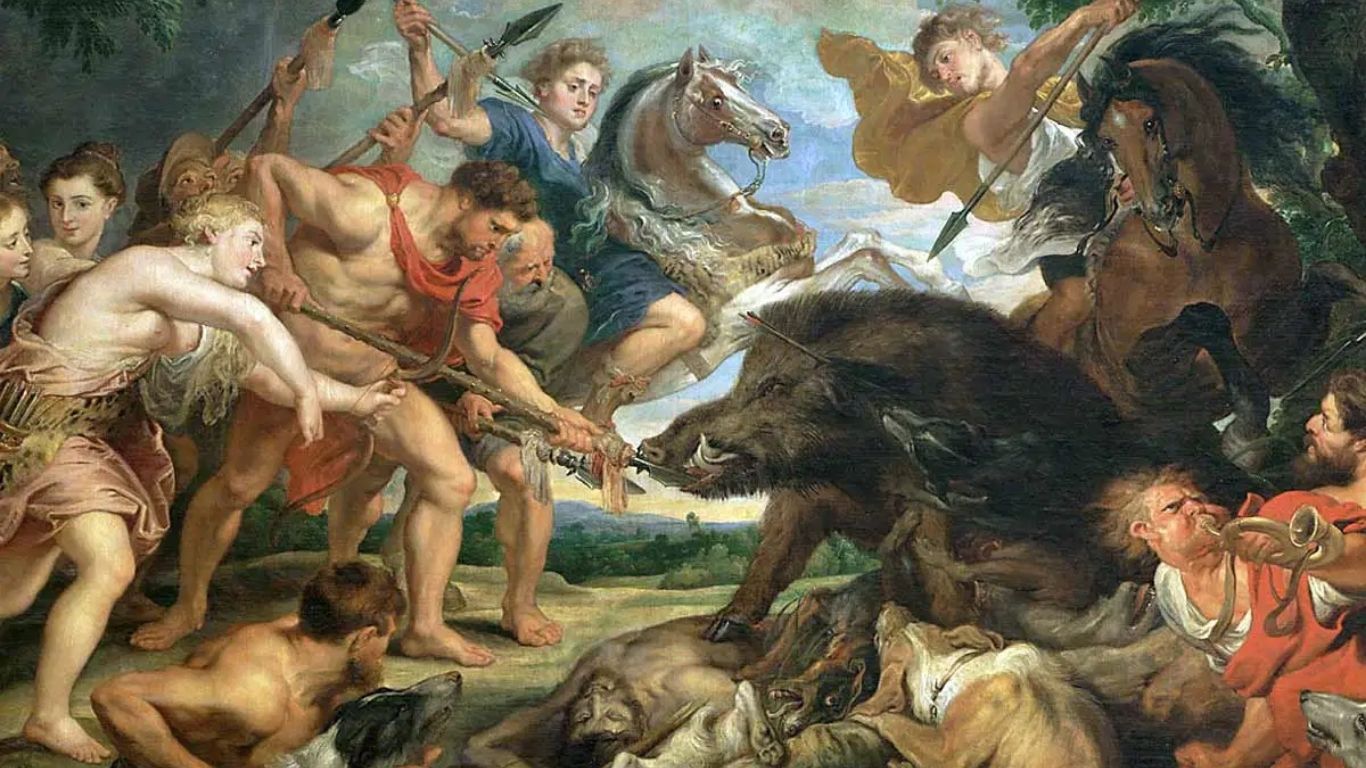
Prince Meleager, heir to the proud throne of Calydon, came into the world beneath the shadow of a prophecy that would shape his destiny. On the very night he was born, Queen Althaea was visited by the three Fates—Clotho, Lachesis, and Atropos—silent architects of every mortal life. Clotho spun his fragile thread, Lachesis determined the length of his journey, and Atropos loomed, ready to cut fate short when the moment arrived. From that first breath, Meleager’s future was bound to danger, culminating in the legendary Calydonian Boar Hunt that would one day determine the rise—or ruin—of his heroic name.
The Fates, materializing like shadows near the blazing hearth, pointed to a log crackling in the flames and proclaimed that Meleager’s life would endure only as long as that piece of wood remained unconsumed. Althaea, her heart pounding with maternal terror, lunged to douse the fire, desperate to preserve the ember that tethered her son’s vitality to the world. But the goddesses dissolved into the ether before she could plead for mercy or clarity, leaving her with a japanese-secret-to-a-long-and-happy-life-by-hector-garcia/”>secret burden heavier than the crown she wore.
In a haze of fear and resolve, Althaea retrieved the smoldering log, extinguishing its glow and sealing it within a sturdy chest. She clutched the key as if it were her own heartbeat, vowing to safeguard it through the years. As Meleager blossomed into a diary-of-a-young-girl-by-anne-frank/”>young man of extraordinary prowess—daring, hot-tempered, and unmatched in feats of arms—Althaea drew quiet comfort from this hidden talisman, believing it her unassailable shield against destiny’s cruelty.
The Ominous Rise of the Calydonian Boar
Calydon’s prosperity shattered one fateful year during the annual sacrifices to the gods. Meleager’s father, the king, committed a grave oversight: he neglected to honor Artemis, the fierce goddess of the hunt, with an offering. Artemis, ever vengeful toward those who spurned her, unleashed retribution in the form of a monstrous boar upon the land.
This beast was no ordinary predator; its hide bristled with hairs sharp as razors, its tusks curved like deadly spears, and lightning crackled from its snarling maw. Rampaging through fields, it uprooted crops and devoured herds, leaving devastation in its wake. Villages fell silent under its terror, as brave souls who dared confront it were gored or trampled into the roses-are-blood-red/”>blood-soaked earth.
The king’s realm teetered on ruin, with no single warrior capable of felling such a horror. Desperation forged an unlikely alliance: Althaea’s brothers, the queen’s beloved kin, pledged to stand with their nephew Meleager. Yet even their combined might seemed insufficient against the divine curse, prompting Meleager to summon Greece’s finest champions for what would become the legendary Calydonian Boar Hunt.
Assembling the Band of Legendary Warriors
Meleager wasted no time, dispatching calls across the Hellenic world to rally a host of heroes whose names echoed in tales of valor. Among the first to answer were Castor and Pollux, the immortal twins renowned for their unbreakable bond. Castor, master of horsemanship, could outride the wind itself, while Pollux dominated any foe with fists like thunderbolts.
Acastus joined the fray, his arm a catapult for javelins that pierced armor and flesh with unerring force. Caeneus brought impenetrable resilience, a warrior whose skin defied blade and point alike, forged in trials that bent the laws of nature. Amphiaraus, the seer-priest, added prophetic insight, his divinations piercing the veil between mortal strife and godly whims.
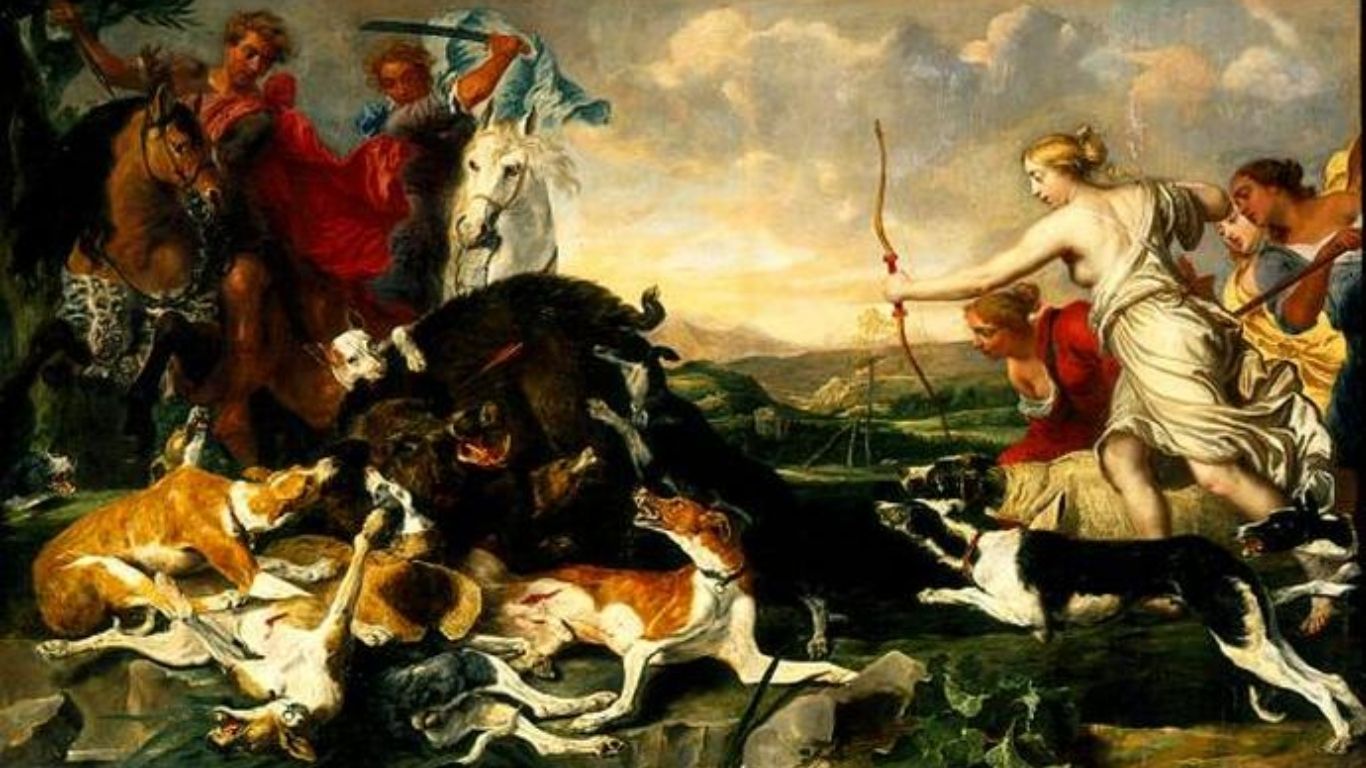
Towering above them in skill and legend stood Atalanta, the Arcadian huntress whose very existence defied convention. Abandoned by her father, who craved a son, she survived the wilds suckled by a bear and nurtured by nomadic hunters. She emerged as a tempest—swift as a gale in footraces, unbreakable in wrestling pits, and lethal with bow or spear. Though murmurs rippled among the men, decrying a woman’s place in their ranks, Meleager silenced dissent with fervent praise of her unmatched prowess, binding the group in purpose.
The Perilous Hunt Begins
With hounds baying and spirits steeled, Meleager led his band into the boar’s ravaged domain, Althaea watching from the palace battlements with a knot of anxiety she dared not voice. Her faith in the guarded log steadied her—her son could not perish while it smoldered untouched. The warriors pressed into the dense forest lair, deploying vast nets to ensnare the beast and hurling spears into the gloom.
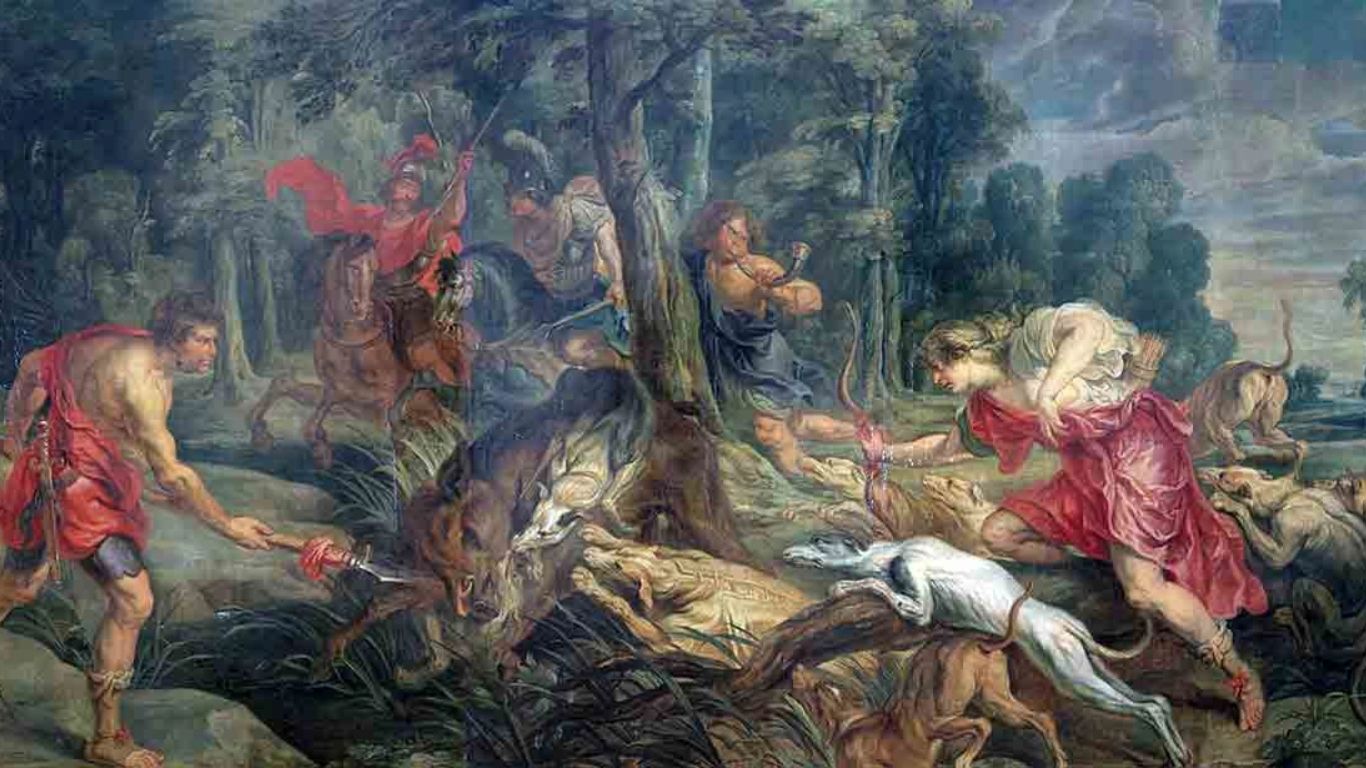
Chaos erupted as the boar exploded from its den, a living avalanche of fury. Trees splintered like matchwood under its charge, hunters scattered or crushed in its path. Pausing amid the carnage, it honed its tusks on a mighty fallen oak, eyes blazing with infernal rage, preparing to impale more victims.
In that crucible of terror, individual brilliances shone. Atalanta, eyes locked on the frenzy, spotted a chink in the monster’s armor—behind its twitching ears. Her arrow sang true, embedding deep and drawing first blood, staggering the colossal form. Seizing the moment, Amphiaraus unleashed his shaft into the boar’s glaring eye, blinding it and sowing disarray.
Meleager’s Killing Blow and Bitter Aftermath
Meleager, heart ablaze with the hunt’s fire, closed in for the coup de grâce. His spear plunged home, transfixing the beast’s vitals and ending its rampage in a final, shuddering roar. Triumph swelled as the heroes dragged the corpse from the woods, but glory fractured swiftly.
Meleager, honoring the first strike, bestowed the boar’s prized hide and severed head upon Atalanta, proclaiming her the hunt’s true architect. Outrage ignited among his uncles, who deemed it an affront to grant such laurels to a woman. In a surge of possessive fury, they wrested the trophies from her grasp, sparking Meleager’s volcanic temper.
Words escalated to blows, kinsmen clashing in a frenzy of betrayal. When the dust settled, Meleager stood over the slain bodies of his mother’s brothers, their blood staining his hands—a rash act born of pride that would unravel fates.
Althaea’s Descent into Vengeful Fury
Back in Calydon, Althaea awaited news with bated breath, her cheers turning to wails as messengers bore the unthinkable: her son, slayer of her brothers. Grief twisted into a maelstrom of rage, visions of fraternal loyalty clashing against maternal bond. Staggering to her chambers, she wrenched open the long-sealed chest, the log’s charred form mocking her vigilance.
Ears ringing with echoes of loss, hands trembling with unbridled wrath, Althaea hurled the fateful brand into the roaring hearth. Flames devoured it greedily, mirroring the doom she unleashed. Far away, Meleager convulsed in sudden, otherworldly torment, his life-thread severed by a mother’s curse.
Echoes of Tragedy: Legacy of the Log
Meleager’s agony unfolded in waves of fire that no healer could quell, his body wasting as if the boar’s lightning coursed through his veins anew. The palace filled with lamentations, warriors who shared his victory now witnessing destiny’s inexorable grip. Althaea, collapsing amid the ashes, grappled with regret’s abyss—had vengeance stolen her son twice over?
The tale rippled outward, a cautionary epic woven into Greece’s mythic tapestry. It underscored the Fates’ unyielding decree, where even royal safeguards crumbled before divine prophecy. Meleager’s end, though swathed in heroism, served as a stark reminder that hubris and kin-strife invited cosmic reprisal.
Atalanta, bearing the hide in quiet vindication, vanished into legend, her role emblematic of sidelined strength. The uncles’ shades haunted Calydon’s halls, fueling cycles of vendetta that plagued the realm for generations.
Deeper Layers: Symbolism in the Myth
Beyond the visceral hunt, the story pulses with profound symbols. The log embodies fragile mortality, its embers a metaphor for life’s precarious flicker, guarded yet ultimately betrayed by human passion. Artemis’s boar personifies neglected piety’s cost, a divine scourge that tests communal valor.
Meleager’s arc—from prophesied prince to kinslayer—mirrors the warrior’s dual edge: glory forged in blood, undone by impulse. Althaea’s arc delves into maternal extremes, her protective zeal inverting into destruction, questioning where love ends and retribution begins.
Atalanta stands as a beacon of subversion, her prowess challenging patriarchal hunt norms, her prize a fleeting nod to merit over lineage.
The Hunt’s Heroes in Broader Lore
Each warrior’s inclusion enriches the narrative, drawing from wider myths. Castor and Pollux’s presence foreshadows their Gemini constellation ascent, blending mortal grit with celestial favor. Acastus, javelin lord, ties to Jason’s Argonauts, his prowess a prelude to greater quests.
Caeneus’s invulnerability stems from unique origins—a woman transformed by Poseidon—adding layers of identity fluidity. Amphiaraus’s foresight hints at his Theban tragedy, where prophecy dooms despite wisdom.
Meleager himself recurs in tales, his boar-slaying fueling Ovid’s Metamorphoses expansions, where rage’s consequences ripple eternally.
Moral Tapestries and Modern Resonance
This myth weaves timeless morals: honor the gods lest calamity stalk your lands; temper valor with restraint, for rashness slays kin as surely as beasts. Familial bonds, stretched by glory, snap under pride’s weight—a warning for leaders and lovers alike.
In today’s lens, it resonates as a study in unintended fallout—prophecies self-fulfilling through fear, gender roles upended by Atalanta’s arc. Environmental undertones emerge too: the boar’s blight as retribution for sacrilege, echoing humanity’s fraught dance with nature.
Althaea’s pivotal choice probes ethical abysses—does justice demand kin’s death, even indirectly? These threads invite endless reflection, cementing the Calydonian Hunt as mythic bedrock.