
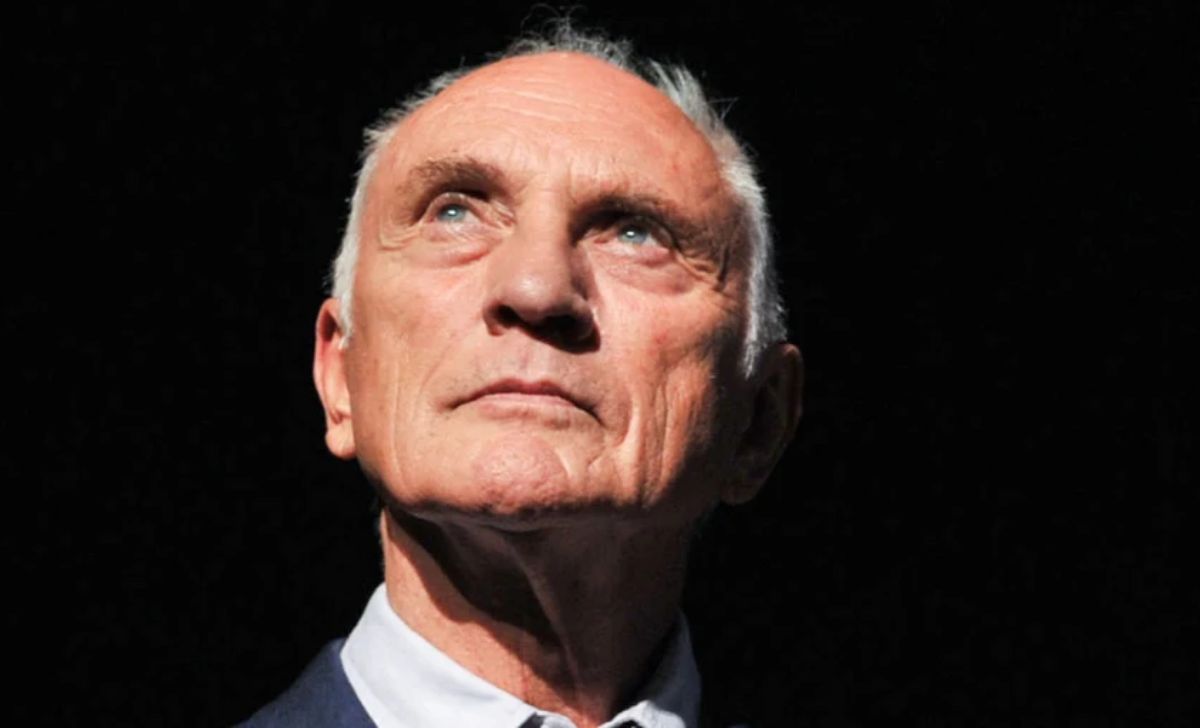
Terence Stamp, one of Britain’s most striking screen presences and a defining face of 1960s London, has died at the age of 87. His family confirmed on Sunday that the Oscar-nominated actor passed away in the morning, leaving behind a career that spanned more than six decades.
In a statement, his family remembered him not only for his cinematic achievements but also for his literary contributions. “He leaves behind an extraordinary body of work, both as an actor and as a writer that will continue to touch and inspire people for years to come,” they said, requesting privacy during this difficult time.
From East End Roots to the Big Screen
Born on July 22, 1938, in London’s East End, Stamp grew up the son of Ethel and Thomas, a merchant seaman and coal shoveler. He endured the bombings of World War II before leaving school to work in advertising. His passion for performance eventually led him to drama school, where he won a scholarship.
In interviews, Stamp often spoke about his working-class background and the doubts of his father, who believed “people like us didn’t do things like that.” His mother, however, quietly supported his dream of acting, and her encouragement fueled his early career.
Early Stardom and Critical Acclaim
Stamp burst into international recognition with his role in Peter Ustinov’s 1962 adaptation of Billy Budd. His performance as the innocent sailor earned him an Academy Award nomination for Best Supporting Actor—his only Oscar nod.
Through the 1960s, he became a central figure in British cinema and culture. He starred in films like Far From the Madding Crowd (1967) alongside Julie Christie and Poor Cow (1967), Ken Loach’s first feature film. His striking looks and impeccable style made him a favorite of photographer David Bailey, and he became romantically linked to some of the era’s most famous women, including Julie Christie, Jean Shrimpton, and even Brigitte Bardot.
Life Beyond the Spotlight
Although Stamp was a leading man of the Swinging Sixties, his career hit a quieter phase in the 1970s. After missing out on the role of James Bond, he turned to Italian cinema and collaborated with filmmakers like Federico Fellini and Pier Paolo Pasolini, appearing in Theorem (1968) and A Season in Hell (1971).
He later withdrew from Hollywood for a time, traveling to India to study yoga and spirituality. This period of reflection eventually led him back to the screen with renewed energy.
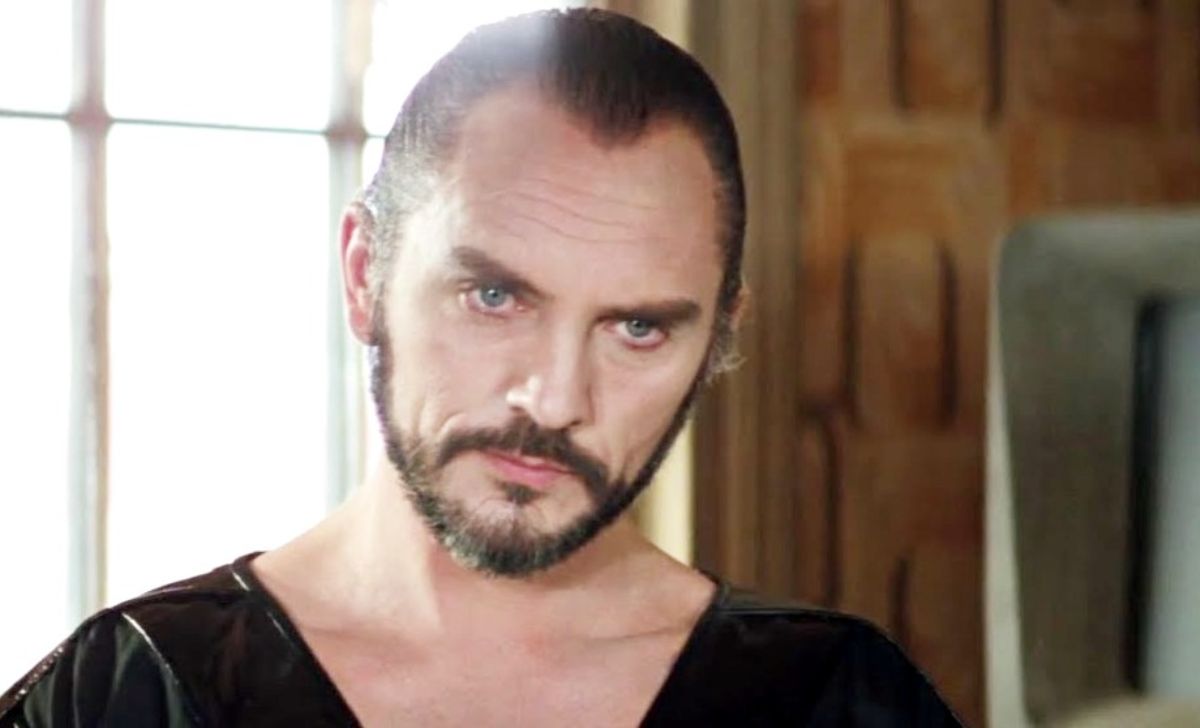
The Role of a Lifetime: General Zod
Stamp’s most famous Hollywood role came in 1978 when he was cast as General Zod, Superman’s ruthless Kryptonian adversary, in Richard Donner’s Superman. He reprised the role in Superman II (1980), cementing himself as one of the most memorable villains in comic book cinema.
Decades later, he returned to the Superman universe in an unexpected way. In the hit TV series Smallville, which chronicled Clark Kent’s early years, Stamp lent his voice to Jor-El, Superman’s father. This unique casting created a symbolic full circle in his connection to the iconic superhero.
Versatility and Later Roles
Stamp never confined himself to one type of role. In 1994, he delivered a groundbreaking performance as Bernadette, a transgender woman, in The Adventures of Priscilla, Queen of the Desert. The role was widely praised for its sensitivity and charm, showcasing his range beyond the traditional leading man or villain.
His later credits included Hollywood films such as Oliver Stone’s Wall Street (1987), Bryan Singer’s Valkyrie (2008) alongside Tom Cruise, Tim Burton-directed projects, and George Nolfi’s The Adjustment Bureau (2011) with Matt Damon.
A Personal Life of Contrasts
Beyond the camera, Stamp lived a life as colorful as his roles. He shared a flat with fellow actor Michael Caine in his early years, though the two later drifted apart. In 2002, he married an Australian pharmacist 35 years his junior, though the marriage ended six years later.
Despite personal ups and downs, Stamp always spoke with candor about his journey. Reflecting on his career, he admitted to working on films he wasn’t proud of simply to make ends meet, but he always returned to roles that reignited his love for acting. “When I’ve got the rent, I want to do the best I can,” he once said.