
In the vibrant tapestry of Greek mythology, filled with gods, monsters, and heroes, one figure stands out as something entirely different—a being not born of flesh, but forged from metal. This was Talos, often regarded as the first robot in human imagination. Long before the term “robot” even existed, the ancient Greeks imagined a mechanical guardian built to defend the island of Crete. His story, recorded as early as 700 BCE, blends myth with strikingly futuristic themes of artificial intelligence, automation, and the uneasy boundary between man and machine. Let’s journey into the fascinating myth of Talos—the bronze giant created by a god, powered by divine lifeblood, and destined to meet a tragic end.
Forged by a God: The Birth of Talos
The tale begins in the fiery workshop of Hephaestus, the Greek god of technology, blacksmithing, and invention. Known for crafting wondrous objects for the gods—including Achilles’ invincible armor and Hermes’ winged helmet—Hephaestus was tasked by King Minos of Crete to build a defense system that would keep intruders away from the island.
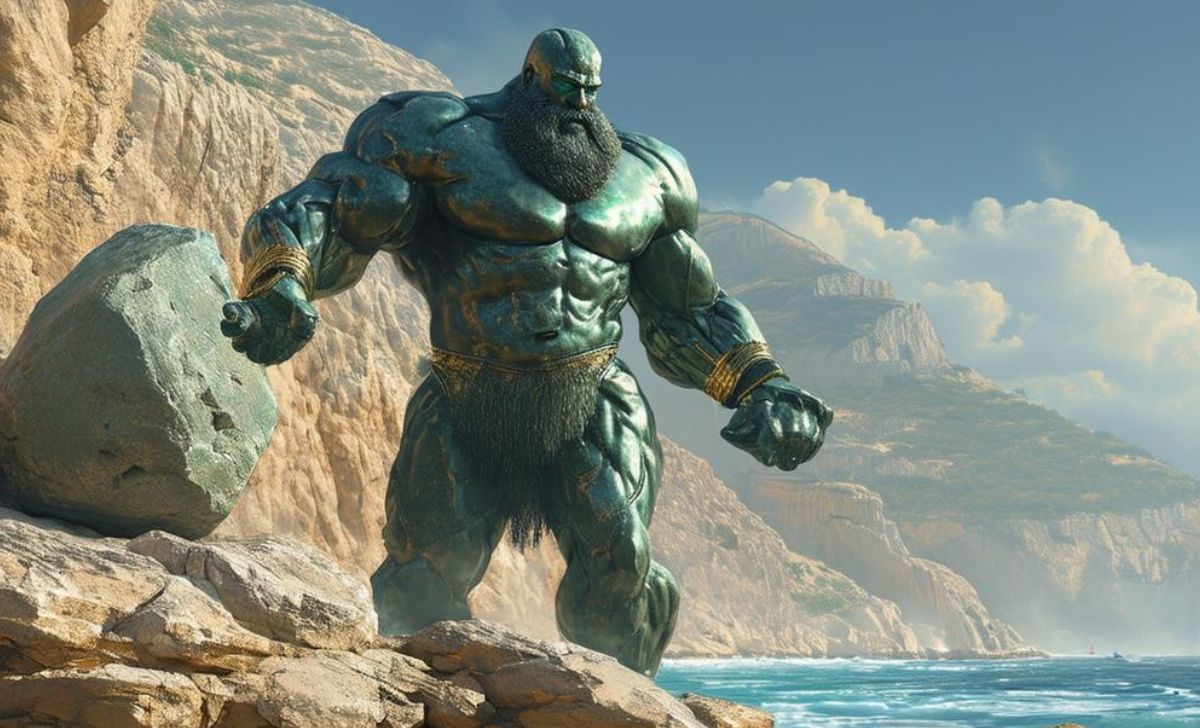
Hephaestus rose to the challenge in spectacular fashion. Instead of creating more soldiers or weapons, he cast a single, enormous figure out of gleaming bronze. Shaped like a man but towering over mortals, this creation was animated not by breath or blood but by ichor—the golden life fluid of the gods. This magical substance coursed through a single vein running from Talos’s neck to his ankle, sealed with a bronze bolt.
Thus was born Talos, the first automaton, an unyielding sentinel who needed no rest, no food, and no mercy.
The Relentless Guardian of Crete
Once activated, Talos patrolled the shores of Crete tirelessly. The myth says he would march around the island’s perimeter three times every single day, scanning the horizon for any sign of approaching ships.
If he spotted invaders, his response was swift and brutal:
- He would hurl gigantic boulders to smash their vessels to splinters.
- If any survivors reached the shore, he would heat his bronze body until it glowed red-hot and crush them to his burning chest, incinerating them instantly.
Talos was the embodiment of mechanical efficiency: tireless, emotionless, and lethal. Yet beneath this cold exterior lay something more complex than mere machinery—a faint spark of consciousness, an almost human yearning that would one day lead to his undoing.
A Deadly Encounter
Talos’s downfall came when he encountered some of the greatest adventurers of Greek lore: Jason and the Argonauts, returning from their epic quest to retrieve the Golden Fleece. Exhausted from their perilous journey, the sailors hoped to rest briefly on Crete before continuing home.
But Talos would not allow it. As soon as their ship neared the coastline, the bronze giant strode into the surf, ready to annihilate them. The Argonauts trembled before the unstoppable colossus—except for one among them, the cunning sorceress Medea.
While the others quailed, Medea’s sharp eyes noticed something crucial: a glinting bronze bolt on Talos’s ankle. Realizing this might be a weakness, she concocted a daring plan. Standing boldly before the towering automaton, Medea offered him a bargain:
She claimed she could make him truly immortal if he allowed her to remove the bolt.
Talos, though mechanical, longed for immortality, seemingly unaware of his own artificial nature. This deeply human desire resonated within him, and he agreed. As Medea chanted her incantations, Jason stealthily removed the bolt.
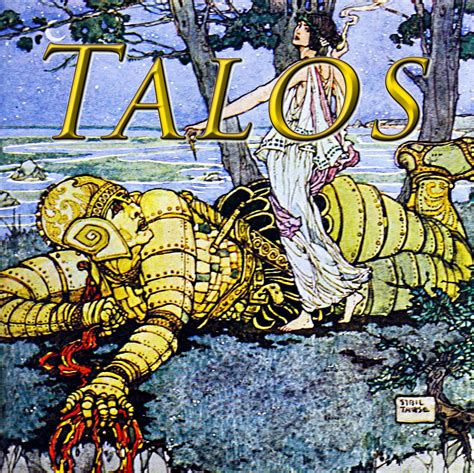
At once, the ichor poured out like molten metal, draining Talos of life. The mighty guardian shuddered, staggered, and collapsed with a deafening crash. Crete was left unprotected, and the Argonauts sailed away unharmed.
The Symbolism Behind Talos
Talos’s story is more than just an action-packed legend. It is one of the world’s oldest cautionary tales about artificial intelligence and automation. Even in antiquity, the Greeks were exploring profound questions that still haunt us today:
- Can something artificial possess life or consciousness?
- What happens when machines begin to mirror human desires—like the wish for immortality?
- How do we control creations that are stronger than their creators?
Talos represents the power and peril of human innovation. He was built as a perfect defender, yet his creators gave him a fatal flaw: a single bolt, a single point of failure. This design oversight—and his almost human longing—led to his doom.
The tragedy of Talos echoes through modern science fiction, where superintelligent machines often rebel, malfunction, or succumb to very human weaknesses. It shows that the fear of technology escaping our control is not new—it dates back over 2,700 years.
From Myth to Machines: Ancient Greek Automatons
Interestingly, Talos was not entirely a fantasy to the ancient Greeks. By the 4th century BCE, Greek engineers had begun building real automatons—mechanical devices that could move on their own. These included:
- Robotic servants that poured wine or opened temple doors
- Mechanical birds that flapped their wings and “flew”
- Automated puppets used in theatrical plays
While none of these inventions matched Talos’s colossal scale or power, they prove that Greek thinkers were already exploring the line between human and machine. The myth of Talos may have even inspired these real-world creations, showing how myth can fuel technological imagination.
Ancient Art and Culture
Talos’s fame in ancient Greece was immense. He appeared in:
- Coinage minted in Crete
- Vase paintings depicting his battle with the Argonauts
- Public frescoes and sculptures celebrating his role as protector of Crete
- Theatrical performances, where actors portrayed his towering bronze form
One particularly striking vase from the 5th century BCE shows the moment of Talos’s death. As he collapses, a single tear rolls down his bronze cheek. This tiny detail reveals how the Greeks saw him—not just as a mindless machine, but as a sentient being capable of fear, pain, and longing.
Talos’s Legacy: The First Robot
Today, Talos is remembered as the earliest known robot in human storytelling. Long before modern robotics or artificial intelligence, the Greeks imagined a mechanical being created to serve humans yet ultimately undone by human cunning and its own emotions.
Talos embodies many of the same themes that continue to dominate science fiction and AI ethics:
- The dangers of unchecked technological power
- The blurred boundary between human and machine
- The possibility—and peril—of giving machines human traits
In this way, the myth of Talos is astonishingly ahead of its time. It shows that even in the ancient world, people were already grappling with the same anxieties and hopes that surround our rapidly advancing technologies today.