
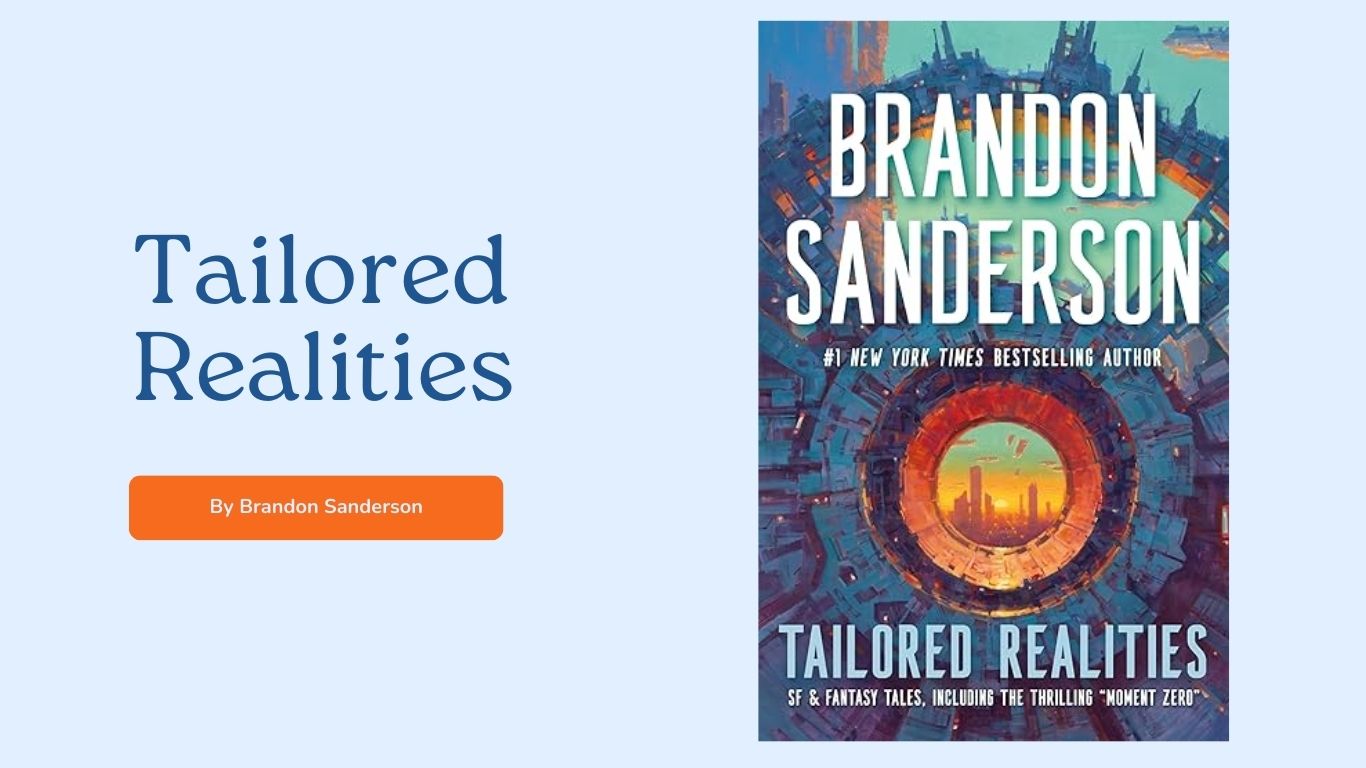
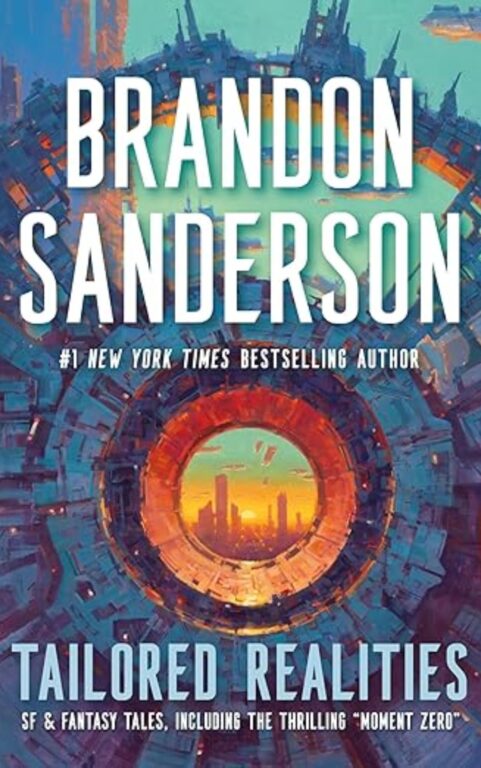
Brandon Sanderson is best known for sweeping fantasy epics packed with magic systems, massive worlds, and decade-spanning storylines. So when a book arrives that promises compact science-fiction and fantasy stories instead of thousand-page sagas, expectations naturally shift. Tailored Realities takes a completely different approach to storytelling—short, sharp narratives focused on powerful single ideas rather than sprawling universes.
This collection brings together ten of rhythm-of-war-by-brandon-sanderson/”>Sanderson’s non-Cosmere short stories and novellas, along with a brand-new centerpiece titled “Moment Zero.” The result is a book that feels like a creative laboratory: every story tests a different concept—simulated realities, superhero logic, military sci-fi, telepathic politics, time travel, and even horror elements. Instead of one massive world, readers get many smaller ones, each built with precision and purpose.
What Is Tailored Realities About?
At its heart, Tailored Realities is a standalone short fiction collection that gathers rhythm-of-war-by-brandon-sanderson/”>Sanderson’s non-Cosmere work into one volume. These stories were originally published across different platforms and years, and this book gives them a unified home with added context and commentary.
Some of the most important stories included are:
- “Snapshot” – A near-future crime thriller where detectives use perfect simulations of past days to solve crimes.
- “Perfect State” – A philosophical novella about a man ruling a custom-built simulated world as its god-emperor.
- “Defending Elysium” – A sci-fi political thriller involving telepaths and humanity’s first serious alien contact.
- “Firstborn” – A military science-fiction story focused on sibling rivalry and strategic deception.
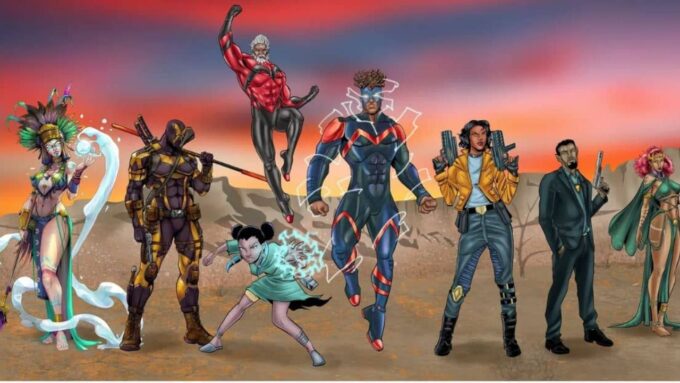
- “Mitosis” – A fast-paced superhero story tied to the Reckoners universe.
- Several shorter experimental pieces that explore unique narrative ideas and alternate storytelling styles.
Holding all these together is “Moment Zero,” a long, ambitious novella that functions as the emotional and thematic backbone of the entire collection.
Plot Spotlight: How the Key Stories Work
Since this is an anthology, the book doesn’t follow a single storyline. Instead, each major entry delivers a self-contained narrative built around a powerful central idea.
Snapshot
The collection opens strongly with “Snapshot.” In this world, law enforcement can generate exact simulations of the past—perfect recreations of entire days filled with real people, real pain, and real emotions. Detectives step into these artificial worlds to search for clues after crimes have already happened.
The story follows a routine investigation that soon turns morally disturbing. The simulated people believe they are real, yet they are doomed to be erased once the investigation ends. The main character must confront whether solving crimes is worth inflicting suffering on people who technically do not exist—but who still feel everything.
This story sets the philosophical tone for the collection immediately.
Perfect State
In “Perfect State,” Sanderson explores identity, power, and illusion. The protagonist, Kai, rules perfectly over a simulated world designed specifically for him. He is a conqueror, a hero, and a living legend inside his reality.
The story begins to shift when Kai is forced into a strange diplomatic and romantic encounter with another ruler from a different simulated universe. What begins as politics soon becomes an identity crisis. If everything about your world is artificial, does that make your victories meaningless? And if your personality was shaped by a designed environment, are your choices truly your own?
This novella leans heavily into psychological and philosophical science fiction.
Defending Elysium and Firstborn
“Defending Elysium” takes readers into a future where telepaths and aliens coexist in uneasy secrecy. The plot follows a gifted agent tasked with navigating interspecies diplomacy and national security. The story blends political tension with personal vulnerability as the protagonist struggles between loyalty, duty, and personal freedom.
“Firstborn” shifts the tone into military strategy and sibling drama. The younger brother of a legendary war hero has spent his life being overlooked and underestimated. When he is thrust into a critical military campaign, he must survive on intelligence rather than raw talent. The story builds toward a clever conclusion that flips expectations about leadership and success.
Moment Zero
The largest and most talked-about story in the book is “Moment Zero.” This novella tells the story of two police officers linked across fractured timelines—one living before a mysterious catastrophe, the other surviving in its aftermath.
As time loops, the officers attempt to prevent mass destruction while facing hostile creatures, moral dilemmas, and the terrifying realization that even small actions may permanently reshape the future. The narrative blends time travel, crime investigation, and horror elements into a fast-moving thriller.
What makes Moment Zero stand out is how it combines emotional stakes with complex mechanics. It doesn’t just explore how time travel works—it focuses on how it emotionally damages the people forced to live with its consequences.
For many readers, this story alone justifies the entire collection.
Themes That Run Through the Book
Despite being a mixed-genre collection, Tailored Realities carries strong thematic consistency across its stories:
- Reality Versus Illusion – Simulated lives, artificial worlds, and altered timelines appear again and again.
- Power and Responsibility – Many protagonists wield unusual abilities, but each must face the moral cost of using them.
- Identity Under Pressure – Characters frequently question whether they are shaped by choice or by systems built around them.
- Sacrifice and Consequence – Actions taken for the greater good often leave lasting emotional damage.
Rather than focusing only on spectacle, Sanderson uses these themes to ground the stories emotionally.
How Sanderson’s Short Fiction Feels Compared to His Epics
Readers familiar with Sanderson’s large-scale novels may be surprised by how tight and focused these stories feel. There is little room for long introductions or gradual world-building. Instead, the book relies on:
- Clear concepts introduced immediately
- Fast escalation of conflict
- Direct emotional payoffs
- High-concept ideas that resolve within limited page counts
Some of the shorter entries feel like creative experiments or writing challenges rather than fully developed sagas. But for readers who enjoy idea-driven science fiction, this is often part of the appeal.
The inclusion of author’s notes and interior illustrations also adds value. These extras explain when each story was written and what creative challenges inspired them, giving readers a behind-the-scenes look at Sanderson’s process.
Who Should Read Tailored Realities?
This book works best for three types of readers:
- Longtime Sanderson fans who want every piece of his non-Cosmere writing in one place
- Science-fiction readers who enjoy speculative concepts more than long fantasy arcs
- Readers who enjoy variety, shifting tones, and experimental storytelling
For brand-new readers, Tailored Realities can be a good sampler of Sanderson’s imagination—but it may not fully represent the epic scope that made him famous. It introduces his ideas, his pacing, and his fascination with rules-based systems, but without the massive emotional investment of his longer novels.
Final Thoughts
Tailored Realities is a collection built on imagination, experimentation, and moral complexity. It offers:
- Crime stories set inside artificial worlds
- Philosophical rulers trapped inside simulations
- Telepaths navigating alien diplomacy
- Underdogs outsmarting legendary heroes
- Superpower chaos and time-travel catastrophe
Not every story will leave the same impact, but together they form a powerful showcase of how flexible Sanderson’s storytelling can be when he steps outside massive fantasy series.
If you are already a fan, this book feels essential—especially because of “Moment Zero.” If you are exploring his work for the first time, it offers a wide-ranging glimpse into his creative range across science fiction, fantasy, and speculative thrillers.
In the end, Tailored Realities succeeds not because it tries to be epic—but because it focuses on carefully crafted moments, each shaped to test a different version of reality.