

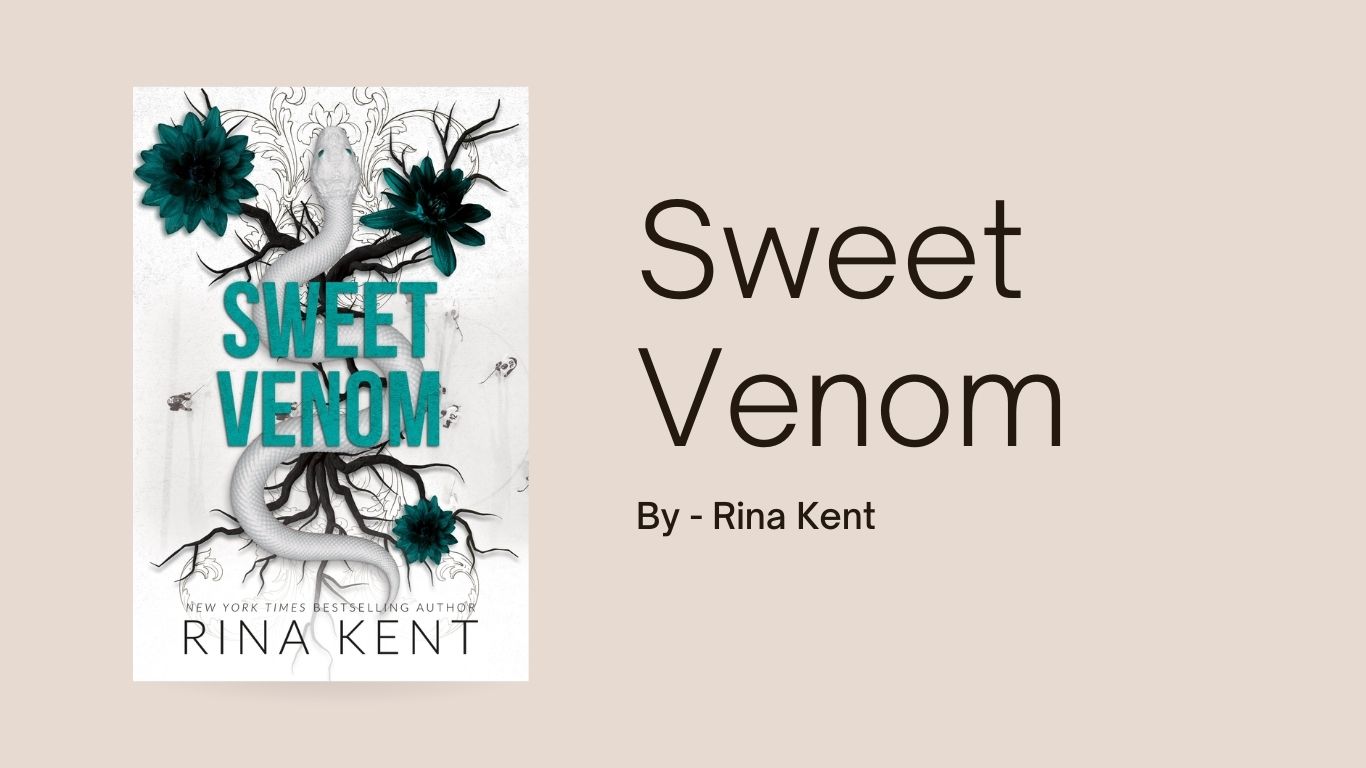
Rina Kent’s Sweet Venom arrives like a charged whisper — pretty on the surface but with a wire of danger running just beneath. If you’ve read the first Vipers book, you’ll recognize the author’s appetite for morally messy characters and relationships that teeter between protection and possession. This second installment builds on that world with sharper edges: college life filtered through an elite hockey backdrop, a secretive social undercurrent, and a romance that refuses to play by comfortable rules.
What this book is (and who it’s for)
At its core, Sweet Venom is a dark contemporary romance set in a collegiate hockey world: athleticism, privilege, and the kinds of campus secrets that blossom into full-blown obsession. It’s explicit, emotionally intense, and meant for readers who accept — even expect — uncomfortable dynamics in service of a cathartic character arc. If you prefer gentle, clearly-consensual slow-burns without psychological friction, this isn’t the book for you. Many readers celebrate Kent’s ability to blend heat with psychological complexity; others flag the book’s troubling power-play elements.
Plot summary (no spoilers beyond the core setup)
The story follows Violet (Vi) and Jude, two central figures pulled into each other’s orbits by more than chemistry. Vi is a young woman navigating college life and its social hierarchies; Jude is the dark, charismatic hockey player whose intensity masks complicated trauma. The novel tracks their collision — from initial friction to a fierce, often destabilizing connection — against the backdrop of team drama, campus intrigue, and a secretive social world that ratchets up stakes beyond romance.
james-patterson/”>Along the way Kent layers in twists about loyalty, vengeance, and choices that force both characters to reckon with who they’ve been and who they might become. The book doesn’t shy from heavy themes: past abuse, mental-health strain, grief and community judgment figure into the story and affect how characters respond to one another.

Characters and chemistry: why it works (for many readers)
Kent is strongest when she’s writing flawed, vocal characters who are unafraid to be selfish and messy. Jude is the archetypal “bad boy” turned multi-layered human: possessive, unpredictable, but also capable of tenderness that reads as earned rather than handed out. Vi’s arc provides an emotional anchor — she’s not a blank-slate heroine; she has boundaries that are tested, and her growth is the engine that keeps the novel from drifting into pure titillation.
The chemistry between them is combustible: sex scenes and power plays are charged in a way that’s meant to unsettle and enthrall simultaneously. Fans praise this intensity as precisely what they come to Kent for.
Pacing, structure, and the writing voice
Kent’s prose is nimble and immediate. She balances internal monologue with outward scenes that move the plot briskly; the result is a page-turner that rarely stalls. The pacing favors emotional beats and reveals, so the twists that land late in the book have real impact. Scenes of hockey life and team rituals also serve as functional worldbuilding: they make the setting specific and the stakes tangible, rather than acting as mere backdrop.
That said, readers should expect tonal whiplash at times — the book leaps between tender and brutal quickly, and Kent intentionally plays with discomfort to keep readers invested.
Themes: power, secrecy, and redemption
A throughline in Sweet Venom is how secrecy and social hierarchy warp personal truth. Kent explores how power can be exercised both protectively and destructively; characters often think they’re acting for love when they’re actually responding to fear, jealousy, or survival instincts.
The novel also asks whether love can be transformative enough to unspool dangerous patterns without excusing them — a morally thorny question the book leans into rather than resolving neatly. Many readers find the emotional conclusion cathartic; others remain unsettled, which testifies to the author’s refusal to flatten complexity for easy comfort.
Strengths: what Kent does especially well
- Character voice: The protagonists are vividly rendered; Kent gives both lead characters interiority that helps the reader understand — if not always approve of — their choices.
- Atmosphere: The elite-hockey-culture setting is evocative and textured, offering a fresh playground for the dark romance tropes Kent favors.
- Emotional hits: The book delivers honest, raw emotional moments that stay with you after the last page.
Weaknesses: where it may trip up readers
- Content intensity: The novel contains power-imbalanced scenes and psychological manipulation that will be triggering or off-putting for some readers. Kent doesn’t sanitize these elements, which is part of the book’s intent but also its biggest barrier.
- Trope familiarity: If you’ve read a lot of dark romance, some plot beats and character types may feel familiar; a few readers on forums noted echoes of Kent’s earlier works and other genre staples.
Final verdict: who should pick this up — and why
Sweet Venom is a highly effective dark romance for those who come to the genre for emotional intensity, morally gray characters, and a story that doesn’t flinch from ugliness on the way to catharsis. It’s polished, propulsive, and emotionally high-stakes; for committed dark-romance fans it will likely land as a satisfying, if sometimes uncomfortable, read.
For readers who want reassurance, healthy-relationship modeling, or very clear-cut consent dynamics throughout, Kent’s book won’t be a fit. Decide based on your content limits: if the idea of messy characters wrestling with trauma appeals to you, Kent delivers with style and heat.
Quick reading notes (for convenience)
- Tone: Dark, erotic, emotionally intense.
- Setting: College campus / hockey team culture.
- Trigger/content flags: Past abuse, mental-health struggles, power imbalance, sexual explicitness.