
Spider-Man stands as one of Marvel’s most iconic characters, and his comic book history is filled with pivotal moments that have shaped not only his narrative but the entire landscape of superhero storytelling. From tragic personal losses to universe-spanning adventures, the Web-Slinger has given us countless unforgettable tales. Here are some of Spider-Man’s greatest comic book storylines that deserve recognition.
Spider-Man’s Greatest Comic Book Storylines
The Night Gwen Stacy Died (1973)
Issues: The Amazing Spider-Man #121–122
Creative Team: Gerry Conway, Gil Kane, John Romita Sr.
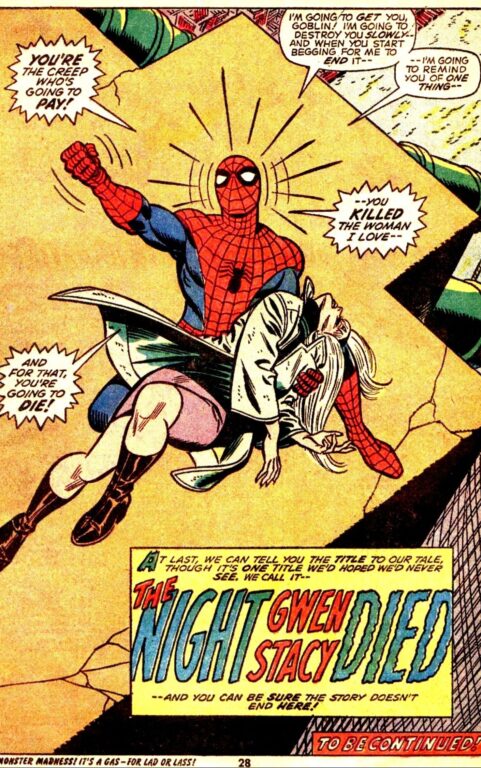
Perhaps the most pivotal Spider-Man story ever told, “The Night Gwen Stacy Died” fundamentally changed the superhero comic landscape. This two-issue arc, published in 1973, introduced a shocking concept: the permanent death of a major character in a superhero’s supporting cast—something virtually unheard of in that era.
In this tragic tale, Norman Osborn, suffering from a psychological breakdown triggered by his son Harry’s drug addiction and financial pressures, resurrects his Green Goblin identity and targets Spider-Man’s loved ones for revenge. The Goblin abducts Gwen Stacy, Spider-Man’s girlfriend, and lures him to a bridge where a devastating battle ensues. The Goblin hurls Gwen off the bridge, and although Spider-Man manages to catch her with his web, she dies instantly—her neck broken by the sudden stop of the webbing, or possibly already broken by the Goblin before the fall. The note on the letters page of The Amazing Spider-Man #125 states that the whiplash effect from her sudden stop caused her death.
The emotional weight of this story cannot be overstated. Spider-Man cradles Gwen’s lifeless body, vowing revenge against the Goblin. In the following issue, Spider-Man tracks down the villain but cannot bring himself to kill him. However, when the Green Goblin attempts to impale Spider-Man with his glider, the device instead strikes the Goblin, seemingly killing him. This story is widely credited with ending the Silver Age of Comics and jumpstarting the Bronze Age, fundamentally shifting comics toward more mature, tragic storytelling.
If This Be My Destiny – The Master Planner Saga (1966)
Issues: The Amazing Spider-Man #31–33
Creative Team: Stan Lee, Steve Ditko
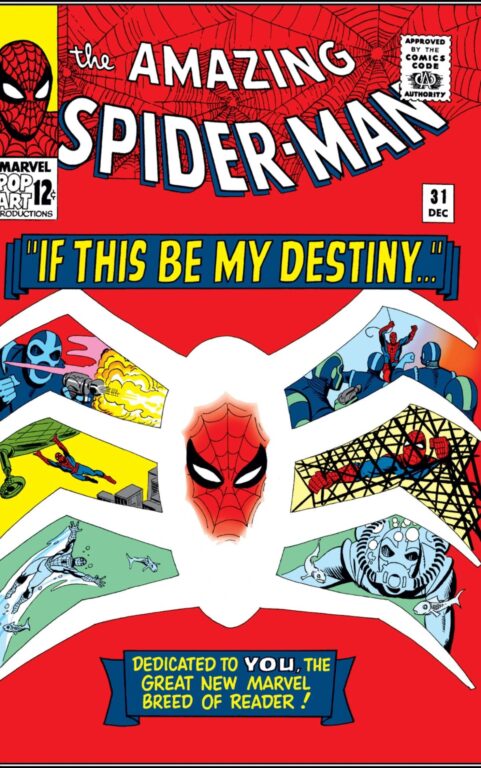
This early storyline by Spider-Man’s co-creators represents the character at the peak of Lee and Ditko’s creative powers. Peter Parker finds himself in an impossible situation when Aunt May falls gravely ill due to a radioactive blood transfusion. Meanwhile, Doctor Octopus, operating as the Master Planner, steals a rare serum—ISO-36—that could save her life. Peter must track down Doc Ock and retrieve the serum while battling both the villain and his own self-doubt.
The story culminates in one of the most iconic sequences in Spider-Man history: Peter, pinned under several tons of steel machinery in a flooding room, draws upon reserves of determination he didn’t know he possessed to free himself in time to save the day. This sequence perfectly encapsulates Spider-Man’s true superpower—not his spider-strength or web-slinging abilities, but his unwavering determination to do what’s right, even when facing impossible odds. The psychological depth of this arc established the template for countless Spider-Man stories to come, emphasizing that Peter Parker’s greatest challenges are often internal rather than external.
Kraven’s Last Hunt (1987)
Issues: Web of Spider-Man #31–32, Amazing Spider-Man #293–294, and Spectacular Spider-Man #131
Creative Team: J.M. DeMatteis, Mike Zeck
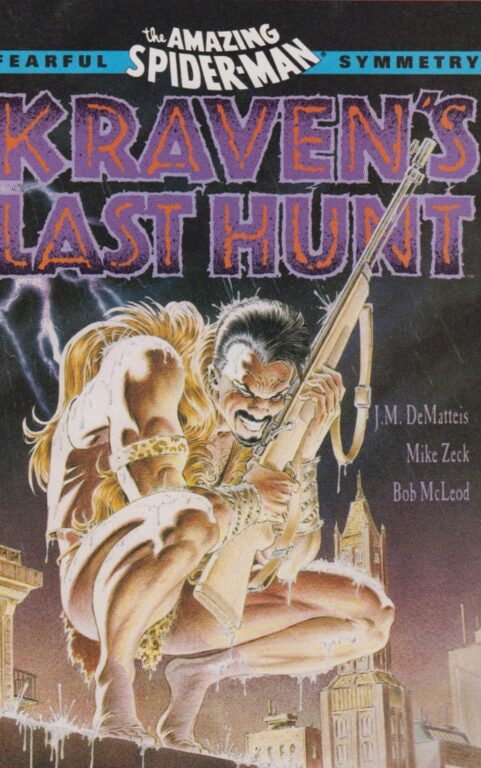
Often considered one of the darkest and most psychologically complex Spider-Man stories ever written, “Kraven’s Last Hunt” presents a six-part masterpiece that explores obsession, aging, and the nature of identity itself. Writer J.M. DeMatteis crafts a gothic tale in which an aging Kraven the Hunter, feeling the weight of mortality and decades of defeats at Spider-Man’s hands, decides to finally settle things between them.
In a shocking sequence, Kraven hunts down Spider-Man, shoots him with a tranquilizer rifle, and buries him alive. But this isn’t simply about killing his nemesis—Kraven then assumes Spider-Man’s identity, dressing as the Wall-Crawler to prove his superiority. Throughout New York City, the imposter Spider-Man brutally dispenses vigilante justice, culminating in single-handedly defeating Vermin, a foe that the real Spider-Man never managed to best alone. When Spider-Man revives and digs his way out of the grave after two weeks, a weakened confrontation ensues in which Kraven achieves psychological victory over his adversary. The story ends with Kraven committing suicide, having finally conquered his inner demons and achieved what he always sought: proof of superiority over Spider-Man. DeMatteis later explained that the story explores how others perceive Spider-Man versus his true nature as a caring, passionate human beneath the mask—something Kraven never truly understood. This arc is famous for the iconic image of Spider-Man rising from his grave, reinforcing the character’s indomitable spirit.
The Alien Costume Saga / Origin of Venom (1984–1988)
Issues: The Amazing Spider-Man #252–263, The Spectacular Spider-Man #90–100, Web of Spider-Man #1
Creative Team: Tom DeFalco, Ron Frenz, David Michelinie
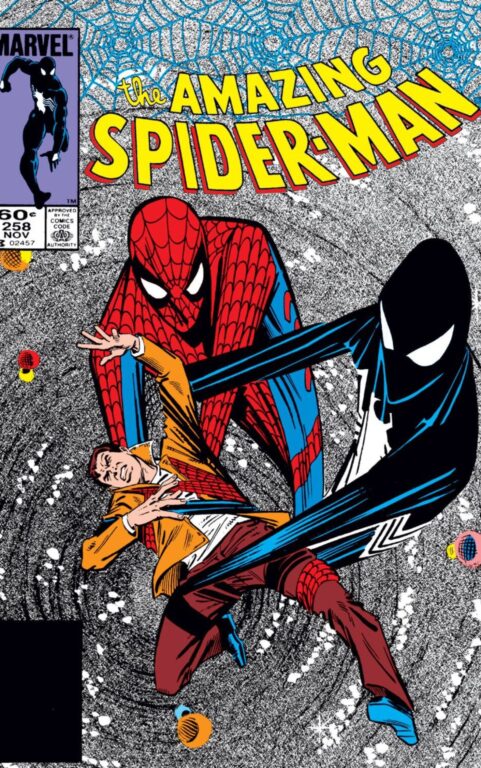
After the events of Secret Wars, Spider-Man returns to Earth with a new black costume he believes was created by a machine designed to replicate costumes. However, this “costume” is actually a sentient alien symbiote that responds to his thoughts and even generates organic webbing. What begins as an exciting new chapter slowly reveals itself to be a psychological warfare as the symbiote begins to take control and amplify Spider-Man’s aggressive tendencies.
Spider-Man eventually discovers the truth and removes the symbiote through exposure to sonic energy, but the alien survives and later bonds with Eddie Brock Jr., a disgraced journalist with a grudge against Spider-Man. This union creates Venom, one of Spider-Man’s most formidable and iconic villains. The first appearance of Venom occurs in The Amazing Spider-Man #300 (1988). This storyline fundamentally changed Spider-Man’s rogues gallery and introduced one of Marvel’s most complex and popular characters, exploring themes of obsession, rejection, and revenge through the symbiote’s perspective.
The Clone Saga (1994–1997)
Multiple Issues Across Spider-Man Titles
Creative Team: Various Writers and Artists
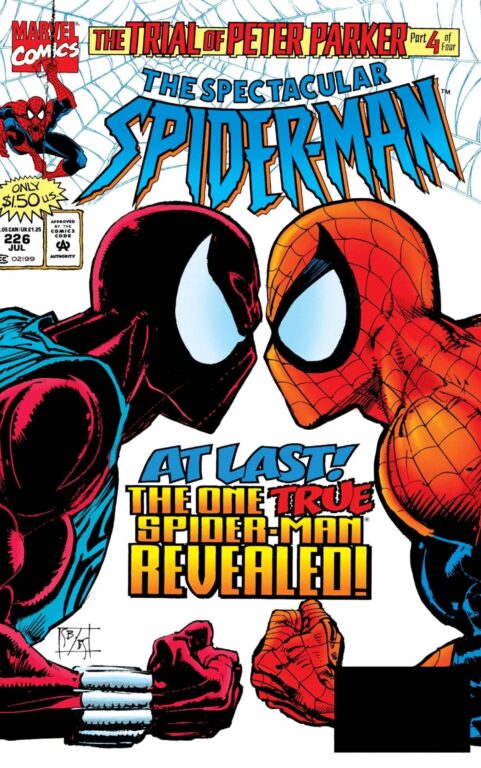
This extended storyline consumed all regular Spider-Man series between 1994 and 1997 and reignited one of the earliest Spider-Man mysteries. A clone of Spider-Man—the Scarlet Spider, Ben Reilly—reappears after surviving the events of the original Clone Saga from the 1970s, during which Professor Miles Warren (the Jackal) had created clones of both Spider-Man and Gwen Stacy.
What unfolds is a convoluted but emotionally powerful narrative in which Peter Parker is told he may actually be the clone, while Ben Reilly is the original. Medical tests seemingly confirm this, leading Peter to retire from being Spider-Man and prepare for fatherhood after learning Mary Jane is pregnant. Ben assumes the Spider-Man mantle as the Scarlet Spider. However, the truth eventually emerges: it was all manipulation orchestrated by Norman Osborn, who had returned from the dead. The real Peter Parker is indeed the original, while Ben is the clone. Ben dies saving Peter, his body degenerating like any other clone, and Peter reclaims his role as Spider-Man.
Despite its controversial execution and the fan backlash it generated, the Clone Saga ultimately explores complex themes of identity and what truly makes someone “real”—is it DNA, memories, or the choices one makes?
Civil War: Spider-Man’s Crisis (2006–2007)
Issues: The Amazing Spider-Man #529–543 (Spider-Man’s tie-ins)
Creative Team: J. Michael Straczynski, Mark Millar, Ron Garney
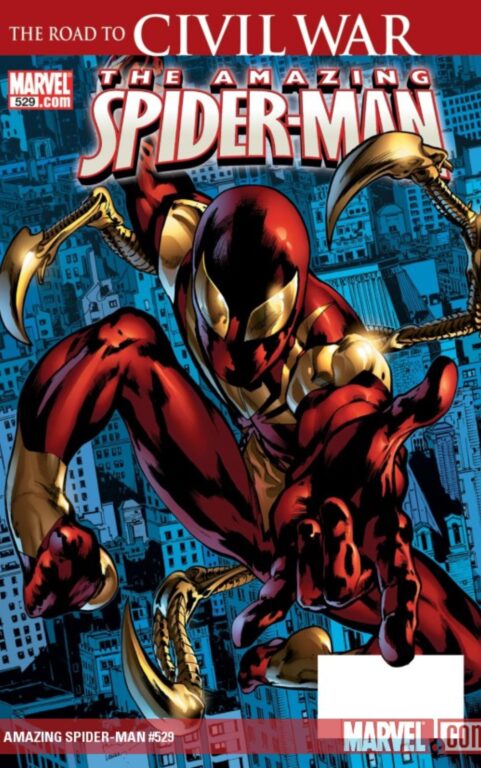
Spider-Man finds himself caught in the ideological conflict between Captain America and Iron Man when the U.S. government passes the Superhero Registration Act. Tony Stark convinces Peter Parker to publicly reveal his secret identity at a press conference, believing the move will bolster support for the Registration Act. Peter agrees, and the world discovers that Spider-Man is Peter Parker—a decision with devastating consequences.
When Aunt May is shot by an assassin hired by the Kingpin in retaliation for Peter’s public unmasking, Spider-Man enters a dark phase known as “Back in Black,” putting on his black suit and pursuing vengeance across the city. During this arc, Peter beats the Kingpin to near death, showing how far the traumatized hero is willing to go for revenge—a stark departure from his usually heroic nature.
This conflict ultimately forces Peter and his family underground, leading to the controversial “One More Day” storyline, but the Civil War era itself represents one of the most transformative periods in Spider-Man’s history, fundamentally challenging his moral compass.
Spider-Verse (2014)
Multiple Series Cross-Over Event
Creative Team: Dan Slott, Various Artists
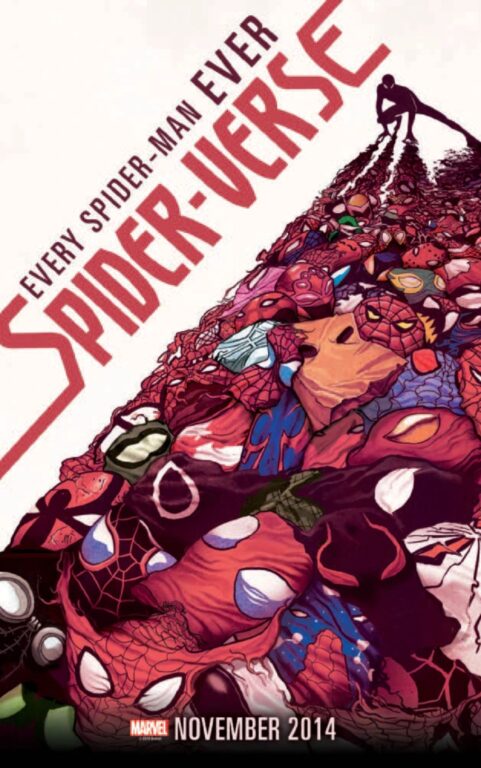
This epic multiverse event brings together multiple versions of Spider-Man from across the Marvel multiverse to face the Inheritors, a family of interdimensional vampires led by Morlun and his father Solus. The storyline features iconic alternate versions including Miles Morales, Spider-Gwen, Spider-Man 2099, Spider-Man Noir, and countless others.
At its heart, Spider-Verse explores what it means to be Spider-Man across infinite realities and variants. Each Spider-Man carries the same fundamental values and drive to protect others, despite their different origins, abilities, and circumstances. The event culminates in an epic battle where the Spiders must sacrifice themselves and work together to stop the Inheritors from consuming all Spider-Totems across the multiverse. This storyline directly inspired the beloved Spider-Man: Across the Spider-Verse animated film series.
Ultimate Spider-Man (2000–2011)
Written by Brian Michael Bendis, Art by Mark Bagley
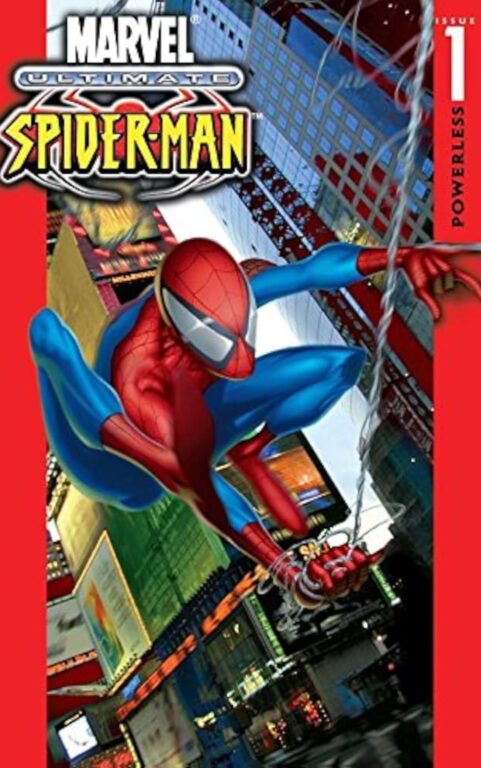
A completely reimagined Spider-Man for the Ultimate Marvel universe, this series modernizes Peter Parker’s origin and story for a contemporary audience. The series transformed Spider-Man into a teenage drama, presenting a younger, more vulnerable Peter facing high school pressures while simultaneously fighting supervillains.
Notably, this continuity features Peter Parker’s death in the “Death of Spider-Man” arc, where he sacrifices himself to stop the Green Goblin, passing the mantle to Miles Morales. Bendis’s run is considered by many as the crown jewel of Marvel’s Ultimate line, successfully capturing the essence of Spider-Man for a new generation while maintaining the character’s core values and appeal.
Superior Spider-Man (2013–2014)
Issues: The Amazing Spider-Man #698–700 and Superior Spider-Man #1–33
Creative Team: Dan Slott, Ryan Stegman, Humberto Ramos
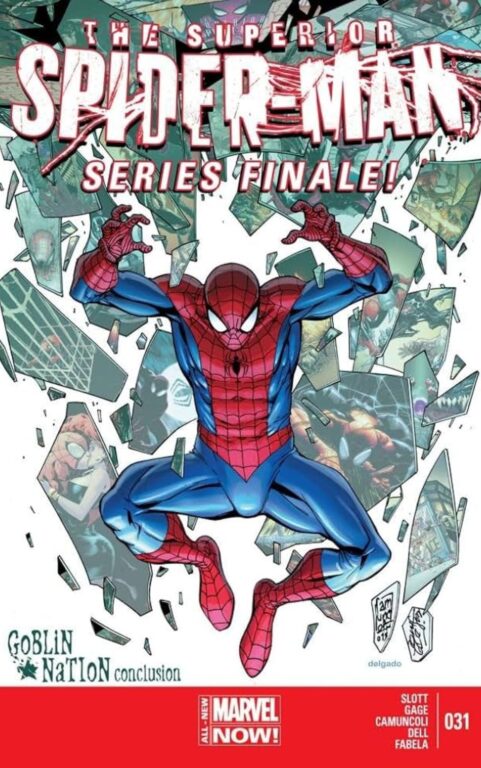
In one of Marvel’s boldest storytelling decisions, Peter Parker’s consciousness is replaced by Doctor Octopus in a body-swap orchestrated during the “Dying Wish” storyline. Otto Octavius, the dying villain, transfers his mind into Spider-Man’s body, leaving Peter trapped in Otto’s failing form. Otto dies, and Peter seemingly perishes with him, but his consciousness remains as a ghost in his own body, forced to watch Otto live as Spider-Man.
What follows is a fascinating exploration of whether Otto, with Peter’s memories and abilities, can truly become a hero. Otto adopts a more brutal approach to vigilante justice, killing criminals and taking extreme measures that the real Spider-Man would never take. However, through exposure to Peter’s memories and the influence of those around him, Otto gradually transforms, ultimately coming to respect Peter’s sacrifice and his unwavering commitment to redemption. When Peter eventually regains control of his body, he must prove that he is indeed the “Superior” Spider-Man by admitting his mistakes and taking responsibility.
Spider-Man: Blue (2002–2003)
Limited Series by Jeph Loeb and Tim Sale
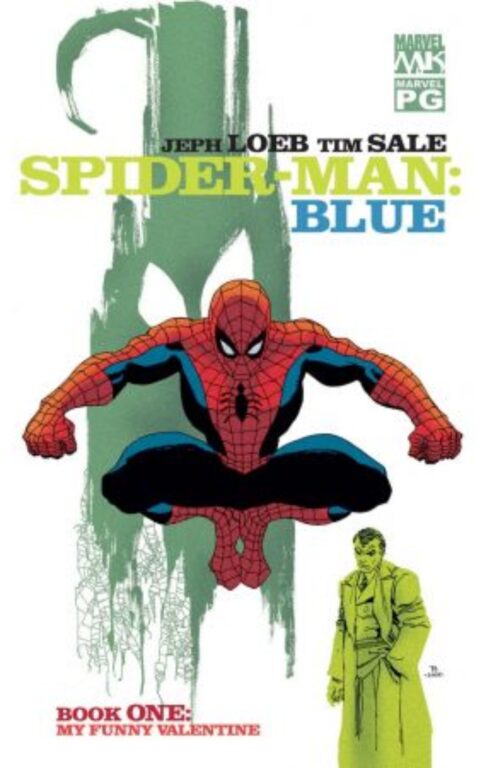
This six-issue miniseries, illustrated by the legendary team behind The Long Halloween, tells the story of Peter Parker and Gwen Stacy’s romance through narration recorded on tape as an adult Peter reflects on Valentine’s Day. The story recounts their college years, the blossoming romance between them, and the romantic tension involving Mary Jane Watson, all while implying that Kraven the Hunter is orchestrating events behind the scenes.
What makes Spider-Man: Blue remarkable is its emotional depth and artistic beauty. Tim Sale’s artwork pays homage to the 1960s aesthetic while bringing a contemporary maturity to the story. Loeb’s dialogue captures Peter’s grief over Gwen’s death and the lingering impact of her loss on his life, even though he has found happiness with Mary Jane. The miniseries ends with adult Peter at Gwen’s grave, and when Mary Jane discovers him, she offers sympathy rather than jealousy, showing the compassion and understanding that characterizes their relationship.