
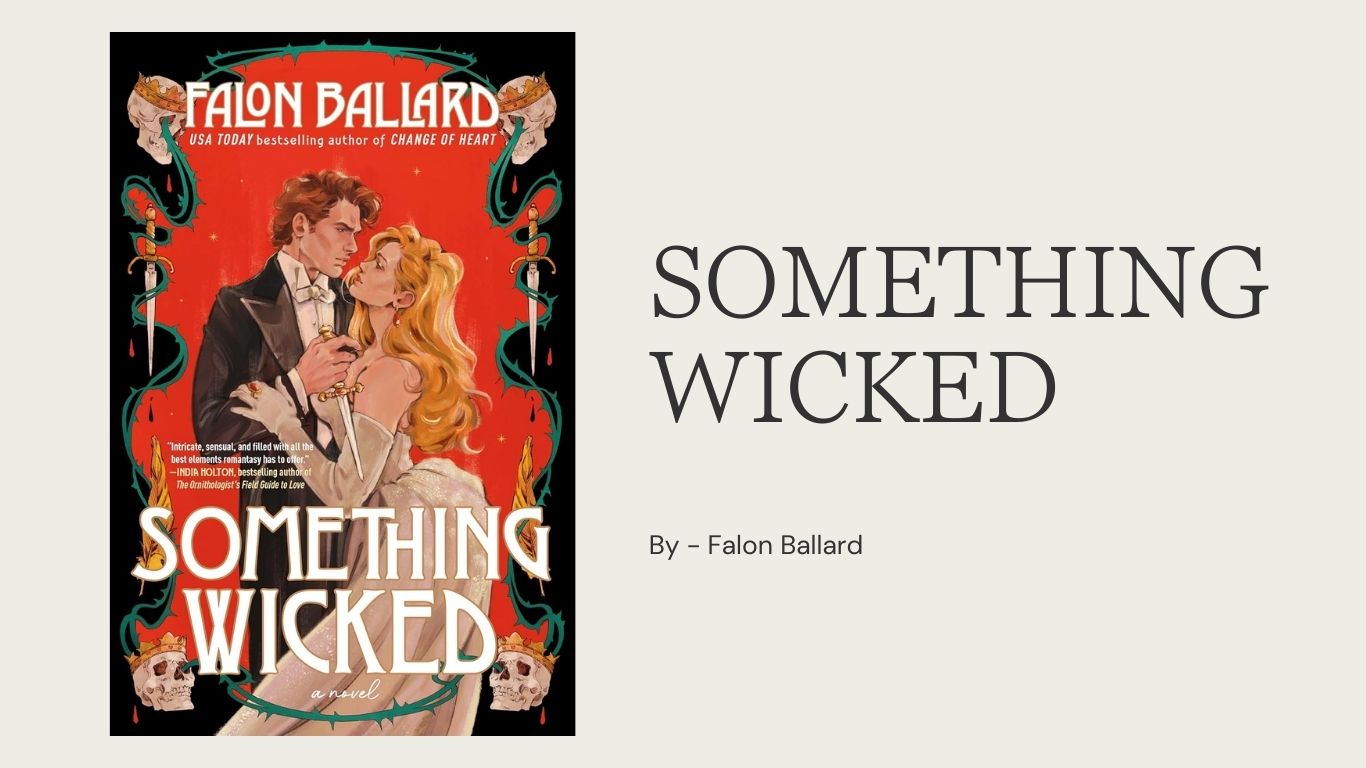
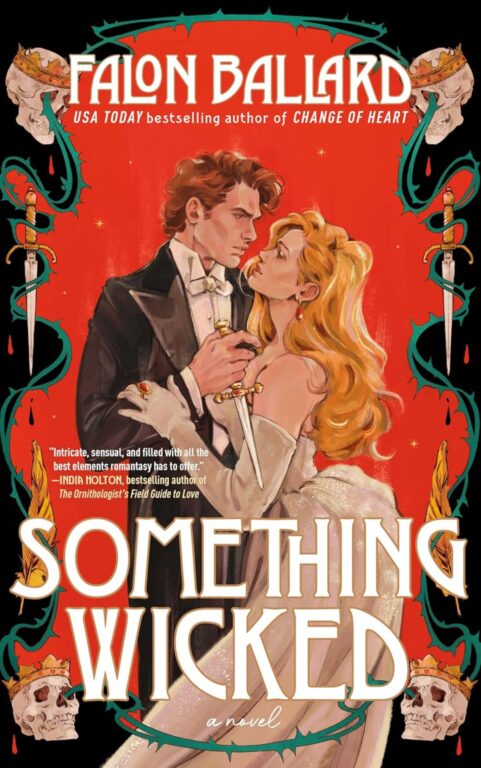
Something Wicked by Falon Ballard is a glossy, high-concept romantasy that throws a dethroned prince and a Gifted courtesan into the same room—and then locks the door while a country burns outside. The pitch is as dramatic as it sounds: Macbeth energy (ambition + regicide) colliding with Moulin Rouge! decadence (a glittering pleasure club, chosen family, and desire as currency).
On the page, that cocktail translates into big feelings, very explicit intimacy, and a “trust me or the world ends” pace. It’s also a book that tends to split readers: plenty of readers praise the heat, the vibe, and the fast turn-the-pages momentum, while others bounce off the sketchier politics/worldbuilding and the romance’s quickness.
Premise (spoiler-light)
Avon has just survived an Uprising that topples its monarchs—and replaces the old regime with a new nightmare of a rule: to qualify as a candidate in the first presidential election, contenders must kill the former monarch of their home province.
Enter Callum, son of a dethroned king, who is “perfect on paper” for leadership… except for the small issue of being asked to commit patricide. To get through what he believes must be done, he turns to Lady Caterine (“Cate”), a famous courtesan at La Puissance, whose magic (her “Gift”) can manipulate emotions through orgasm—a premise the book leans into with both sincerity and unapologetic spice.
That arrangement should be transactional. Instead, it becomes dangerous—because the hardest thing in Avon isn’t the murder decree. It’s trusting the person close enough to ruin you.
The world: Avon, the Gifted, and La Puissance
The book’s most vivid “stage” is La Puissance, a glamorous pleasure club that doubles as a sanctuary—especially for Gifted women, who live under social distrust and restrictive laws. The story is framed very deliberately as a celebration of sex workers, trying to show the real, raw experience alongside the glitter of the club.
The Gifted concept is simple to grasp (people—often women—born with supernatural abilities), and Cate’s Gift is the signature: emotion as something tactile and adjustable, used for relief, coping, and sometimes control. A common note, though, is that while the ideas are strong, the broader system—how the magic and politics work at scale—can feel thin or underexplained.
So the world is built to feel more than to simulate, like a theatrical set where the lighting is perfect even if the backstage map is a little blurry.
Cate & Callum: the emotional engine (and the volatility)
Cate knows exactly who she is: skilled, sharp, protective, and deeply tied to the club’s family ecosystem. Her Gift gives her power, but the book also frames that power as labor—something that costs her and needs boundaries.
Callum is written as walking tension: a man raised by monarchy, pushed toward “necessary” violence by a new regime, and carrying prejudice against the Gifted that he has to face head-on. That prejudice (and how quickly it shifts) is one of the more divisive elements—some readers buy the arc, others feel the turnaround is too fast to fully land the emotional weight.
When the pairing works, it works because the book keeps returning to one pressure point: intimacy as the fastest route to truth. When it doesn’t, it’s because the emotional “why” can feel like it’s sprinting to keep up with the physical “wow.”
Romance & spice: what the book is really selling
This is an adult romantasy that doesn’t pretend the heat is incidental. The sex scenes aren’t just extras; they’re part of the premise, part of the magic system, and part of the emotional conflict (because Cate’s Gift and her work blur boundaries the couple has to negotiate).
Readers who click with this book usually highlight:
- the sizzling chemistry and high spice
- the sex-positive lens around courtesans and the club as community
- the “just one more chapter” momentum of the relationship’s escalation
On the other hand, some readers argue the romance leans into insta-lust / rapid bonding, which can make the emotional foundation feel thinner than the book’s dramatic stakes suggest.
Themes that land (even when the plot wobbles)
Even mixed reactions tend to agree the book is reaching for more than just pretty chaos and steam.
1) Power and bodily autonomy
Cate’s Gift is literally about emotional control, so the book naturally circles questions of consent, vulnerability, and what it means to be safe with someone who can unmake you.
2) Prejudice, oppression, and who gets believed
The Gifted are treated as both political problem and social threat, and that tension gets personal through Callum’s mistrust and unlearning.
3) Revolution hangover
One of the smartest pieces of the premise is that overthrowing monarchs doesn’t magically create justice. Avon’s “new order” is still brutal—just brutal in a new costume.
Writing style & pacing (what it feels like to read)
Ballard’s background in contemporary romance shows in the snappy, relationship-forward focus and the easy readability. The opening pages lean hard into lush, sensory description—color, fabric, candlelight, music—very “cabaret fantasy.”
Readers often mention trade-offs here:
- Fast pace, high drama, high spice make it easy to binge.
- That speed can also make certain reveals or emotional pivots feel rushed.
- Interludes like letters or journal-style snippets between chapters add texture for some, but can undercut suspense for others if they hint at outcomes too soon.
There are occasional notes about dialogue “telling” too much or spelling out feelings where subtext could have done the work.
“Macbeth meets Moulin Rouge!” — does it actually work?
As a hook, it’s perfect. In practice, it plays out roughly like this:
- Moulin Rouge! contributes the atmosphere: the club, the glamour, the found family, the romance growing in a world where sex is both work and performance.
- Macbeth provides the bones: ambition, betrayal, the shadow of murder, and the way power rots people from the inside.
Some readers feel the Shakespearean element is more of a vibe than a rigorous retelling—enough to flavor the story, not always enough to fully satisfy political-intrigue junkies. Others love that it leans into being heightened, theatrical, and a bit unhinged rather than grounded and sober.
What works best
- La Puissance as a setting. It’s the book’s standout location—glamorous, messy, protective, and politically loaded.
- A sex-positive heroine with agency. Cate is not treated as a cautionary tale; her work is complex and meaningful, not just window dressing.
- A premise that sinks its hooks in immediately. The “kill your province’s monarch to run for office” decree is wild in a way that instantly raises stakes.
Where it may not land for everyone
- Worldbuilding and political mechanics can feel thin. Readers who want strict rules and detailed systems may come away wanting more.
- Romance pacing is a risk. If you love very slow-burn, painstaking trust-building, this might feel like it jumps emotional checkpoints.
- Tone juggling can be jarring. The constant swing between “nation in turmoil” and very intimate, pleasure-focused scenes won’t work for everyone.
Who this book is for (and who should skip)
You’ll probably enjoy it if…
- spicy romantasy is exactly what you’re looking for
- “pleasure club + politics + magic” sounds fun rather than outlandish
- you like theatrical, dramatic stories that feel like stage productions on the page
You might want to skip if…
- you need detailed, logically airtight magic and politics
- you care more about intricate strategy than character dynamics and heat
- instant chemistry or quick emotional attachment is a pet peeve
Final verdict
Something Wicked works best if you let it be what it clearly wants to be: a decadent stage show of a book. It’s all about lush lighting, big emotions, sharp heels on marble, and the danger of wanting someone in a world where desire is always transactional.
For readers who come for spice, spectacle, and a bold, slightly outrageous hook, it delivers. For those who need the scaffolding of the world to be as solid as the romance is intense, Avon might feel like the prettiest set you’ve ever seen—built on just a bit of wobble.