

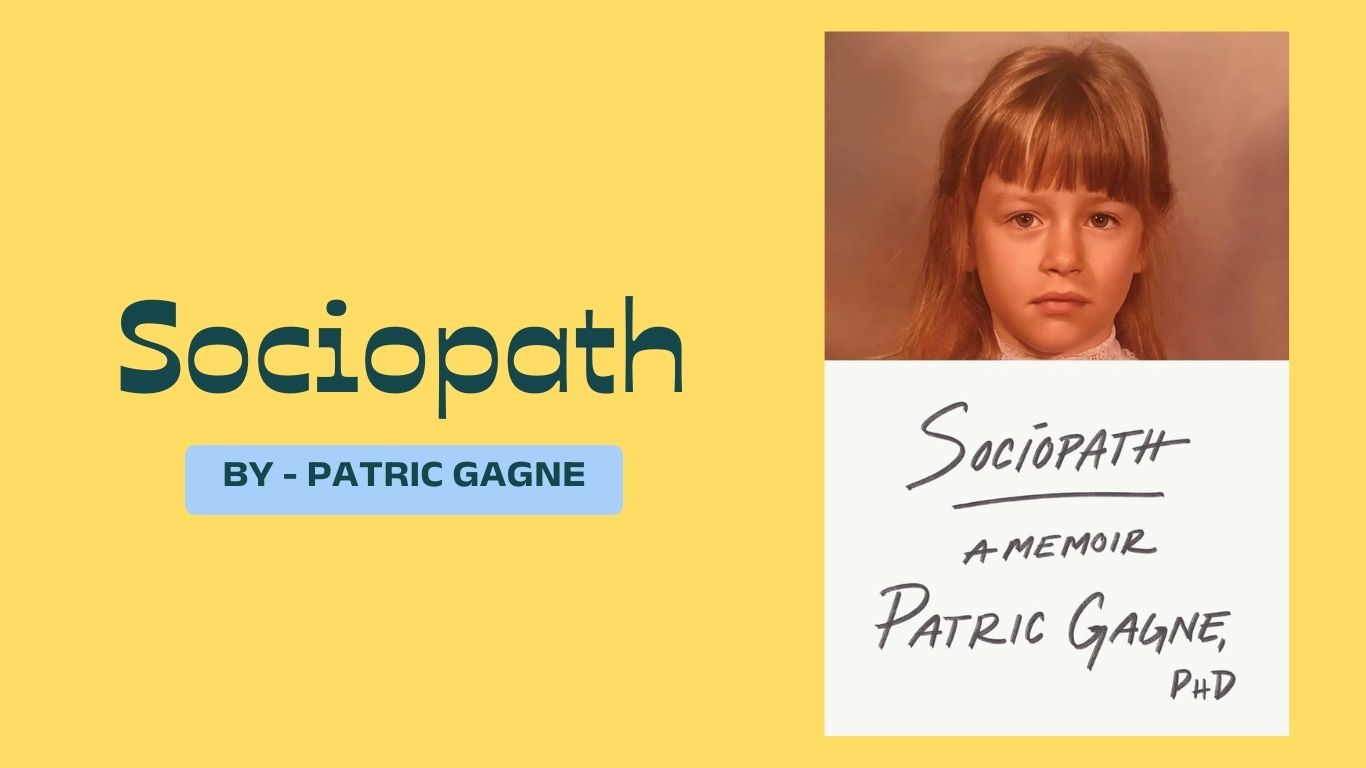
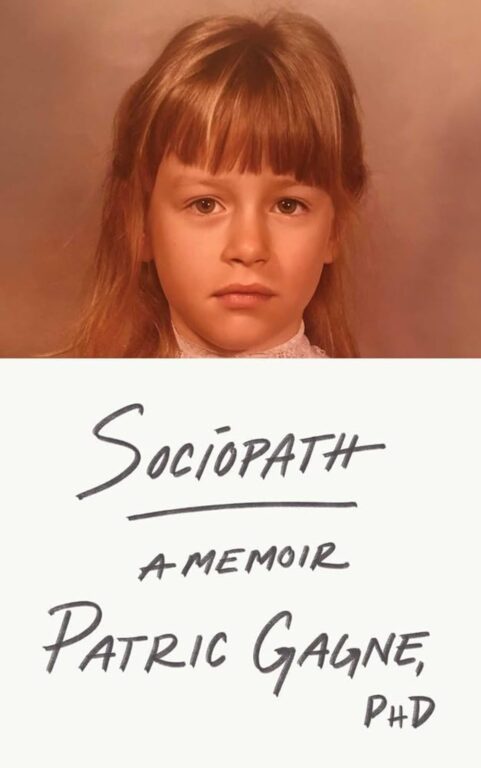
There’s something quietly unnerving about a memoir that doesn’t tell you how to feel. Sociopath by Patric Gagne is one of those books. It doesn’t try to shock, confess, or explain itself away. Instead, it opens a door into a mind that doesn’t work the way most of ours do—and then leaves us standing there, deciding what to make of it.
This isn’t a lurid exposé or a neat psychological case study. It sits somewhere messier and more interesting: part self-examination, part attempt at translation. Gagne isn’t asking for absolution. She’s trying to be understood—and that makes the reading experience both compelling and uncomfortable in the best way.
What the book is about
At its heart, Sociopath is a first-person story about realizing, later in life, that you don’t experience the world the way others do. Gagne walks readers through her childhood, teenage years, and adulthood, pointing out moments that only made sense in hindsight—emotional detachment, impulsive decisions, and a striking lack of guilt that separated her from her peers long before she had language for it.
Her journey takes an unexpected turn when she becomes a therapist herself. That irony—someone who studies and helps others navigate emotions while struggling to feel them instinctively—adds a fascinating layer to the memoir. Throughout the book, she shares moments that forced her to confront the limits of her inner world, alongside the systems and rules she built to live without harming others.
Marriage and motherhood form the emotional backbone of the story. These sections are especially powerful because they quietly dismantle stereotypes. Gagne doesn’t present herself as cold or incapable of attachment; instead, she shows how connection can exist even when it doesn’t look or feel “normal.”
What it feels like to read
The writing is controlled, clear, and deliberately restrained. Gagne doesn’t dramatize her experiences or beg for sympathy. She tells the story plainly, sometimes bluntly, and lets readers sit with the discomfort. That distance may feel unsettling at first—but it feels honest.
In many ways, the tone mirrors her inner life. Just as she has had to study and decode human behavior consciously, readers are asked to do the same with her story. There are no emotional signposts telling you when to feel sorry, angry, or relieved. You have to decide for yourself.
Why the book works
One of Sociopath’s greatest strengths is its refusal to turn sociopathy into spectacle. Gagne doesn’t portray herself as a villain, nor as a misunderstood genius. She presents sociopathy as something that requires constant effort, structure, and vigilance.
Some of the most compelling moments come when she describes urges she knows are socially unacceptable—and the deliberate choices she makes to stop herself. These passages quietly challenge a deeply ingrained assumption: that morality must come from feeling. Gagne suggests that ethics can be learned, practiced, and maintained cognitively, even when empathy doesn’t arise naturally.
The book is also remarkably accessible. Psychological ideas are woven into real-life moments rather than explained through jargon. You never feel like you’re reading a textbook, but you also never feel talked down to.
Where it falters—and why that matters
The book hasn’t escaped criticism, and some of it is fair. A few readers question whether Gagne’s evident care for her family fits the label she embraces. Others wish for more clinical grounding, clearer lines between diagnosis and personal interpretation.
There are also moments where troubling actions are explained but not deeply interrogated. If you’re looking for clear accountability or external perspectives, you may feel something is missing. This is a story told entirely from the inside—and that means readers have to remain alert, skeptical, and thoughtful.
But that limitation is also part of the point. Sociopath doesn’t claim to speak for everyone. It offers one life, one mind, and asks readers to wrestle with it.
Why this book feels important right now
We talk more openly about mental health than ever before—but we still love simple categories: good and bad, safe and dangerous, normal and broken. Sociopath pushes hard against that instinct.
The memoir asks uncomfortable questions:
If empathy doesn’t come naturally, can responsibility still exist?
If someone has harmful impulses, does choosing restraint matter?
And how much space does society allow for people who fall outside emotional norms?
Gagne doesn’t offer easy answers. She offers lived evidence that structure, accountability, and self-awareness can matter as much as feeling.
Who should read it
This book will resonate with readers drawn to psychology, morally complex memoirs, and stories that unsettle neat assumptions. It’s particularly relevant for people working in mental health, education, or justice—fields where labels shape real lives.
That said, this is not a clinical guide. If you want definitive explanations or diagnostic certainty, you’ll need to look elsewhere. Sociopath works best when read as a personal account, not a universal template.
Final thoughts
Sociopath is not an easy book—but it’s a valuable one. Patric Gagne doesn’t ask to be excused. She asks to be seen clearly enough to live responsibly among others. The tension between explanation and accountability runs through every page, and that’s where the memoir finds its power.
You may finish the book feeling unsettled, conflicted, or unsure of what to believe. That doesn’t mean it failed. It means it did exactly what it set out to do: force readers to look beyond headlines and stereotypes, and sit with a reality that refuses to be simple.
If nothing else, Sociopath reminds us that understanding is not the same as endorsement—and that distinction matters more than ever.