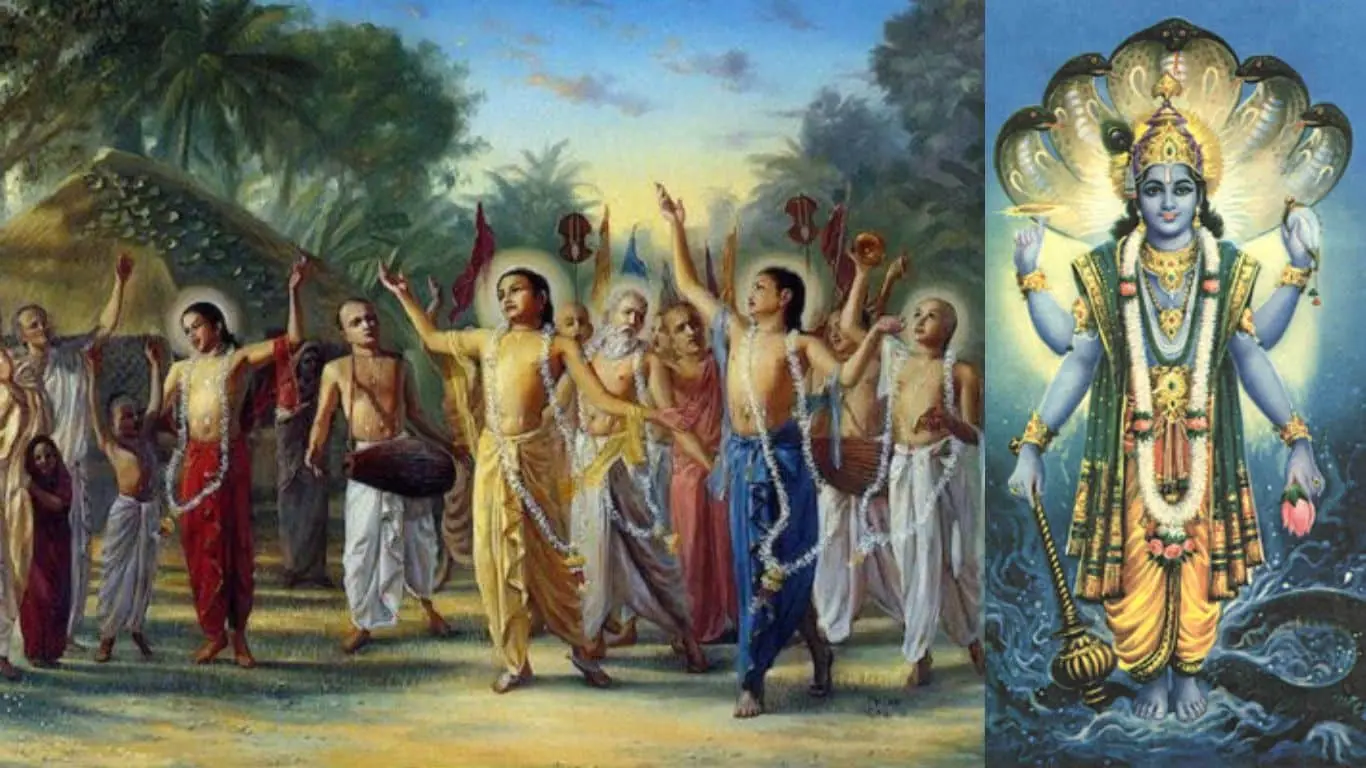
In Hinduism, there exists a realm of timeless wonder—an age of unparalleled purity and divine harmony known as Satya Yuga, the Golden Age of Truth. In this epoch, humanity is believed to have reached the pinnacle of virtue, where truth, righteousness, and spirituality flourished in all their pristine glory. Satya Yuga, the first of the four cosmic ages, encapsulates an era of unparalleled moral and spiritual enlightenment, where the very fabric of existence resonated with unwavering honesty and unwavering devotion.
In this article, we embark on a journey through the pages of Hindu mythology to unveil the mesmerizing landscape of Satya Yuga. We will delve into its defining characteristics, explore captivating tales and legends that unfolded during this age, and contemplate the profound spiritual insights it imparts. As we navigate this age of truth, we will also contemplate its relevance in the modern world, discovering how the echoes of Satya Yuga continue to resonate, beckoning humanity to reconnect with the timeless values it represents.
Satya Yuga: The Golden Age of Truth in Hindu Mythology
The Age of Truth
In the rich tapestry of Hindu mythology, Satya Yuga, often referred to as “The Age of Truth,” stands as a shimmering gem, a time when humanity and the cosmos danced in perfect harmony. In this sacred epoch, the very essence of existence was rooted in unwavering virtue and unblemished honesty. Truth wasn’t just a concept; it was the life force that pulsed through every being. Satya Yuga radiated with spiritual brilliance, where individuals lived in profound communion with the divine. Morality reached its zenith, and righteousness was an intrinsic part of society’s fabric.
Characteristics of Satya Yuga

Satya Yuga, also known as the Age of Truth, is characterized by several distinct features and qualities that set it apart from the other Yugas in Hindu mythology. Here are the key characteristics of Satya Yuga:
- Truth and Honesty: Satya Yuga is named after “Satya,” which means truth. In this age, truthfulness is not only valued but is the very foundation of existence. People are inherently honest, and deception is virtually nonexistent.
- Virtue and Righteousness: Virtue and righteousness are upheld as the highest values. People adhere strictly to moral and ethical codes, and their actions are guided by principles of justice and fairness.
- Spiritual Awareness: Satya Yuga is marked by a deep spiritual awakening. Individuals are naturally inclined toward spirituality, and their lives revolve around self-realization and enlightenment. Spiritual practices and meditation are widespread.
- Longevity: human lifespans are significantly longer during Satya Yuga. It is believed that people can live for thousands of years in a state of perfect health and youthful vitality.
- Unity with Nature: There is a profound connection with the natural world. Humans live in harmony with nature, respecting and protecting the environment. There is no exploitation of resources.
- Lack of Conflict: Conflict and violence are rare in Satya Yuga. People resolve disputes amicably, and there is a general sense of peace and tranquility.
- Absence of Disease: Physical and mental ailments are almost nonexistent. People enjoy perfect health throughout their extended lifespans.
- Higher Consciousness: The inhabitants of Satya Yuga have a heightened state of consciousness. They possess advanced wisdom and understanding of the universe and its mysteries.
- Simplicity and Austerity: Life is characterized by simplicity and austerity. Material possessions are minimal, and people focus on inner fulfillment rather than external wealth.
- Direct Connection with the Divine: There is a direct and profound connection with the divine. Gods and divine beings are often present and interact with humans, guiding them on their spiritual journeys.
These characteristics paint a picture of a utopian age where truth, virtue, and spirituality reign supreme. Satya Yuga is often seen as an idealized period, and its attributes serve as a source of inspiration and guidance in Hindu philosophy and spirituality, encouraging individuals to aspire toward higher moral and spiritual standards.
Legends from Satya Yuga

Satya Yuga, the Age of Truth in Hindu mythology, is associated with several captivating legends and stories that reflect the virtuous and spiritually enlightened nature of this era. Here are a few notable legends from Satya Yuga:
1. Matsya Avatar (The Fish Incarnation):
- In the dawn of Satya Yuga, a catastrophic flood threatened to submerge the Earth. Lord Vishnu, in His Matsya Avatar, appeared as a gigantic fish with a horn and rescued King Satyavrata. During this divine intervention, Matsya also recovered the sacred Vedas, which had been stolen by the demon Hayagriva. The avatar’s actions preserved knowledge and ensured the survival of humanity and dharma (righteousness).
2. Kurma Avatar (The Tortoise Incarnation):
- During Satya Yuga, a cosmic event unfolded: the churning of the ocean of milk (Samudra Manthan). The gods and demons sought the nectar of immortality hidden in the ocean. However, the colossal mountain used for churning began to sink. To stabilize it, Lord Vishnu assumed the form of Kurma, a giant tortoise, upon whose back the mountain rested. Kurma’s role in this event exemplifies cooperation for a higher spiritual purpose.
3. Mohini Murti:
- As the churning of the ocean continued, a dispute arose over the distribution of the nectar of immortality. Lord Vishnu, in the enchanting form of Mohini, a mesmerizing woman, appeared. Her presence captivated both gods and demons. She artfully resolved the dispute by distributing the nectar to the demigods, illustrating the power of divine illusion and diplomacy.
4. Dhanvantari:
- During the churning of the ocean, Dhanvantari emerged carrying the pot of immortal nectar (amrita). He is revered as the divine physician who inaugurated Ayurveda, the science of traditional medicine. While specific legends about Dhanvantari are limited, his presence signifies the importance of health and the healing arts.
5. Varaha Avatar (The Boar Incarnation):
- In Satya Yuga, the Earth had submerged into the cosmic waters, and the demon Hiranyaksha had stolen it. To rescue the Earth, Lord Vishnu assumed the form of Varaha, a colossal boar. He dived deep into the cosmic ocean, defeated Hiranyaksha in a fierce battle, and lifted the Earth from the abyss, symbolizing the divine protection and salvation of the world.
6. Narasimha Avatar (The Man-Lion Incarnation):
- The tale of Prahlada exemplifies the power of unwavering faith and righteousness. Despite being the son of the demon king Hiranyakashipu, Prahlada remained devoted to God. His father’s relentless attempts to divert him from the path of righteousness failed. Threats and punishments couldn’t shake Prahlada’s faith. In desperation, Hiranyakashipu sought to kill him, leading Lord Vishnu to appear as Narasimha—a half-man, half-lion form—to protect Prahlada. In a fierce battle, Narasimha defeated and destroyed Hiranyakashipu, proving that not even the demon’s boons could save him. This story underscores the triumph of goodness and faith over evil, regardless of the challenges faced.
Life in Satya Yuga
In the heart of Satya Yuga, the harmonious melody of existence resonates. Longevity, an extraordinary hallmark of this age, sees humanity flourishing for thousands of years. These extended lifespans provide ample time for spiritual growth and self-realization. It’s an era where virtue is not just upheld but woven into the very fabric of life, and honesty prevails without question. Truth is no mere abstraction; it’s the essence of existence itself.
Spiritual enlightenment permeates every soul, fostering a deep connection with the divine. Meditation and self-realization are not pursuits but a way of life. People live in profound resonance with the universe, experiencing a higher state of consciousness. Nature and humanity are in perfect harmony, with the environment respected and preserved.
Conflict is a rarity as disputes find peaceful resolutions. Simplicity and austerity define existence, and the pursuit of material wealth is replaced by the quest for inner fulfillment. In this age, Satya Yuga, the ideals of truth, virtue, and spiritual enlightenment illuminate the path forward for all generations.
From Satya Yuga to Kali Yuga: The Moral Descent

As we delve deeper into the transitions of the Yugas, we arrive at a critical juncture in our cosmic journey—from the idyllic age of Satya Yuga to the turbulent era of Kali Yuga. Here, we witness the profound shift in human morality, a descent from the pinnacle of virtue to the depths of moral decay. These transitions tell a compelling story of changing values, ethics, and societal norms, providing us with insights into the intricate fabric of cosmic evolution.
Lessons from Satya Yuga for the Present
As we reflect on the age of Satya Yuga, a time of unwavering truth and virtue, we unearth invaluable lessons that resonate profoundly in our contemporary world. These timeless principles of righteousness, devotion, and spiritual enlightenment beckon us to rediscover their relevance.
In a world often characterized by complexity and moral ambiguity, the simplicity and clarity of Satya Yuga’s guidance become guiding beacons. They inspire us to reestablish connections with truth, compassion, and our higher selves, fostering a harmonious existence.
When we view our present through the lens of Satya Yuga, we embark on a journey infused with renewed wisdom and purpose. These ancient lessons provide us with a reliable compass, reminding us that the pursuit of virtue and inner illumination is perpetually relevant.
Also Read: 10 Iconic Stories from Hindu Mythology Everyone Should Know