
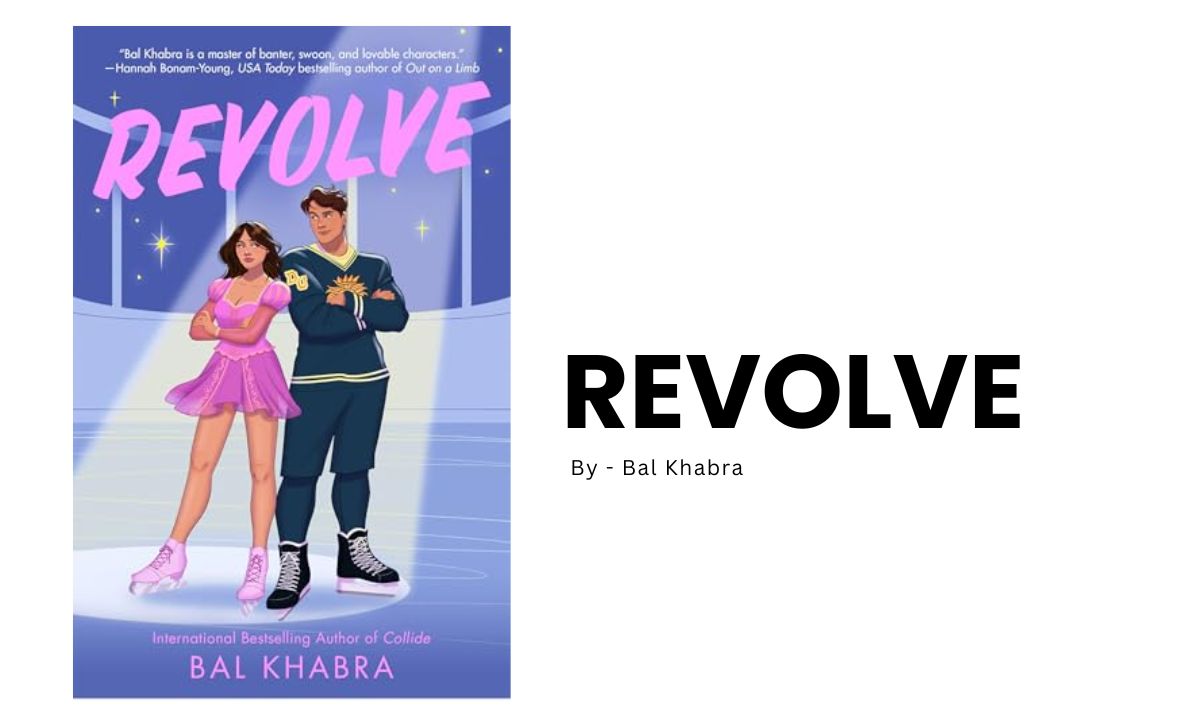
Bal Khabra’s Revolve lands squarely in the sports-romance lane but refuses to be just another rivals-to-lovers story. It’s a novel about reclaiming a life after a fall, about the strange gravity that draws two damaged athletes together, and about how the rink — for better or worse — shapes identity. Revolve follows Sierra Romanova, a former Olympian figure skater fractured by a public accident, and Dylan Donovan, a brash hockey player whose self-destructive streak has jeopardized his future. What makes this book hum is Khabra’s knack for character-first scenes, crisp banter, and a steady layering of emotional stakes that keeps the pages turning.
Plot at a Glance
Sierra Romanova arrives at Dalton University carrying the weight of an accident that left her with panic attacks and a fractured skating career; the ice that once gave her purpose has become both enemy and memory. Dylan Donovan’s hockey future is teetering after he’s benched for reckless behavior, and the punishment sends him to the same rink Sierra avoids.
When circumstances push them together as on-ice partners, what begins as friction morphs into something steadier — an alliance that tests their limits and forces both to confront fear, ambition, and the versions of themselves they’d buried. The narrative guides readers through training scenes, campus life, and intimate conversations, building to a finale that asks whether trust can be rebuilt in time for the next big performance.

Characters and Relationships: Believable Growth, Not Instant Magic
The heart of Revolve is the emotional arc: Sierra’s fear, rendered with careful sensory detail, never becomes mere plot device; it’s a lived experience. Khabra resists the temptation to “fix” trauma with a single speech or a montage. Instead, Sierra’s progress is incremental — small stepping stones of exposure, support, and setbacks that feel earned.
Dylan, meanwhile, is written as more than a trope. His recklessness has consequences, and his attempts at atonement are messy and specific; he learns to listen, to apologize, and to be present rather than performative. Their chemistry is earned through shared goals and vulnerability, not convenient misunderstandings. Multiple reviewers have noted the satisfying development of both leads and their slow-burn chemistry — a compliment to Khabra’s pacing and emotional shading.
Voice, Banter, and the Setting That Matters
Khabra’s dialogue snaps — there’s wit and friction in equal measure, which keeps the quieter emotional scenes from sagging. The rink and the culture around college sports feel textured: the rituals of practice, the stench of ice rinks at dawn, the way a confident skate turn can say more than a conversation. That specificity matters because the setting isn’t just backdrop; it’s a character in its own right, shaping choices and conflicts. Readers who love sports romance will appreciate how Khabra balances the athletic elements with the romantic tension without letting either overpower the other.
Pacing and Structure: Steady With Purposeful Beats
If you prefer novels that rush headlong into drama, Revolve is not that kind of sprint. The book favors a steady build: rivalry, friction, a slow thaw, and then higher-stakes tests of commitment. This approach rewards readers who enjoy character development over dramatic plot twists. Training montages and performance preparations are interleaved with moments of introspection and relationship work, so the emotional payoff lands without feeling manipulative. Critics who appreciated Khabra’s prior titles in the Dalton University setting have noted that Revolve maintains the series’ tone while delivering a well-contained story that can satisfy first-time readers and series fans alike.
Themes: Fear, Identity, and What ‘Home’ on the Ice Means
Beyond romance, Revolve explores how athletes define themselves by their sport and how fragile that identity can become after injury or public failure. The novel interrogates the pressure to perform, the public gaze that can both lift and crush, and the quieter tasks of becoming patient with oneself. Themes of redemption and consent — emotional and physical — are handled with care; consent isn’t a throwaway line but a recurring ethical thread in how the characters interact and rebuild trust. This thematic focus gives the book emotional resonance that lingers after the last page.
What Works Especially Well
- The emotional realism: Sierra’s panic attacks and the slow, practical steps toward recovery feel authentic and respectfully rendered.
- The chemistry: Dylan and Sierra’s back-and-forth reads true; their banter is matched by moments of tenderness that don’t feel forced.
- The sports detail: Fans of hockey-figure skating crossovers will find the athletic scenes credible and satisfying.
Many readers and reviewers have praised these elements, calling the novel a must-read for lovers of sports romance who want character-driven stories.
Minor Quibbles
No book is perfect, and Revolve has a few predictable stretches. Some plot beats follow genre conventions — which will be comforting to fans and predictable to genre-savvy readers. A couple of secondary characters could have received deeper arcs, and a few tension escalations resolve more quickly than some readers might prefer. These are small trade-offs against the larger strengths of voice and character work.
Final Verdict
Bal Khabra’s Revolve is a thoughtful, emotionally satisfying addition to her Dalton University universe. It’s less about shock value and more about the slow work of rebuilding trust and identity. If you enjoy sports-centered romances that marry athletic authenticity with heartfelt character arcs — and if you appreciate romance that earns its heat through earned vulnerability — Revolve will likely land on your favorites shelf. For new readers, it’s a strong entry point; for series veterans, it expands familiar territory with new emotional stakes.