

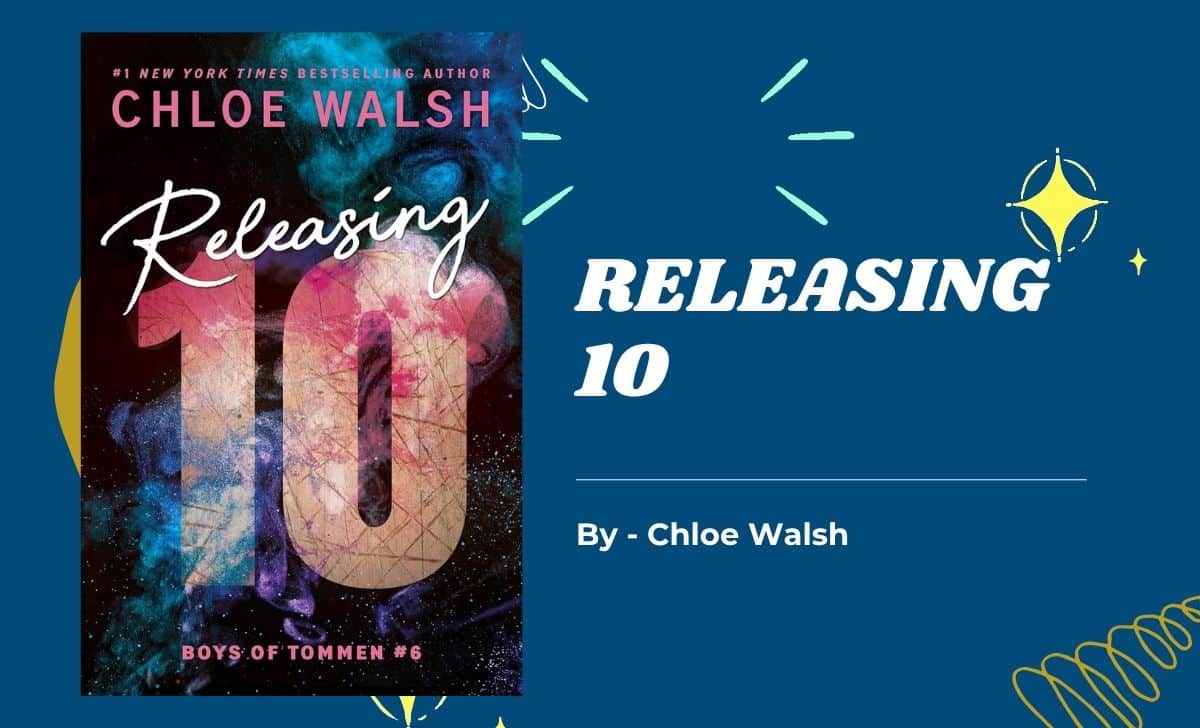
Releasing 10, the sixth and final installment in Chloe Walsh’s Boys of Tommen universe, is a profoundly emotional journey of trauma, mental health, and love’s endurance. This isn’t a light romance; it’s a powerful portrayal of survival and sincerity that lingers long after the last page.
Plot
Set largely in rural Ireland across the 1990s and 2000s, Releasing 10 follows Lizzie Young from childhood into adulthood. Diagnosed with bipolar disorder early on, Lizzie struggles with family neglect, emotional abuse, and a cycle of misdiagnoses including PTSD, agoraphobia, and schizophrenia—even as she learns to navigate school and society (especially with persistent misunderstanding at home and at school).
Hugh Biggs enters Lizzie’s life early—as a friend, confidante, and eventually her anchor. Raised amid his own family dysfunction, Hugh offers a steady presence, balancing quiet support with personal struggle. Their love builds slowly—from whispered childhood companionship to a mature bond tested by relapse, crisis, and heartbreak.
The structure shifts between Lizzie’s manic highs and crippling lows and Hugh’s responses, creating an immersive perspective that’s both intense and empathetic. Together, they navigate hospital visits, secrets from childhood, and the constantly shifting terrain of mental illness and healing.

Character Portraits
Lizzie Young: The Storm Within
Lizzie is unforgettable. She endures trauma from early childhood, including sexual abuse and parental dismissal, and battles bipolar disorder in a world that often dismisses her experiences. Her emotional landscape is neither sugar‑coated nor sensationalized; Walsh conveys mania, depression, guilt, rage, and hope with searing authenticity. Lizzie is never portrayed as helpless—her journey is one of self‑definition, survival, and slow reclamation of agency.
Hugh Biggs: The Solid Ground
Hugh is compassionate without being saintly. He learns how to support a partner with severe mental health needs, educates himself, and stays by Lizzie’s side—even while managing his own emotional wounds. His love is steady, but he’s also willing to step back when needed, recognizing that love cannot fix everything. Hugh represents emotional literacy, self-awareness, and the courage to hold space without losing himself.
Themes and Emotional Core
Mental Illness and Realism
Walsh’s portrayal of bipolar disorder is unflinching. The book lays bare the instability and unpredictability of Lizzie’s state—mania followed by exhaustion, isolation, and regret. What sets this apart is how it immerses readers into that experience, rather than framing it as spiritual growth or redemption through love alone.
Trauma and Neglect
Beyond mental illness, the novel addresses systemic failures: medical misdiagnosis, parental neglect, institutional invisibility. Followers of the series on Reddit describe the adult characters—Lizzie’s father, mother, and peers—as neglectful and complicit in her suffering. Some cite episodes as “absolutely horrifying” and express frustration over adults ignoring her pain while she crumbles alone.
Love, Friendship, and Forgiveness
The relationship at the center isn’t flashy—it’s built from friendship rooted in childhood. Hugh and Lizzie’s bond rests on long-term trust and mutual respect. The book does not shy away from conflict or mistakes: forgiveness isn’t instantaneous but earned, and reconnection is fragile and tentative.
Writing Style and Structure
Chloe Walsh’s prose is raw and lyrical. She incorporates Irish idioms, sharp wit, haunting imagery, and emotionally anchored moments of lightness—like laughter amidst chaos or rugby‑field antics that offer breathing space amid the darkness. The book’s dated chapters and alternating POV give it immediacy, especially when juxtaposing Lizzie’s emotional spirals with Hugh’s quiet fear.
Music references appear throughout—songs become emotional markers (“Mr. Brightside,” Damien Rice tracks, Kygo)—evoking moods and memories that resonate beyond text.
Community Reception
The reader base has had visceral reactions. Many describe Releasing 10 as traumatizing in the most deliberate way—even Audible listeners shared how the audiobook made them physically react, especially during scenes of abuse or breakdown.
On Reddit and other forums:
“That was genuinely a hard read. I feel terrible for Lizzie… Mark is honestly so disgusting…”
“People are uncomfortable with trauma, but it’s real… these things do happen.”
Critics in some corners debate whether the graphic content veers into excessive territory—even for YA readers. Some feel scenes of early intimacy felt unnecessary or borderline exploitative given the characters’ ages. That said, others defend the detail, noting it reflects real experiences that are often silenced.
Criticisms At a Glance
- Emotional intensity overload: Some readers find Lizzie’s journey leaves little room for narrative rest. The constant trauma can be exhausting or triggering.
- Repetitive beats: Several reviewers mention that Hugh supporting Lizzie, her relapse, and her pushing him away recur in patterns that sometimes feel too familiar through dozens of chapters.
- Focus narrowness: Compared to earlier Tommen titles with intertwined arcs, this installment centers tightly on two protagonists, giving less attention to side characters or subplots.
Where This Book Stands in the Series
Releasing 10 shifts tone significantly from earlier entries:
- Binding 13 and Keeping 13 addressed bullying and teenage identity through Shannon and Johnny’s athletic and romantic arcs.
- Saving 6 and Redeeming 6 tackled grief, addiction, and socioeconomic struggle through Joey Lynch and Aoife.
- Taming 7 offered lighter‑toned slow‑burn romance between Gibsie and Claire mixed with humor.
- In contrast, Releasing 10 dives inward: no games, no public victory, only internal sustainment and survival. It’s the most intimate and psychologically demanding of the series—and a fitting capstone to the Tommen saga.
Final Reflections
Releasing 10 is not designed as light entertainment—it’s crafted to be felt. It grapples with mental illness, abuse, survival, and love in ways that are unflinching, honest, and at times harrowing.
But there is beauty in its brokenness. Lizzie’s narrative is rage, guilt, confusion, and growth. Hugh’s love is patient, vulnerable, and imperfectly steadfast. Their story does not promise healing—but it affirms that broken things can still hold meaning.
If you want an easy romance, this is not it. But if you seek a story that refuses to soften pain for comfort, that reflects lived trauma and human persistence, then Releasing 10 delivers courage and catharsis in equal measure.