

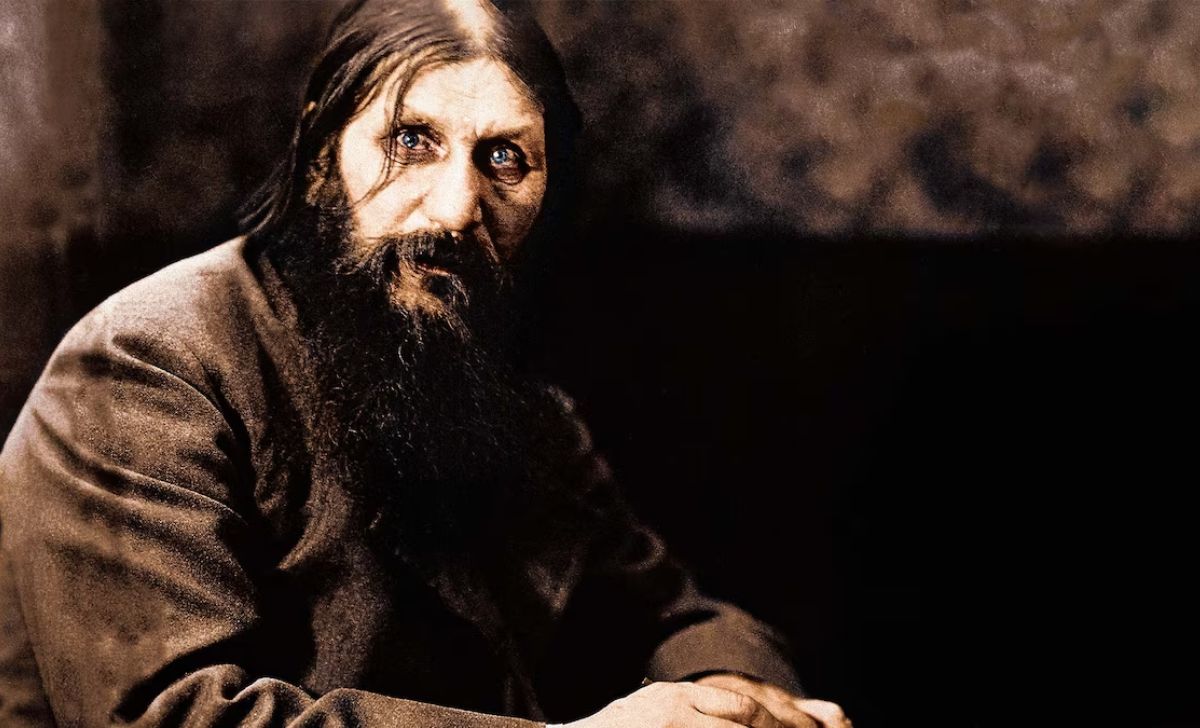
Rasputin: The Untold Story of His Life and Demise begins in the remote landscapes of Siberia, where a boy named Grigori Yefimovich Rasputin was born in 1869 into a humble peasant family. What could have been a life of obscurity would instead become one of the most infamous and mysterious stories in Russian history. Rasputin’s journey from a Siberian village to the opulent halls of the Russian imperial court is a tale filled with mysticism, scandal, and ultimately, violent death.
The Rise of a Controversial Holy Man
Rasputin’s early life was marked by the ordinary hardships of rural peasantry, but in the 1890s, he underwent a profound religious conversion that would change the course of his life. Inspired by wandering Orthodox monks, he began years of pilgrimages across Russia, spreading his reputation as a man with extraordinary spiritual gifts. Stories of his ability to heal and predict events drew the attention of both ordinary peasants and powerful church figures alike, despite his indulgence in drinking, petty theft, and promiscuity.
His magnetic presence and unorthodox methods soon carried him beyond the Siberian villages. By the early 1900s, Rasputin had reached St. Petersburg, the capital of imperial Russia, where he leveraged his charisma to gain favor with spiritual advisors close to the royal family.
Gaining the Imperial Family’s Trust
In November 1905, Rasputin was introduced to Tsar Nicholas II and his wife, Alexandra. The Romanovs were deeply devout, with a belief in mysticism and supernatural powers, and Rasputin captivated them instantly. At the time, Russia was politically unstable after the Revolution of 1905, and the royal family faced personal struggles of its own. Their son, Alexei, heir to the throne, suffered from hemophilia, a potentially fatal blood disorder.
When Alexei experienced a life-threatening crisis in 1912, Rasputin advised the family to reject the doctors’ treatments. Miraculously, Alexei’s condition improved, and the royal family attributed his recovery to Rasputin’s mystical powers. Modern historians now know that the doctors had prescribed aspirin, a treatment that actually worsened Alexei’s condition, making Rasputin’s “intervention” seem miraculous. This event cemented his influence over the monarchy, and Rasputin made a chilling prophecy: if he were to die or be abandoned by the royal family, both the young heir and the crown would soon follow.
Public Perception: Revered and Reviled
While many peasants saw Rasputin as a spiritual champion who represented their voice in a rigidly hierarchical society, the nobility and clergy viewed him as a corrupt and dangerous figure. His continued indulgence in scandalous behavior—heavy drinking, sexual escapades, and political interference—intensified opposition from powerful groups within Russia. By the end of World War I, these tensions escalated to a deadly plan: Rasputin had to be eliminated.

The Mysterious Assassination of Rasputin
Felix Yusupov, a Russian aristocrat, orchestrated the infamous assassination on a cold winter night in 1916. According to Yusupov’s memoirs, the conspirators attempted to poison Rasputin with pastries laced with cyanide. However, the poison was either ineffective or replaced by a co-conspirator at the last moment, as Rasputin ate the pastries without harm. In panic, Yusupov shot him at point-blank range, but Rasputin astonishingly survived, fighting back and attempting to escape.
The attackers pursued him, ultimately delivering a fatal shot to the forehead and dumping his body into the Malaya Nevka River. While Rasputin’s death was intended to stabilize the monarchy, it instead contributed to the turmoil. Public outrage and political instability only grew, and the prophecy Rasputin had made eerily came true: within months, the royal family itself was executed, marking the end of the Romanov dynasty.
Legacy of Rasputin
Rasputin’s life and death remain shrouded in mystery and myth. Was he truly a mystical healer capable of predicting the future, or merely a cunning opportunist who exploited the royal family’s beliefs? Did his death accelerate the fall of the Russian monarchy, or was it simply the culmination of decades of political unrest? History may never provide definitive answers. What remains certain, however, is that Grigori Rasputin left an indelible mark on Russian history—an enigmatic figure whose rise and fall mirrored the collapse of an empire.
From the remote villages of Siberia to the grandeur of the imperial court, Rasputin’s story is a powerful reminder of how charisma, superstition, and political tension can converge to shape the course of history. The life and demise of this “holy man” continue to captivate scholars, writers, and history enthusiasts over a century later.