

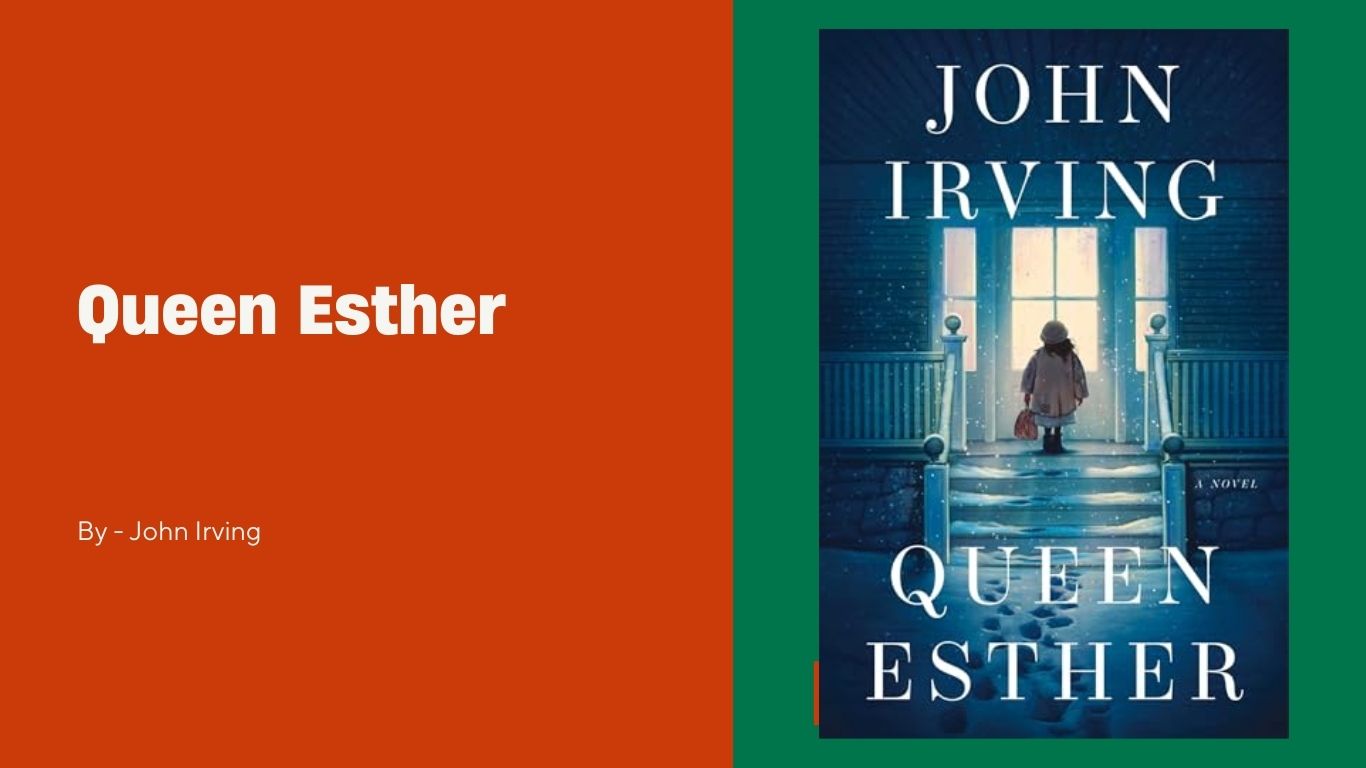
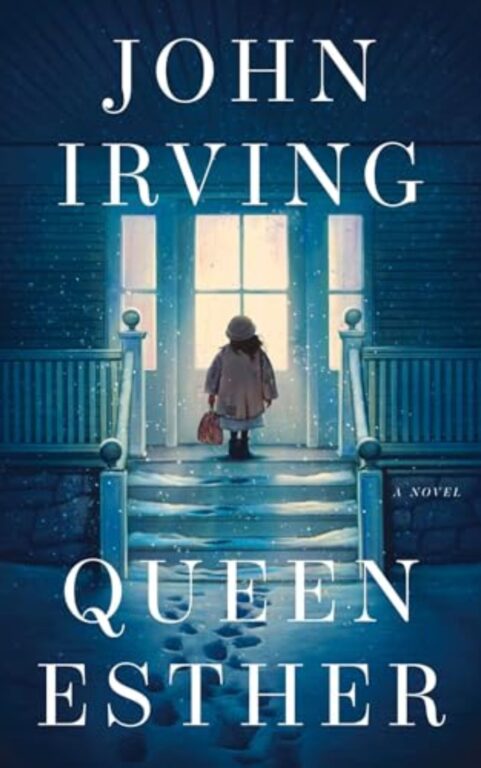
Queen Esther marks a return to familiar yet emotionally charged territory for John Irving. Known for his sprawling narratives, eccentric characters, and recurring themes of fate, loss, and identity, Irving once again builds a novel that stretches across continents and decades. Queen Esther is ambitious in scope and intention, blending personal trauma with sweeping historical moments. While the novel contains many of Irving’s recognizable strengths, it also exposes some uneven choices that have divided readers and critics alike.
Plot summary
The novel opens in Vienna in the early 20th century with the birth of Esther Nacht in 1905. Her childhood is marked by sudden and devastating loss: her father dies early, and her mother is later murdered in an act of antisemitic violence. Orphaned and displaced, Esther is eventually sent to St. Cloud’s orphanage in Maine, a setting that will feel immediately familiar to long-time Irving readers.
Esther is later adopted by the Winslow family, whose wealth and philanthropy offer her security but not immunity from emotional scars. As the story progresses, the narrative unexpectedly shifts focus. Instead of remaining tightly centered on Esther, the novel devotes substantial attention to Jimmy (also known as James Winslow), whose life trajectory — shaped by writing, travel, and emotional confusion — begins to dominate the book.
The story spans multiple locations, including Vienna, Maine, and Jerusalem, and stretches across much of the 20th century. Historical forces such as war, displacement, and the emergence of Zionism form the backdrop against which personal lives unfold. By the novel’s end, the reader is left with a broad, layered account of intersecting lives rather than a singular biographical portrait of its titular character.
Characters and storytelling
Esther is most compelling in the novel’s early chapters. Irving captures her vulnerability with sensitivity, portraying a young girl shaped by grief yet capable of resilience. However, as the narrative progresses, Esther often recedes from the foreground, making space for Jimmy and other characters whose stories expand the novel’s scope but dilute its emotional center.
Irving populates the book with eccentric and memorable figures, a hallmark of his storytelling. Some characters echo those from his earlier works, creating a sense of continuity within his fictional universe. While this intertextual familiarity will please devoted readers, it may also feel distracting to those encountering Irving for the first time. The storytelling style favors digression and reflection over momentum, resulting in a narrative that feels expansive but occasionally unfocused.
Themes: identity, storytelling, and history
At its core, Queen Esther is concerned with how identity is formed, preserved, and challenged over time. Irving explores Jewish identity in the shadow of antisemitism, asking how individuals carry cultural and historical burdens into their private lives. The novel also places great emphasis on storytelling itself — how stories help people survive trauma, construct meaning, and impose order on chaos.
Literary influences, religious narratives, and personal myth-making all play roles in shaping characters’ choices. Irving’s fascination with Dickensian storytelling is evident in both structure and tone. While these themes are ambitious and often moving, they sometimes compete with one another rather than coalesce, leaving the novel thematically rich but uneven.
Strengths
Irving’s prose retains its sharpness and warmth. He excels in crafting scenes that linger — intimate conversations, moments of moral reckoning, and sharply observed details of daily life. His dialogue remains engaging, often balancing humor with gravity. The return to St. Cloud’s orphanage and the reappearance of familiar narrative motifs will resonate strongly with readers who have followed Irving’s career for decades.
The novel also contains passages of genuine emotional power, particularly when it allows itself to dwell quietly on grief, kindness, and the long-term consequences of early trauma. These moments remind readers why Irving has remained a significant literary voice for so long.
Shortcomings and where the novel frays
One of the most common criticisms of Queen Esther lies in its structure. The early promise of a character-driven narrative focused on Esther gives way to long detours that shift attention elsewhere. For some readers, this results in frustration and a sense that the novel loses sight of its emotional anchor.
Additionally, Irving’s handling of sensitive historical and cultural material has drawn mixed reactions. While his intention to confront antisemitism is clear, certain passages feel overly familiar in tone, occasionally clashing with the seriousness of the subject matter. These moments do not overwhelm the novel, but they contribute to the perception that it lacks the cohesion found in Irving’s strongest works.
Why the book matters
Despite its flaws, Queen Esther remains a significant novel. It reflects Irving’s ongoing engagement with questions of belonging, moral responsibility, and the ways history shapes individual lives. The book insists that personal stories matter, even when they unfold against vast historical backdrops.
For readers invested in Irving’s literary world, the novel offers continuity, reflection, and moments of genuine insight. For others, it stands as an example of how ambition can both elevate and complicate a narrative. The novel may not fully resolve its tensions, but it remains thought-provoking in its attempt to reconcile private lives with public histories.
Verdict
Queen Esther is a novel that rewards patience but tests expectations. It is emotionally resonant in parts, uneven in execution, and unmistakably shaped by John Irving’s distinctive voice. Readers seeking a tightly focused character study may feel dissatisfied, while those open to a sprawling, reflective narrative will find much to admire. Ultimately, the book stands as a reminder that even imperfect novels can offer meaningful reflections on identity, loss, and the stories we tell to survive.