
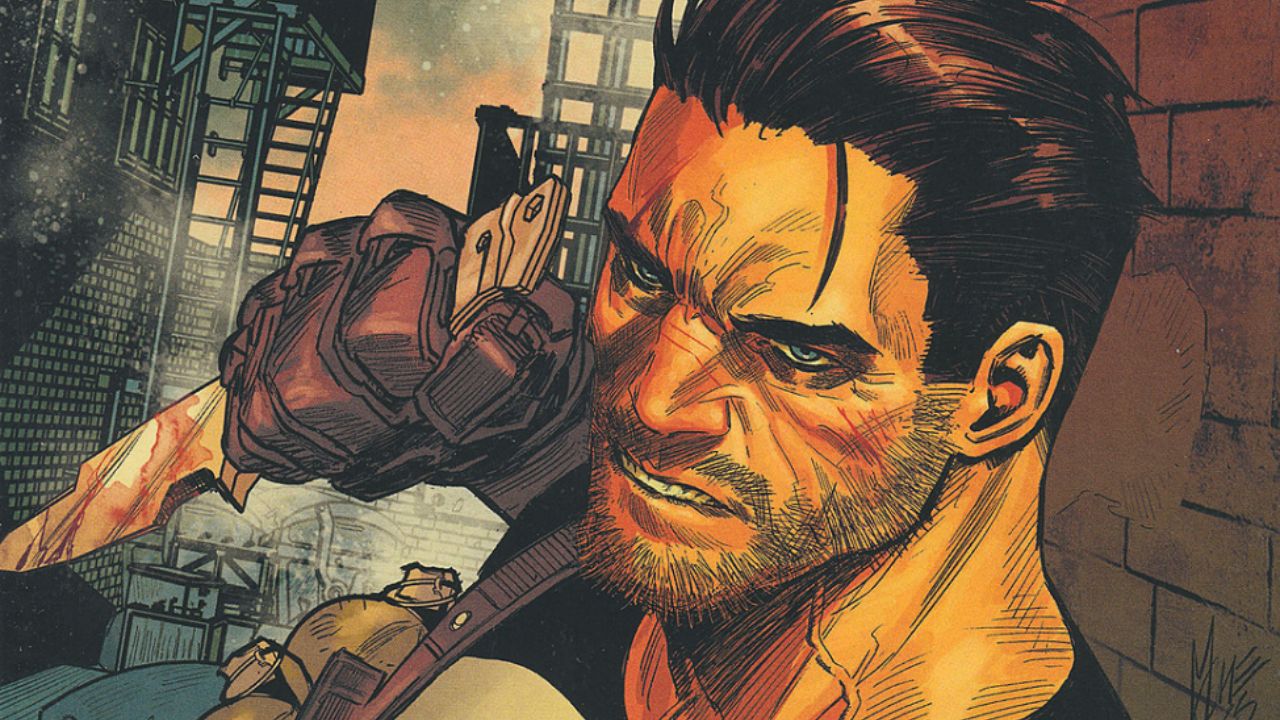
The “Red Band” era of the Punisher has been a visceral, blood-soaked ride from the very first page, but issue #3 is where the narrative engine really begins to roar. Written by Benjamin Percy with art by Julius Ohta and colors by Yen Nitro, this installment isn’t just about the violence—though there is plenty of that—it’s about the terrifying realization of self. For the past two issues, we’ve followed a man who is a weapon without a name. A “vengeance machine” acting on instinct and the subliminal commands of a shadow benefactor. But in Punisher: Red Band #3, the fog of amnesia begins to lift, and the consequences for the New York underworld—and Frank’s puppeteers—are going to be catastrophic.
The Highway to Hell
The issue opens in high gear—literally. Frank Castle, still operating under the “Activate” protocol, finds himself clinging to the grill of a speeding semi-truck. This isn’t just a heist; it’s an interception. The truck is carrying human cargo, a trafficking operation run by a gang calling themselves the Celtic Sons.
The action sequence here is pure, kinetic chaos. Percy and Ohta waste no time in showing us why Frank Castle is the Marvel Universe’s premier predator. He doesn’t just stop the truck; he dismantles the opposition with a cold, mechanical efficiency. The narration gives us a chilling glimpse into his current mental state: “It feels like breathing… It doesn’t feel good to kill. It feels necessary.”
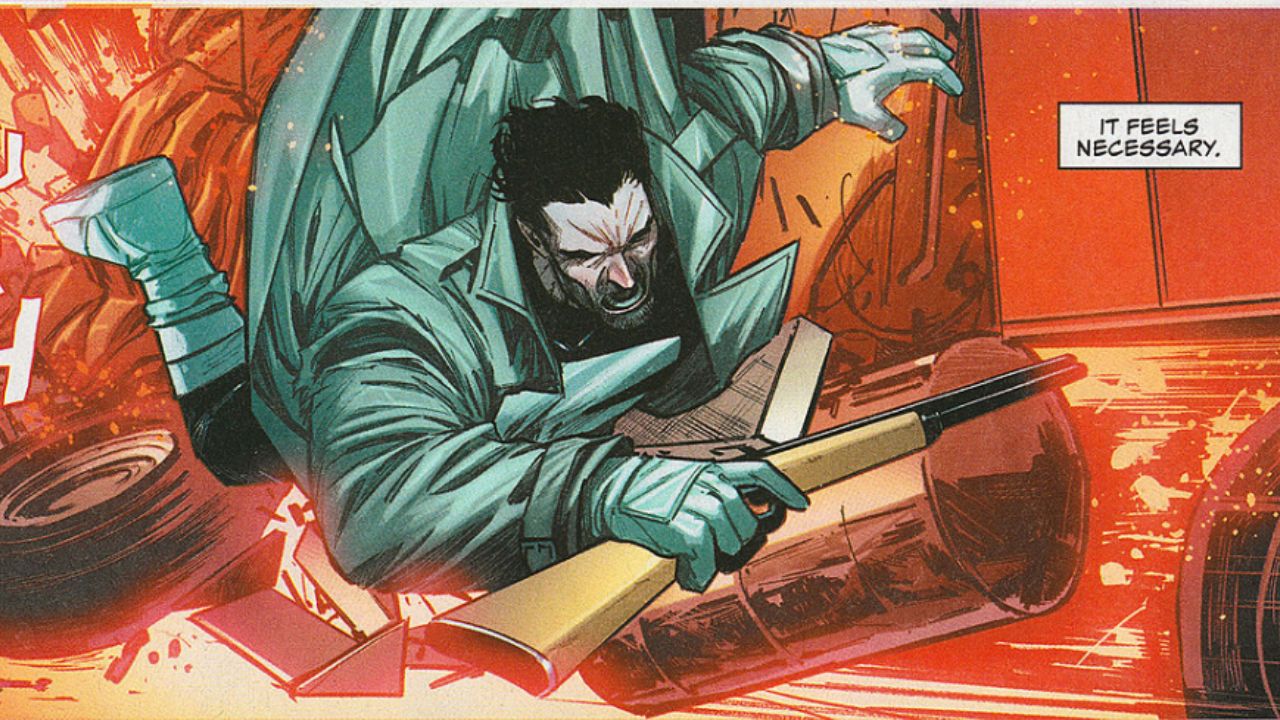
When the truck crashes and the doors are thrown open, the true horror of the shipment is revealed. The container is packed with women from Kurdistan, trafficked for sexual slavery. The “Celtic Sons” make the fatal mistake of threatening the Punisher, believing their numbers give them an advantage. They don’t. Frank butchers them, but what’s fascinating here is his interaction with the victims. He tells them, “You can hurt them too.” It’s a dark mentorship, a transfer of agency from the savior to the saved.
The Voice in the Head
While Frank creates a slaughterhouse on the highway, we get a deeper look at the leash holding him back. Throughout the fight, Frank hears a “muffled voice” from the back of his head—a command to “Stay civil” and “Contribute to the greater good.” This is the voice of Wilson Fisk, the Kingpin, who has been using Frank as his personal “Black Knight” to sanitize the city.
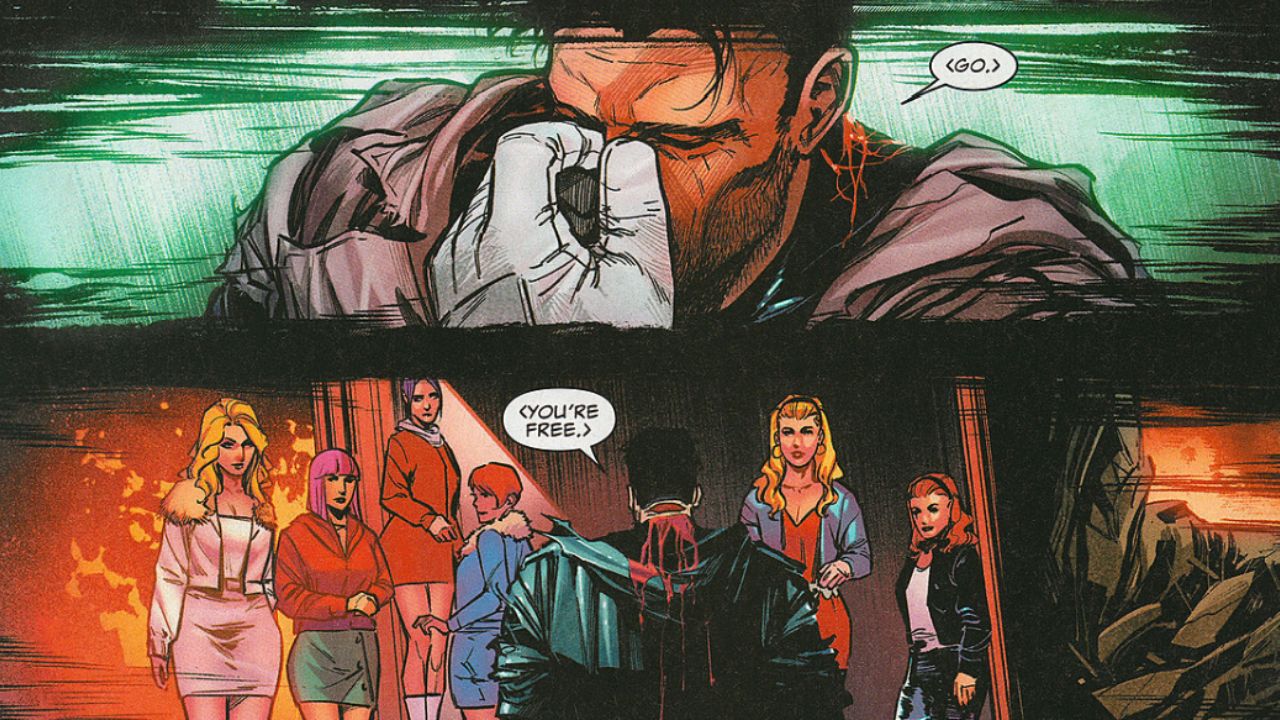
However, the conditioning is cracking. Frank resists the commands to be “civil.” The narration describes the sensation as a “sewn-up mouth” in his mind. He frees the women, telling them to go, acknowledging a tragic truth about his own existence: “You’re free. But I’m not.”
The Torture of Detective Fishback
Meanwhile, the ripple effects of Frank’s return are being felt elsewhere. Tombstone, the albino gangster whose shipment was hit in the first issue, is on a warpath. He has captured Detective Fishback, the partner of Detective Pluto, and is subjecting him to a gruesome interrogation.
This scene serves as a crucial plot pivot. Tombstone is desperate for a name. He wants to know who the “man on the shore” was. Fishback, terrified and in agony, admits he can’t remember—a side effect of the strange, perhaps supernatural or technological, obscurity surrounding Frank’s return. But he remembers one detail: The Skull.
When Fishback mentions the skull on the chest, the realization hits Tombstone like a sledgehammer. The urban legend is real. The Punisher is back. This revelation shifts the stakes from a gang war to a survival horror story for every criminal in New York.
The Kingpin and the Microchip
Perhaps the most disturbing revelation of the series so far is confirmed in this issue: Microchip is alive, and he is helping Wilson Fisk.
In a scene at Fisk’s headquarters, we see the former Kingpin acting as a benevolent conductor of chaos. He views the escalating violence between gangs as a “purge” or a “cleanse.” He plans to let the criminals “eat each other” so he can clean up the leftovers.
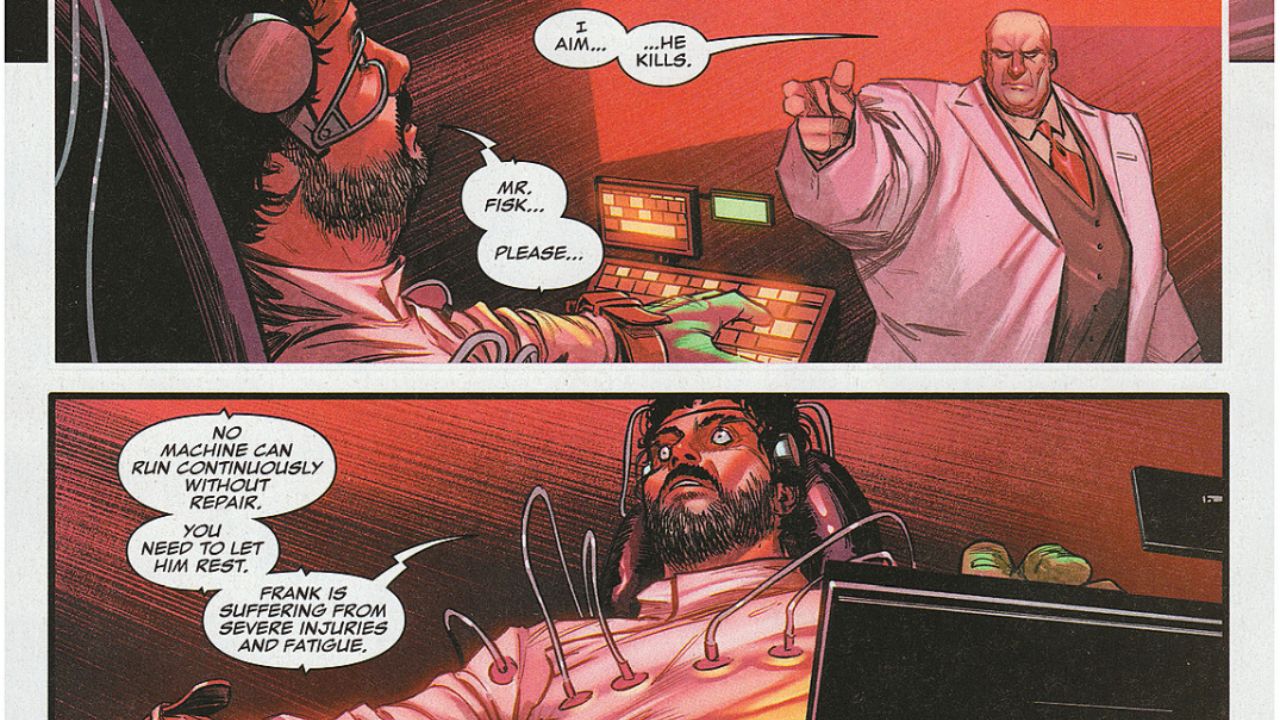
Microchip, however, acts as the voice of caution. He warns Fisk that Frank is “suffering” and that “no machine can run continuously without repair.” It’s a twisted inversion of their classic dynamic. Microchip is still providing tech support for Frank, but now it’s for the purpose of enslaving him rather than aiding his war on crime. Fisk ultimately agrees to let Frank rest, not out of mercy, but to preserve his “thoroughbred.”
The Awakening
The issue concludes with a moment of profound psychological horror and clarity. Frank, exhausted and battered, begins to experience a breakthrough. The external controls and the amnesia can no longer suppress the core of who he is.
The narration describes his mind as a minefield, a place where he is “walking around inside his own skull.” But through the haze of pain and programming, a specific memory “sparkles.” The smell of dust and gun oil triggers the final connection.
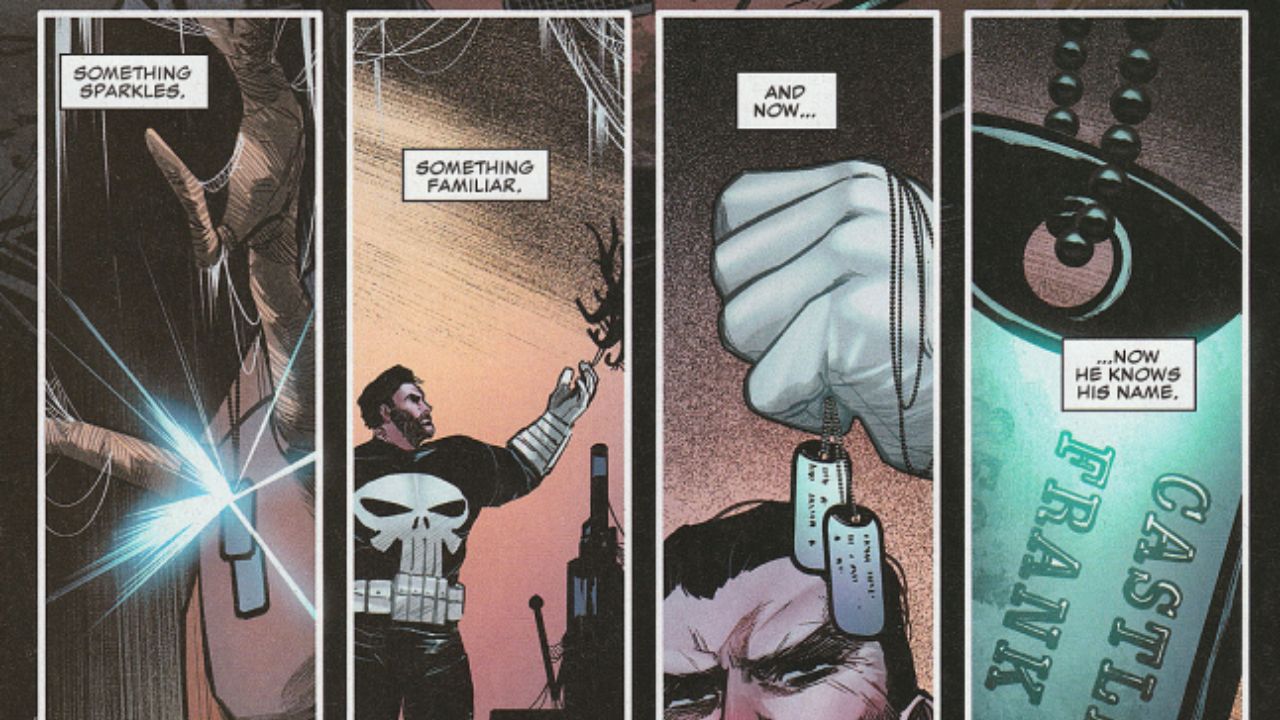
In the final pages, the man looks in the mirror (metaphorically or literally) and finally knows his name: Frank Castle.