

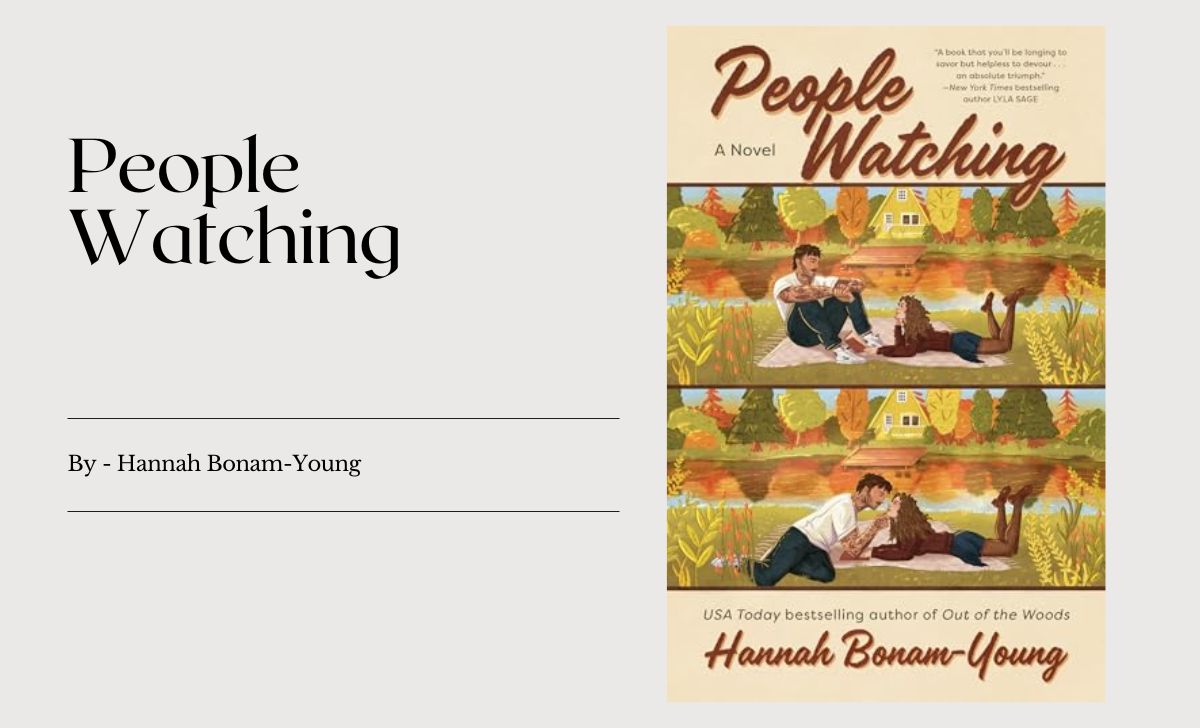
Hannah Bonam-Young’s People Watching arrives as a warm-but-spiky contemporary romance that balances tenderness with frankness about loneliness, caregiving, and sexuality. The novel centers on characters whose lives have been shaped by responsibility and small-town rhythms, and it asks: how do you learn to be seen—and to let someone in—when you’ve been defined by other people’s needs for so long? The book is both a character study and a love story, and it’s written in Bonam-Young’s signature voice: intimate, wry, and unafraid of messy emotion.
What the book is about — a concise plot overview
Prue Welch is a quiet, careful woman living in a small Ontario town. By day she cares for her mother, Julia, who suffers from early-onset Alzheimer’s, and Prue’s life revolves around the careful rituals that protect both her mother’s dignity and the memory of who Julia once was. Into Prue’s contained world arrives Milo, a tattooed, charming, free-spirited artist who moves into the village with family ties and his own complicated backstory. Their connection grows from proximity and mutual curiosity into something both urgent and awkward: Prue is largely sexually inexperienced and guarded; Milo is confident, experienced, and unexpectedly patient. What begins as a proposal from Prue—an arrangement to “learn” sexual intimacy with Milo under negotiated terms—blossoms into a relationship that forces both characters to confront grief, shame, family dynamics, and what they want from life. The caregiving arc (Prue’s relationship with her mother) threads the novel, keeping stakes emotional even when scenes turn playful or sensual.
Tone, style, and what makes Bonam-Young’s writing sing
Bonam-Young writes with a clarity that privileges emotional truth over melodrama. Her sentences are often spare but viscous with feeling—short lines that land like small, precise observations about people. She has a knack for small, domestic detail that makes the novel feel lived-in: the quiet routines of caregiving, the embarrassment and thrill of first sexual encounters, the honest dialog between friends, and the way a town’s gossip can feel like weather. Reviewers and publisher copy alike highlight the book’s emotional candor and the chemistry the author builds between Prue and Milo. That chemistry is less about instant fireworks and more about the slow erosion of barriers—through humor, touch, and the repeated acts of showing up.
Characters: strengths and shortcomings
Prue is the book’s beating heart. She’s not defined by a single trait (virginity, caregiving, or shyness); she’s a bundle of contradictions—tender, codependent, funny, self-protective. Bonam-Young resists easy caricature when it comes to Milo, too: he could have been only a rom-com varnish of “bad-boy-turned-gentle,” but the novel gives him complexities—family obligations, a tendency toward performative bravado, and genuine warmth. Supporting characters (Prue’s father, friends in the village, Milo’s relatives) are sketched with effective economy; they’re not always three-dimensional, but they function well as mirrors and obstacles for the leads. Some readers have noted pacing and balance issues in the relationship arc—at times the sexual chemistry reads more like lust before a later switch into a fuller emotional commitment—but many fans enjoy the tension between Prue’s caution and Milo’s forwardness.
Themes that linger
A few themes anchor the novel beyond the romance plot. Caregiving and memory: Prue’s mother’s Alzheimer’s is handled with tenderness; the novel refuses to sentimentalize but also refuses to make the illness just a plot device. Identity and desire: Prue’s sexual inexperience is treated as part of a life shaped by choices and constraints, not as a problem to be “fixed.” Community and home: the small-town setting is a character in itself—supportive, nosy, and forgiving in turns. And finally, consent and negotiation: the book foregrounds explicit conversations about limits and expectations in a way that feels modern and responsible. These thematic strands give the romance emotional heft.
What works — and what might divide readers
The book’s strongest asset is its voice and emotional honesty. Bonam-Young can write a sentence that makes you wince and then immediately makes you laugh; that tonal agility keeps the pages turning. The caregiving scenes are particularly affecting—scenes of small kindness and unbearable loss that feel authentic. Readers who value character-driven romances and realistic treatment of heavy topics (like dementia) will find much to admire.
Where the book might lose some readers: pacing. A few reviewers and readers on review platforms mention that the relationship’s emotional progression occasionally feels uneven (the switch from physical chemistry to love can seem abrupt). Also, the novel’s explicit sexual scenes and frank talk about sexual inexperience mean it’s best suited for readers comfortable with steamy contemporary romance. If you prefer quieter, plot-driven books or romances that follow a slow-burn for most of the book, you may find parts of People Watching more impulsive than earned.
Final verdict — who should read this book?
People Watching is a strong pick for readers who like contemporary romances that are emotionally grounded, honest about caregiving, and candid about sex. If you enjoy character-first stories—where the pleasures come from witnessing two flawed people try, fail, and try again at intimacy—then this book will likely reward you. Bonam-Young’s prose keeps the novel from falling into formula; when it leans into sentimentality, it rarely crosses the line into cheap manipulation. It’s warm, occasionally sharp, frequently funny, and sometimes heartbreakingly real. For fans of immersive small-town settings and romances that grapple with real-life obligations, People Watching is worth the read.